
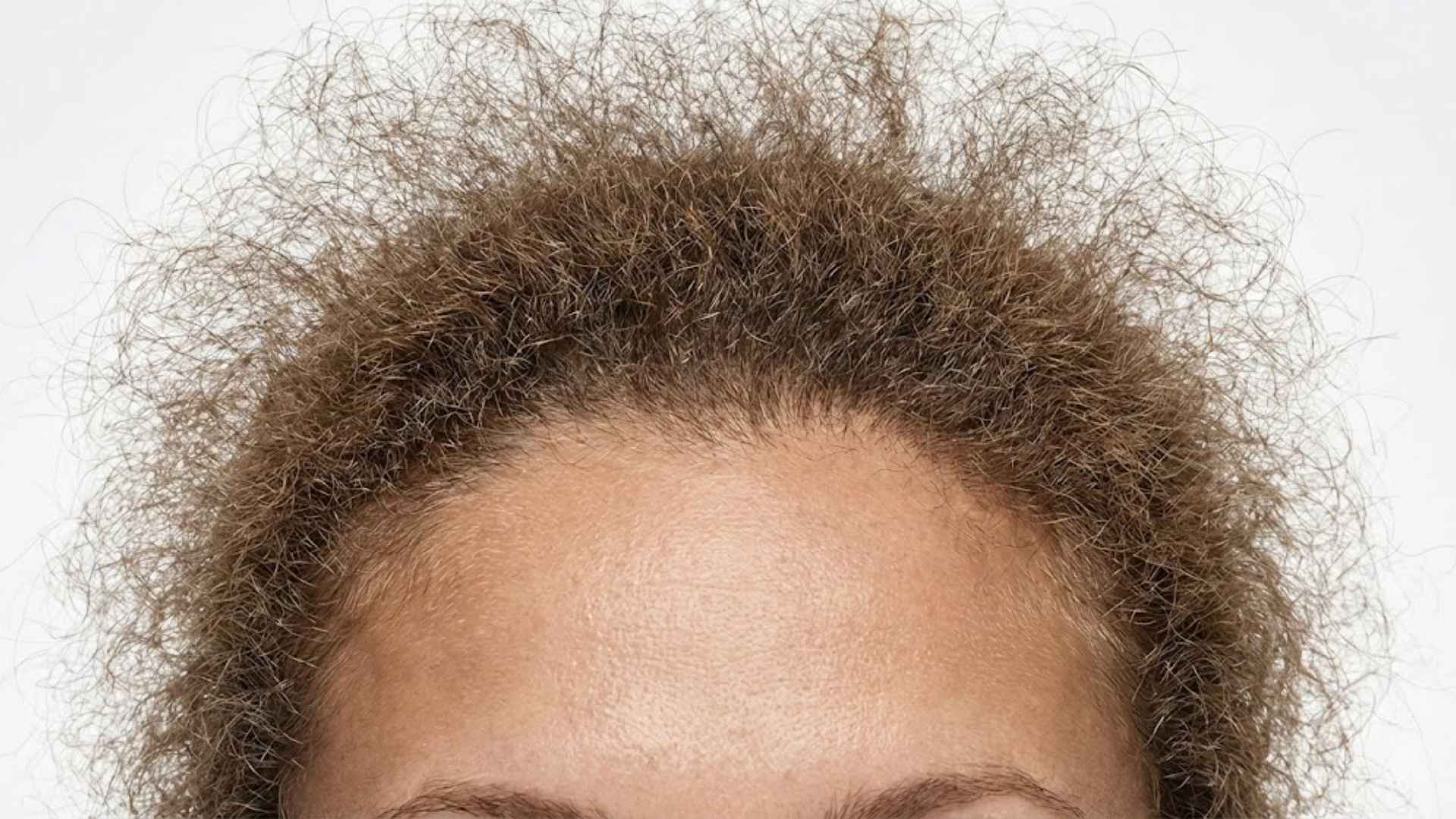
That frizzy halo that won’t smooth down baffles many people. It sits on top of your head. This ring of frizz ignores most serums and creams. It makes hair look messy by midday. Understanding this issue is the first step. Let’s explore what causes this stubborn problem.
Uneven frizz patterns can also explain why the top layer behaves differently — explained in
Why Is the Top of My Frizzy Hair So Different from the Underside?
What Exactly Is This Frizz?
A frizzy halo is a crown of flyaways. These hairs stick straight up or out. They form a fuzzy ring around your head. The hair underneath may feel smooth. The top layer feels dry and rough. This specific frizz resists normal smoothing methods. It often returns hours after styling.
Why Won’t My Frizzy Halo Smooth Down?
Common advice often fails this problem. Let’s examine key reasons why.
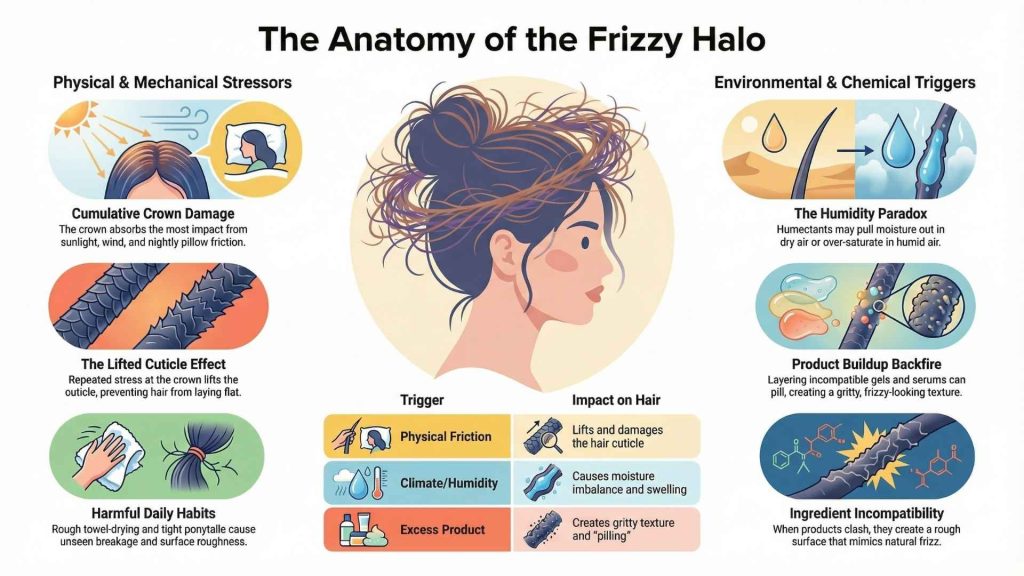
Your Crown Takes the Most Damage.
Sunlight and wind hit this area first. Pillow friction happens here every night. Brushing often starts at the crown. This cumulative stress lifts the hair cuticle. Once lifted, it refuses to lay flat.
Humidity Plays a Tricky Role.
Humectants in products attract moisture. In dry air, they can pull moisture from your hair. In humid air, they may over-saturate each strand. Both reactions can worsen that frizzy halo. Climate deeply affects your results.
Product Buildup Can Be a Culprit.
Layering creams, gels, and serums sometimes backfires. Incompatible ingredients may pill on the hair. This creates a gritty, rough texture. That texture mimics and worsens your frizzy halo. Less is often more.
Daily Habits Cause Unseen Harm.
Rough towel-drying roughs up the cuticle. Brushing dry hair creates static and breakage. Tight ponytails pull at fragile crown hairs. These small actions prevent a smooth finish.
How Can You Manage Stubborn Halo Frizz?
Manage this issue with a gentle approach. Focus on prevention over quick fixes.
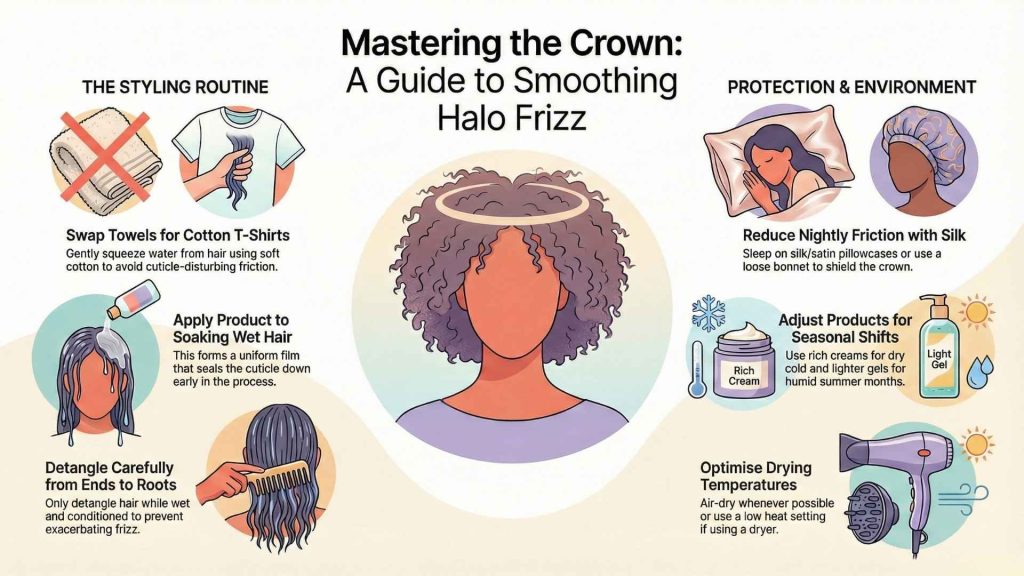
Change Your Drying Technique.
Use a soft cotton t-shirt instead of a towel. Gently squeeze water from your hair. Avoid any vigorous rubbing motions. Let hair air-dry when possible. If using a dryer, choose a low heat setting.
Apply Product to Soaking Wet Hair.
This helps form a uniform film over the strand. Smooth product over the top layer carefully. Use open palms in a gentle gliding motion. This technique helps seal the cuticle down early.
Protect Your Hair at Night.
Sleep on a silk or satin pillowcase. This material reduces friction dramatically. You can also use a loose bonnet. These steps shield your crown from nightly abrasion.
Choose Your Weather Weapons.
Use richer creams in dry, cold weather. Choose lighter gels during humid summer months. Check labels for humectants like glycerin. Adjust your routine with the seasonal shifts.
Handle With Extreme Care.
Detangle hair only when it’s wet and conditioned. Start from the very ends and work up. Never brush a dry frizzy halo. This only exacerbates the problem immediately.
When Should You Talk to a Professional?
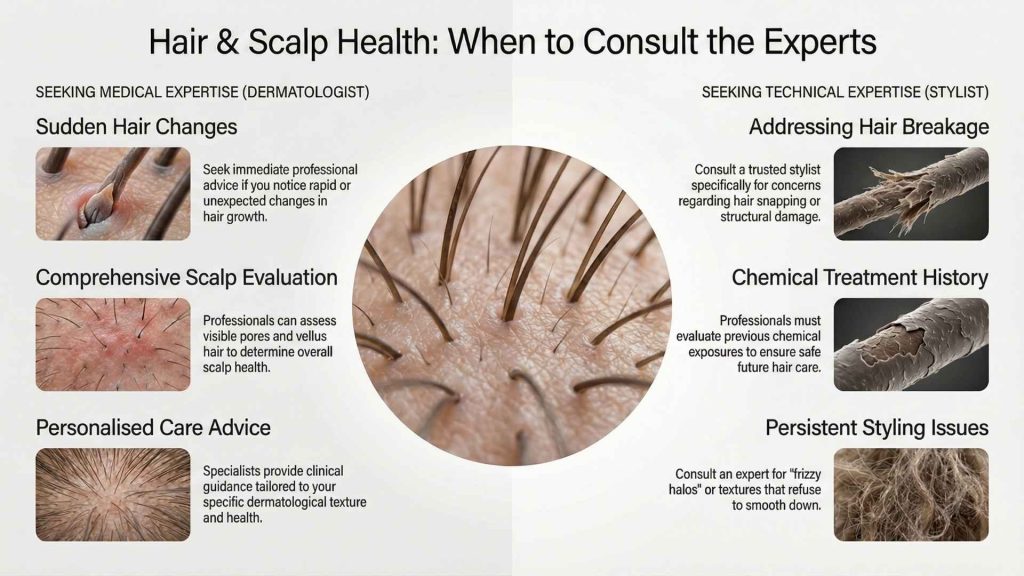
Sometimes, an expert perspective is useful. See a dermatologist for sudden hair changes. Consult a trusted stylist for breakage concerns. Professionals assess chemical treatment history. They can evaluate your scalp’s overall health. They provide personalized care advice.
Dry, splitting strands can make halo frizz worse — see
Making Sense of Split Ends That Travel Up the Shaft
Frequently Asked Questions
Why is my frizz only at the top?
The crown experiences the most environmental exposure. It also suffers from daily friction and styling. This combination specifically creates that top-layer frizz.
Are some hair types more prone?
All hair textures can experience this. Wavy and curly hair often show it more. The natural texture pattern can highlight lifted cuticles.
Will a haircut fix my frizzy halo?
A sharp cut removes split ends. It can blend shorter layers for a smoother look. But new growth will still come in at the crown. Management is an ongoing process.
Do I need protein or moisture?
Your hair’s feel provides clues. Gummy, stretchy hair may need protein. Brittle, snapping hair often needs moisture. Most hair needs a careful balance of both.
Is cold water really helpful?
A cool rinse at the end of your shower can help. It encourages the hair cuticle to lay flat. This simple step smooths the outer layer.
Can hard water cause this issue?
Mineral deposits from hard water can coat hair. This coating leaves hair feeling rough and dry. A clarifying wash occasionally may remove this buildup.
Final Thoughts on Managing Your Frizz
That frizzy halo that won’t smooth down requires patience. Quick fixes often disappoint. Lasting change comes from consistent, gentle care. Understand your hair’s unique environment. Adjust your habits slowly over time. Focus on strengthening your hair’s natural barrier. This approach leads to better, smoother days ahead.
Disclaimer: This article is for educational purposes only. It is not professional medical advice. Always consult a doctor or dermatologist for hair health concerns.