
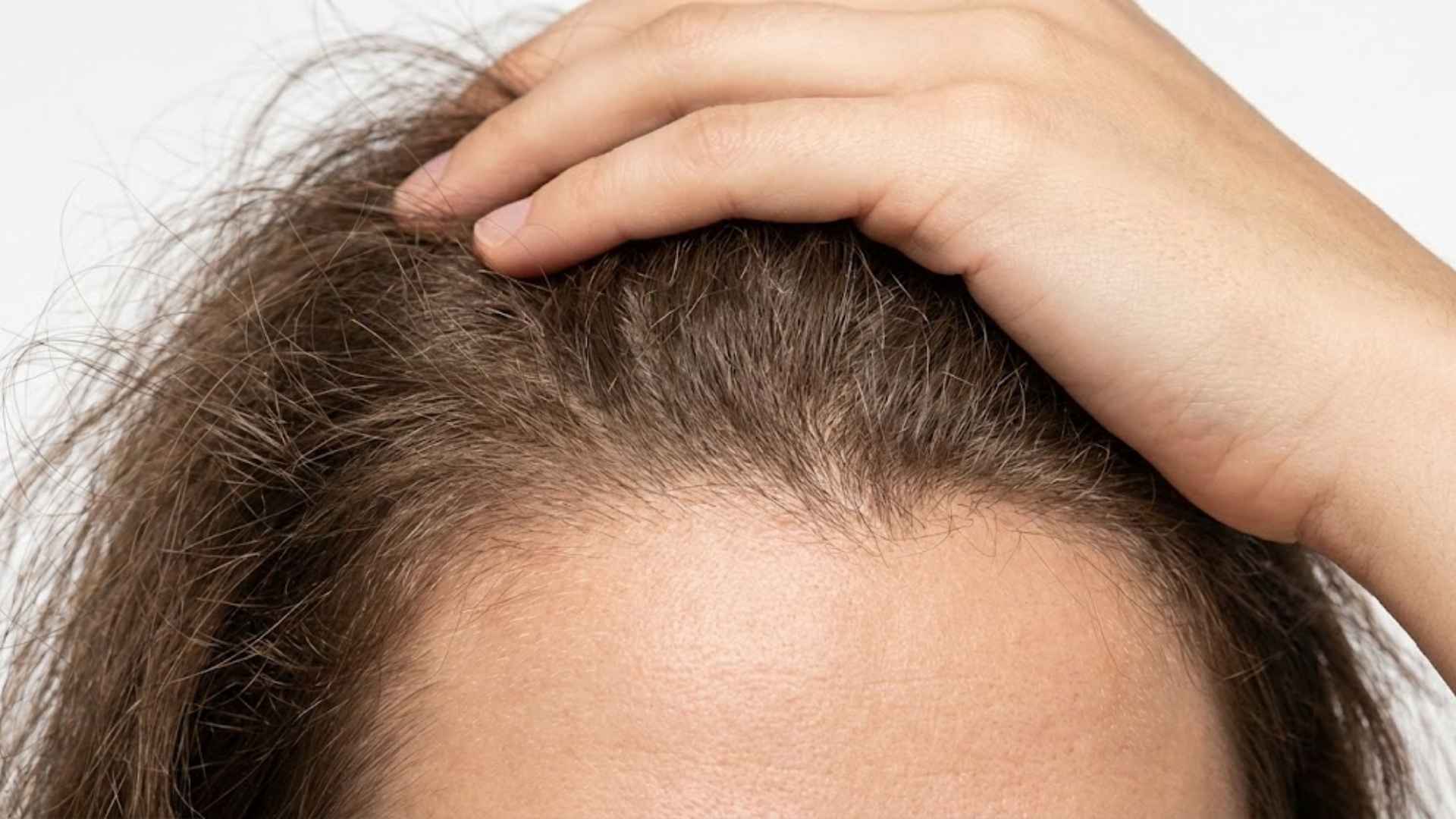
Many people with frizzy hair observe a distinct textural difference between their lower layers and their crown. A common observation is that the hair underneath the top layer often appears smooth or well-defined. In contrast, the very topmost layer at the crown of the head can develop a distinct, wispy frizz that visually stands apart from the rest of the hair.
This specific phenomenon is commonly referred to as a “halo” of frizz. It typically manifests as a fuzzy, lifted layer atop an otherwise smoother base. It is a common observation across different hair textures.
This article explains what halo frizz feels and looks like. It explores the many factors that may contribute to its appearance. It also discusses why some general hair care advice may not seem to work for it. The goal is to provide a clearer understanding of the topic. If you’re also dealing with surface-level frizz that won’t smooth down, see The Frizzy Halo That Won’t Smooth Down: A Complete Guide.
What Is Halo Frizz?
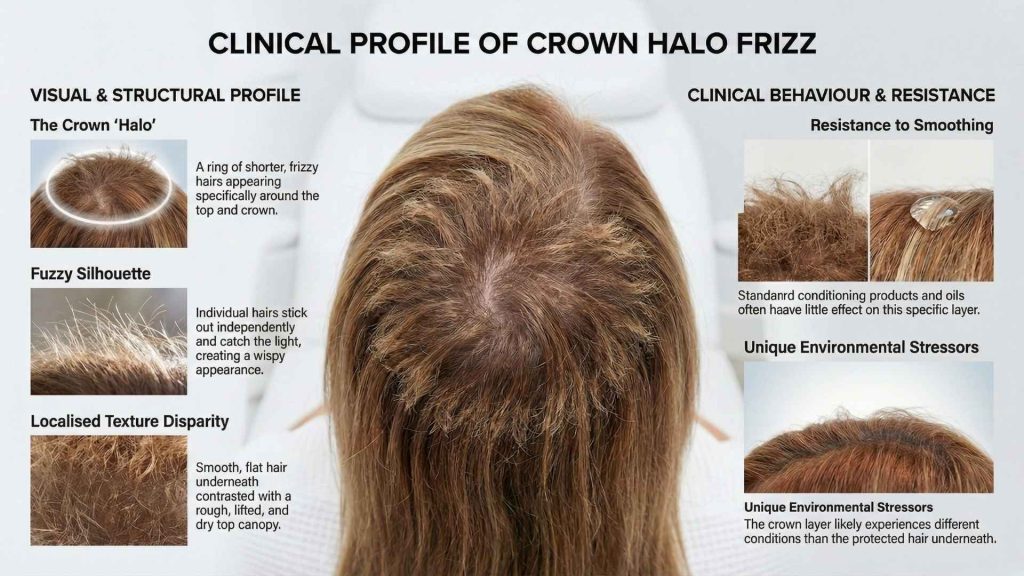
People often describe halo frizz as a ring or “halo” of frizzy, sometimes shorter, hairs that appears specifically around the top and crown of the head. It is characterized by a few common observations:
- Localized Texture Difference: The hair underneath may feel smooth, defined, or lie flat, while the top canopy feels rougher, drier, and appears lifted away from the head.
- Wispy and Unruly Appearance: The individual hairs in this halo often seem to stick out independently, catching light differently and creating a fuzzy silhouette.
- Resistance to Common Smoothing Methods: People frequently report that their usual conditioning products, oils, or styling techniques that work for the rest of their hair have little effect on this top layer.
This distinct behavior suggests the hair at the crown may be experiencing different conditions or stressors than the protected hair underneath.
Why Hair at the Crown May Behave Differently
The top layer of hair, or canopy, occupies a unique and exposed position. Understanding its environment helps explain why frizz might manifest there first or most prominently.
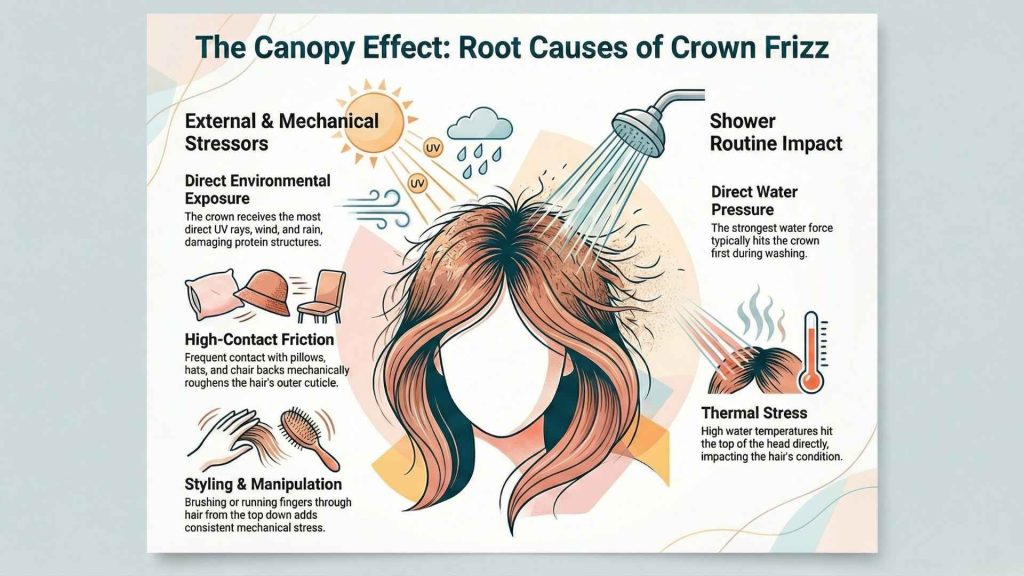
Environmental and Mechanical Exposure
The crown of the head is the most exposed area to daily elements. This exposure can influence the hair’s condition over time.
- Sun and Weather: It receives the most direct exposure to ultraviolet (UV) rays from the sun, which can affect the hair’s protein structure and moisture balance. It is also the first point of contact for wind, rain, and atmospheric humidity.
- Friction and Contact: This area experiences consistent friction from pillows at night, the backs of chairs, hat brims, and even the act of brushing or running fingers through the hair from the top down. This mechanical stress can gradually roughen the hair’s outer cuticle layer.
- Shower Routine Impact: During washing, the strongest water pressure and hottest water typically hit the crown first. Frequent exposure to high water temperature and force is a factor some people consider when assessing their hair’s condition.
Anatomical and Biological Factors
The hair’s own growth patterns and oil distribution also play a role. Product buildup can sometimes make texture differences worse — learn more in Hair Feels Sticky After Washing? – Here Is Your Solution.
- Natural Oil Distribution: The scalp produces natural oils (sebum). Due to the effect of gravity, the natural oils produced by the scalp travel downward along the hair shaft. The hair at the crown, being the highest point, often has the longest path for these oils to travel. Consequently, this area may receive less consistent lubrication. In contrast, hair at the nape and sides frequently rests against the skin on the neck and shoulders. This physical contact can facilitate a more consistent transfer and distribution of oils along those strands.
- Varied Hair Growth Cycles: Hairs grow in asynchronous cycles. The shorter, wispy hairs that contribute to the halo effect are often new growth emerging from the scalp. These shorter strands are more lightweight and can be more susceptible to sticking up or catching static.
Why General Frizz Advice Can Feel Confusing
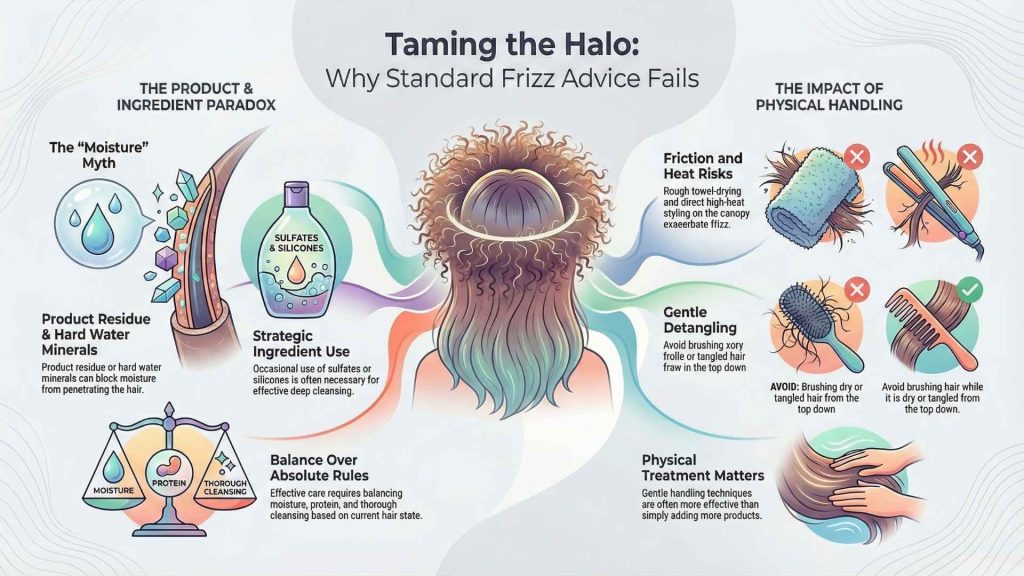
Individuals seeking information on managing frizz often encounter broad, sometimes contradictory, recommendations. This can be particularly frustrating for halo frizz, where the problem is localized. Here’s why standard advice may not seem to apply:
- The “One-Size-Fits-All” Moisture Approach: A common suggestion is to “add more moisture.” However, if the top layer has accumulated product residue or minerals from hard water (a state some describe as “buildup”), applying more moisturizing products may not be effective because they cannot penetrate properly. In such cases, a thorough cleansing is a step some people find useful before any moisturizing routine.
- Conflicting Product Ingredient Guidance: People may read to avoid certain ingredients (like sulfates or silicones) only to later be advised to use them occasionally for deep cleansing. This reflects a broader understanding in hair care about balance—between cleansing and conditioning, and between moisture and protein—rather than absolute rules. What works can depend on an individual’s current hair state, their water quality, and their product history.
- Overlooking Physical Handling: Much advice focuses on products, but physical treatment is equally important. Techniques like rough towel-drying, brushing dry or tangled hair from the top, and high-heat styling directly on the canopy can contribute to the problem. Gentle handling methods are often a cornerstone of reported improvements.
Patterns and Approaches Commonly Discussed
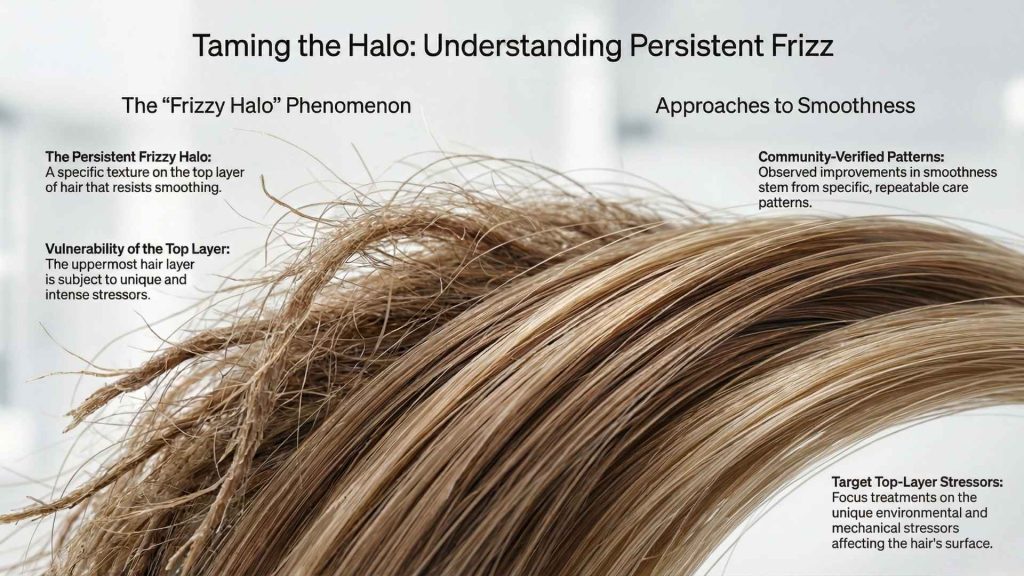
In reviewing community discussions and expert insights, certain patterns of care are frequently mentioned by those who have observed improvements in their hair’s smoothness. These approaches focus on addressing the unique stressors of the top layer.
- Gentler Cleansing Routines: Some people find benefit in periodically using a clarifying shampoo to remove buildup, followed by a conditioner. Others prefer to rinse with cooler water and reduce shower pressure on the scalp. The consistent theme is mindful cleansing tailored to the hair’s needs.
- Strategic Product Application: A technique often discussed involves applying conditioners and stylers to very wet hair, focusing on the mid-lengths and ends first. For the top canopy, a method like “glazing”—smoothing product over the surface with flat hands—is sometimes preferred over vigorous scrunching, which can disturb the cuticle and create frizz.
- Protection from Friction: Using a silk or satin pillowcase is widely cited as a simple change that reduces friction on the crown during sleep, helping to maintain a smoother cuticle layer.
- Mindful Drying Techniques: Swapping a traditional terry cloth towel for a microfiber towel or a soft cotton t-shirt to blot hair dry is a common practice to minimize roughing up the cuticle. Some individuals also find that diffusing hair with a hood attachment or drying the crown on a cool setting helps.
When to Consider Professional Input
While understanding and adjusting one’s routine can be helpful, there are situations where consulting a professional can provide clarity.
- If you experience sudden, significant changes in your hair’s texture or shedding along with frizz.
- If you have specific concerns about scalp health, such as persistent dryness, flakiness, or sensitivity.
- If you are considering significant chemical treatments (like coloring or straightening) and want to understand how they might affect your hair’s condition.
- A credentialed trichologist or an experienced stylist can offer personalized assessment and advice that considers your overall hair and scalp health.
Frequently Asked Questions
Is halo frizz only a problem for people with curly hair?
No, it can be observed across all hair textures—straight, wavy, and curly. Individuals with straight or wavy hair might notice it as a layer of flyaways or overall puffiness at the crown.
Could my shampoo be causing my halo frizz?
It is one potential factor among many. Shampoos that are very strong may be drying for some, while very gentle shampoos, if used exclusively for a long time, may allow for buildup. Many find that a balanced approach, occasionally using a deeper cleansing shampoo followed by a conditioner, works well.
Are short hairs at my crown always breakage?
Not necessarily. They are often new hairs growing in. Hair naturally sheds and regrows continuously. However, if you observe a noticeable increase in short hairs that appear broken and feature tapered or split ends, this can be an indicator of mechanical stress on the hair.
Does hair porosity relate to halo frizz?
The concept of hair porosity—how easily your hair absorbs and retains moisture—can be a useful part of the understanding. High-porosity hair, which absorbs water quickly but loses it quickly, may be more reactive to humidity.
Will getting my hair cut help with halo frizz?
Regular trims are commonly understood to help maintain hair health by removing split ends, which can travel up the hair shaft and contribute to a frayed appearance. For frizz specifically at the ends, this can be beneficial.
Can hard water contribute to this issue?
Yes, minerals in hard water, like calcium and magnesium, can build up on the hair over time. This buildup can create a film that makes hair feel rough, look dull, and prevent conditioners from working effectively.
Conclusion
Frizzy hair at the crown is common. This layer is often called halo frizz. It is not a single problem. There is no single solution.
Instead, it is a visible result. The top layer is the most exposed. It responds to environment, biology, and daily habits.
General advice can feel confusing. It often does not account for this specific context.
A clearer understanding comes from observation. Notice how your own frizzy hair behaves. Consider its unique patterns.
A balanced, gentle approach helps. Focus on cleansing, conditioning, and styling. Prioritize techniques that minimize physical stress. Protect the hair’s outer layer.
Understanding the reasons behind what you see matters most. From there, care routines can become more thoughtful. They can also be more informed. And ultimately, more effective for you.
Disclaimer: This article is for educational purposes only and does not replace professional medical or trichological advice. Always consult a qualified healthcare provider or hair specialist for concerns about your hair or scalp health.