
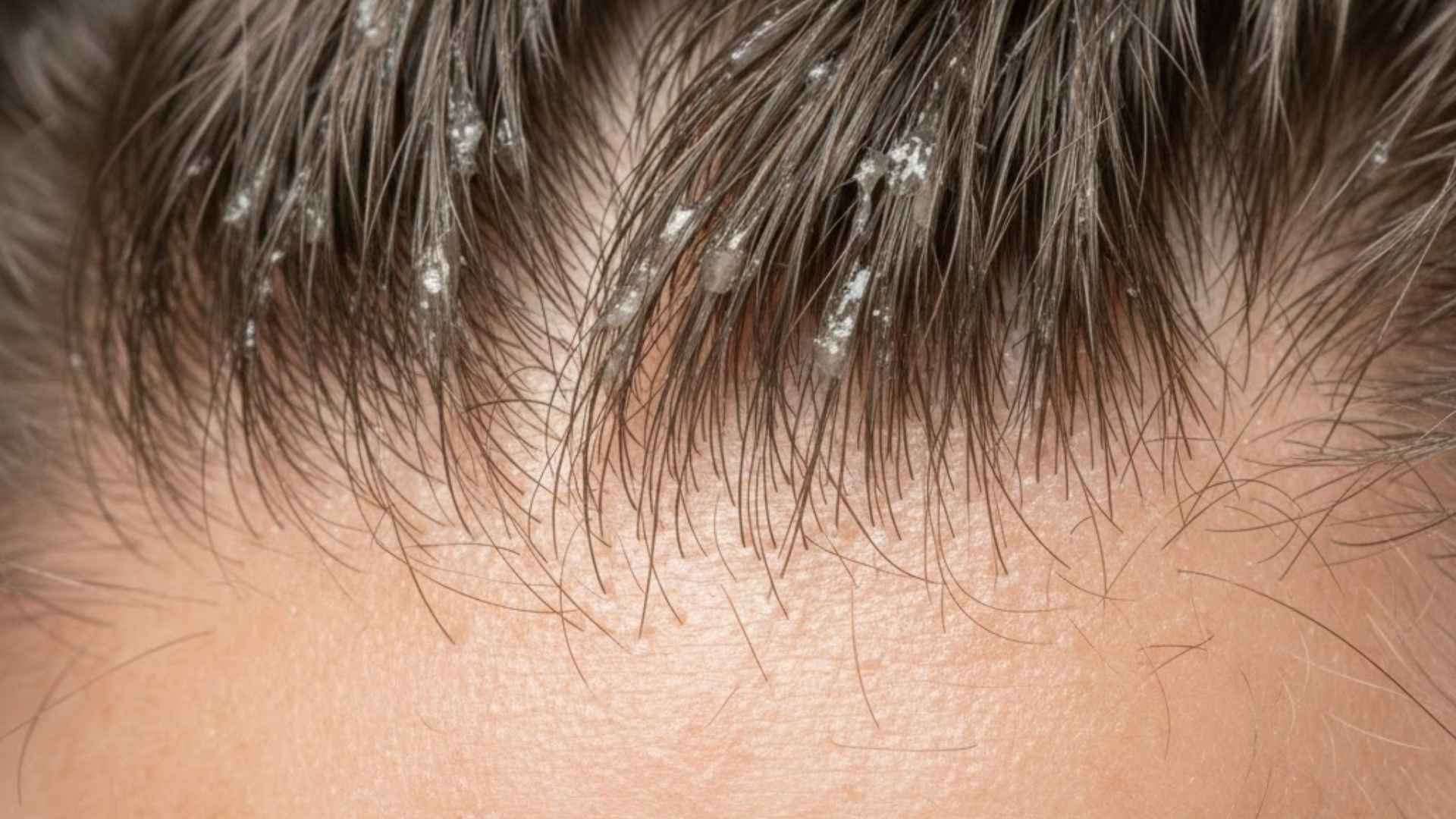
You’ve just finished your hair wash routine, expecting that familiar clean, fresh feeling. Instead, your hair feels coated, sticky, or strangely waxy to the touch, even as it dries. This article will help you understand why Hair Feels Sticky After Washing. We’ll explore the various factors that can contribute to this sensation. Our explanation will move from what you might notice to the underlying reasons why it happens.
This common and frustrating experience can make it seem like the washing process itself is causing the problem. So here is the solution to this problem that we face very frequently. Most of them are my experence towords the problem I face and how I overcome this problem.
Product buildup can exaggerate top-layer frizz — explained in Why Is the Top of My Frizzy Hair So Different from the Underside?
What People Typically Notice and Experience
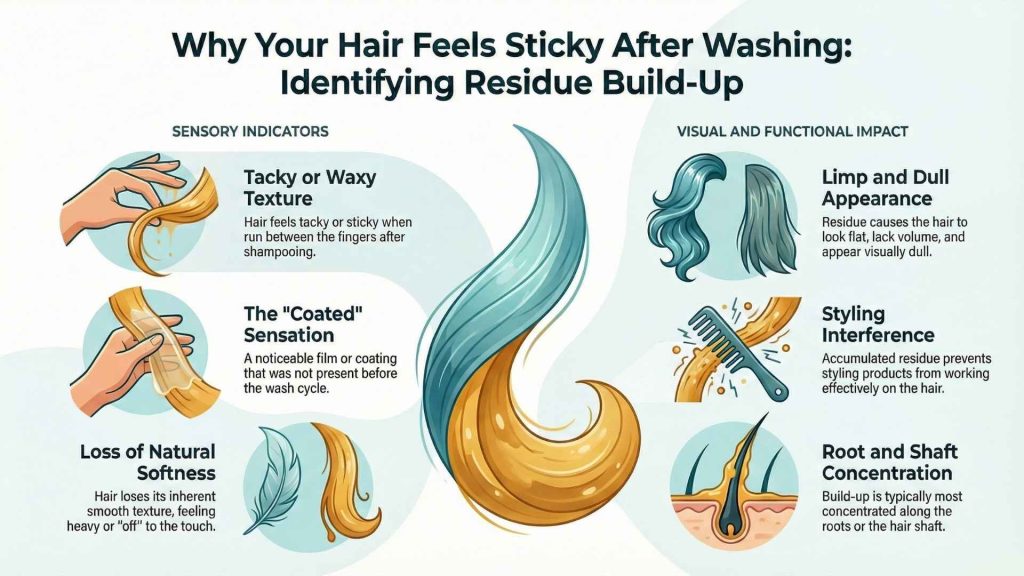
I always wondered why my Hair Feels Sticky Or Waxy After Washing. The feeling is often described as a coating or film that isn’t present before shampooing. People report that their hair loses its natural softness, feels tacky when run between fingers, and may look limp or dull. This residue is typically most noticeable along the hair shaft or at the roots. It can also interfere with styling, causing products to not work as expected or hair to lack volume. Understanding that this is usually a sign of residue accumulation, rather than your hair’s natural state, is the first step toward addressing it.
The Core Science: Why Clean Hair Can Feel Coated
To understand Why Hair Feel Sticky After Washing, it’s helpful to know what happens during an ideal wash. Shampoo contains surfactants—cleansing agents that bind to oil, dirt, and product residue, allowing them to be rinsed away with water. A feeling of stickiness or waxiness after washing suggests this process was incomplete. The residue left behind can come from several sources, and it often involves an interaction between what’s in your haircare products and what’s in your water.
A Common Interaction: Water, Minerals, and Product Ingredients
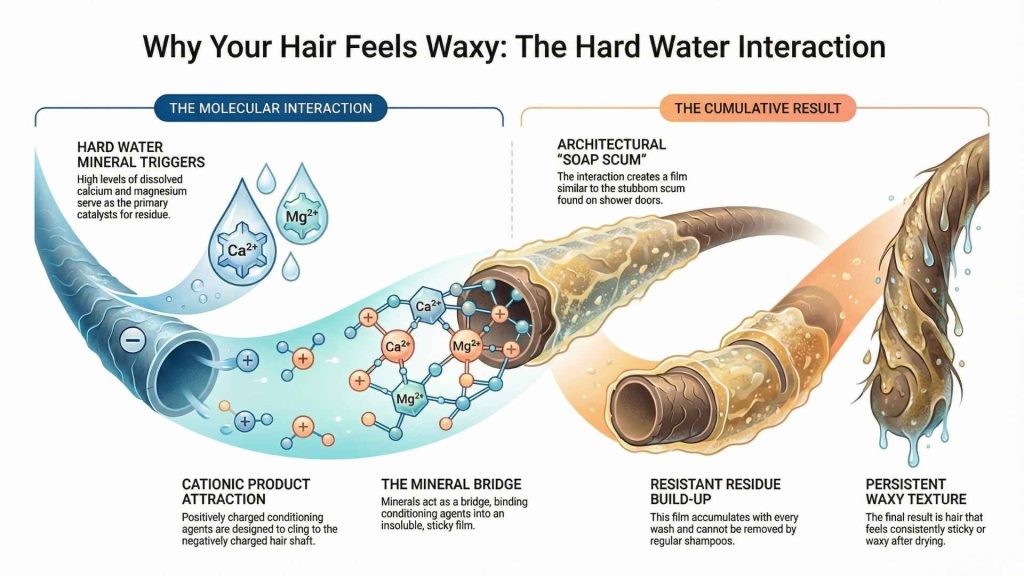
One of the most frequent contributors to post-wash stickiness is an interaction with hard water. Hard water contains high levels of dissolved minerals, primarily calcium and magnesium. Here is a Common Interaction of why hair feels sticky or Waxy After Washing
- The Process: Many conditioners and leave-in products contain positively charged ingredients (cationic surfactants or polymers) designed to cling to the negatively charged hair shaft to smooth it. In hard water, these minerals can act as a bridge, causing these conditioning agents to form an insoluble film—similar to the “soap scum” found on shower doors—instead of rinsing cleanly away.
- The Result: This film accumulates gradually with each wash, leading to that persistent waxy or sticky feeling that regular shampoos cannot remove.
Common Triggers and Contributing Factors
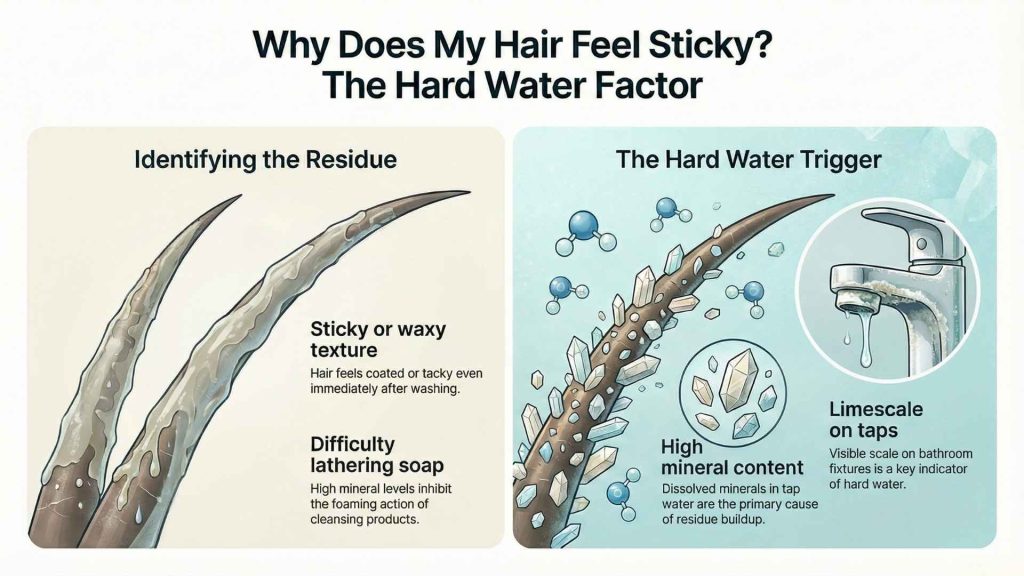
Several factors can create or worsen this residue buildup. Often, more than one factor is present.
Water Quality (Hard Water): As explained, the mineral content in your tap water is a primary factor. You may notice other signs, like scale on faucets or difficulty lathering soap.
Product Buildup: Using products with heavy oils, silicones (especially non-water-soluble types), butters, or lots of polymers can lead to gradual accumulation. This is more likely if you frequently use dry shampoo, styling creams, or hairspray without periodic thorough cleansing.
Cleansing Product Selection: A shampoo that is too gentle or not suited to your hair’s current needs may not provide enough cleansing power to remove daily accumulations of sebum, sweat, and environmental pollutants.
Rinsing Habits: Incomplete rinsing, especially of thick conditioners applied to the roots, can leave a direct film on the hair and scalp.
Scalp Condition: On the scalp, a sticky feeling may sometimes relate to the natural secretion of sebum. Factors like hormonal fluctuations or washing frequency that doesn’t match your scalp’s oil production rate can contribute to this sensation.
Why Standard Haircare Advice Can Feel Confusing
When Your Hair Feel Sticky After Washing, common advice like “wash more often” or “use a gentler shampoo” may not help and can sometimes worsen the problem. For instance, washing more frequently with a gentle shampoo in hard water may simply add more mineral-product film without effectively removing it.
Conversely, aggressively scrubbing the scalp may not address residue on the hair shafts. This disconnect between standard advice and personal experience highlights the importance of identifying the specific contributors in your routine.
It can also create imbalance between oily roots and dry ends — see
Greasy Roots But Dry Frizzy Ends: Your Full Guide.
Approaches Often Reported as Helpful
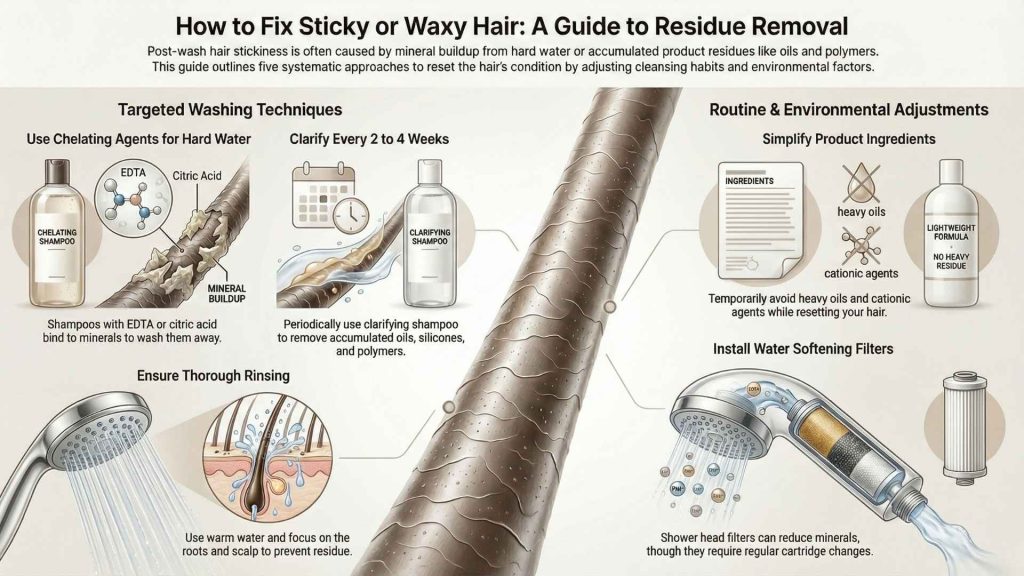
Many individuals find relief by systematically adjusting their care routine after identifying potential triggers. The goal is to remove existing residue and prevent its quick return.
1. Addressing Mineral Buildup: For those in hard water areas, using a shampoo or treatment designed to manage mineral buildup can be a pivotal step. These products often contain ingredients like EDTA (ethylenediaminetetraacetic acid) or citric acid, which can bind to minerals and help wash them away. This process is distinct from general clarifying.
2. Periodic Residue Removal: Using a clarifying shampoo periodically can help remove accumulated product oils, silicones, and polymers. It is generally suggested to use such a product once every 2 to 4 weeks, depending on your product use, but frequency should be adjusted based on your hair’s response.
3. Evaluating Product Ingredients: If hard water is a factor, reviewing your conditioner and styling products may be beneficial. Some find that temporarily simplifying their routine or choosing products with fewer heavy oils and cationic agents helps while they reset their hair.
4. Ensuring Proper Rinsing: Taking extra time to rinse hair thoroughly with warm water, focusing on the roots and scalp where conditioner is often applied, can help prevent simple residue from routine products.
5. Water Softening Solutions: Some people explore mechanical solutions, such as installing a shower head water filter designed to reduce minerals. The effectiveness of these filters varies widely, and they typically require regular cartridge changes.
When to Consider Consulting a Professional
Hair feels sticky after washing. This persists despite adjusting your home care routine. If accompanied by significant scalp itching, flaking, redness, or hair loss, seek professional guidance. A board-certified dermatologist or trusted trichologist can help. They can assess whether an underlying scalp condition is contributing. They can provide personalized advice that considers your complete health picture.
Frequently Asked Questions
Yes. The minerals in hard water (calcium and magnesium) can react with ingredients in many hair products to form a film that sticks to the hair shaft. This residue can feel waxy, sticky, or gritty and is difficult to remove with regular shampoo.
Not exactly. A clarifying shampoo is formulated to remove product buildup, oils, and pollutants. A shampoo for hard water (often called a chelating shampoo) contains specific agents to bind and remove mineral deposits. For stubborn sticky feelings linked to hard water, a chelating formula is often necessary.
It can contribute, especially if it contains heavy conditioning agents and is used in combination with hard water or without thorough rinsing. However, conditioner is rarely the sole cause unless used incorrectly.
There is no universal rule. Washing frequency should be based on your scalp’s oil production, activity level, and product use. For waxy buildup, the focus should first be on the effectiveness of the wash (using an appropriate cleanser and thorough rinsing) rather than just the frequency.
An acidic rinse, like diluted apple cider vinegar, can help smooth the hair cuticle. Due to its low pH, it can also dissolve some types of residue. It may provide temporary improvement in feel and shine. However, it does not remove mineral buildup. It is not a substitute for effective cleansing.
Yes. In areas with very hard water, the interaction between minerals and the basic surfactants in your shampoo can itself create a film. Product use accelerates the issue, but it is not always the origin.
Conclusion
After washing, a sticky or waxy feeling on hair typically signals residue accumulation. This does not mean your hair is inherently unclean. Understand the potential roles of water quality, product interactions, and cleansing habits. This understanding helps you move from frustration to informed observation.
Lasting change often comes from patient, systematic adjustment of your routine rather than a single quick solution.
The most reliable path forward is built on identifying factors most relevant to your situation.
It also involves making thoughtful, gradual changes to your hair care approach.
Disclaimer: This article is for educational purposes only and does not replace professional medical advice. Always consult a healthcare professional or dermatologist for concerns about your scalp or hair health.