
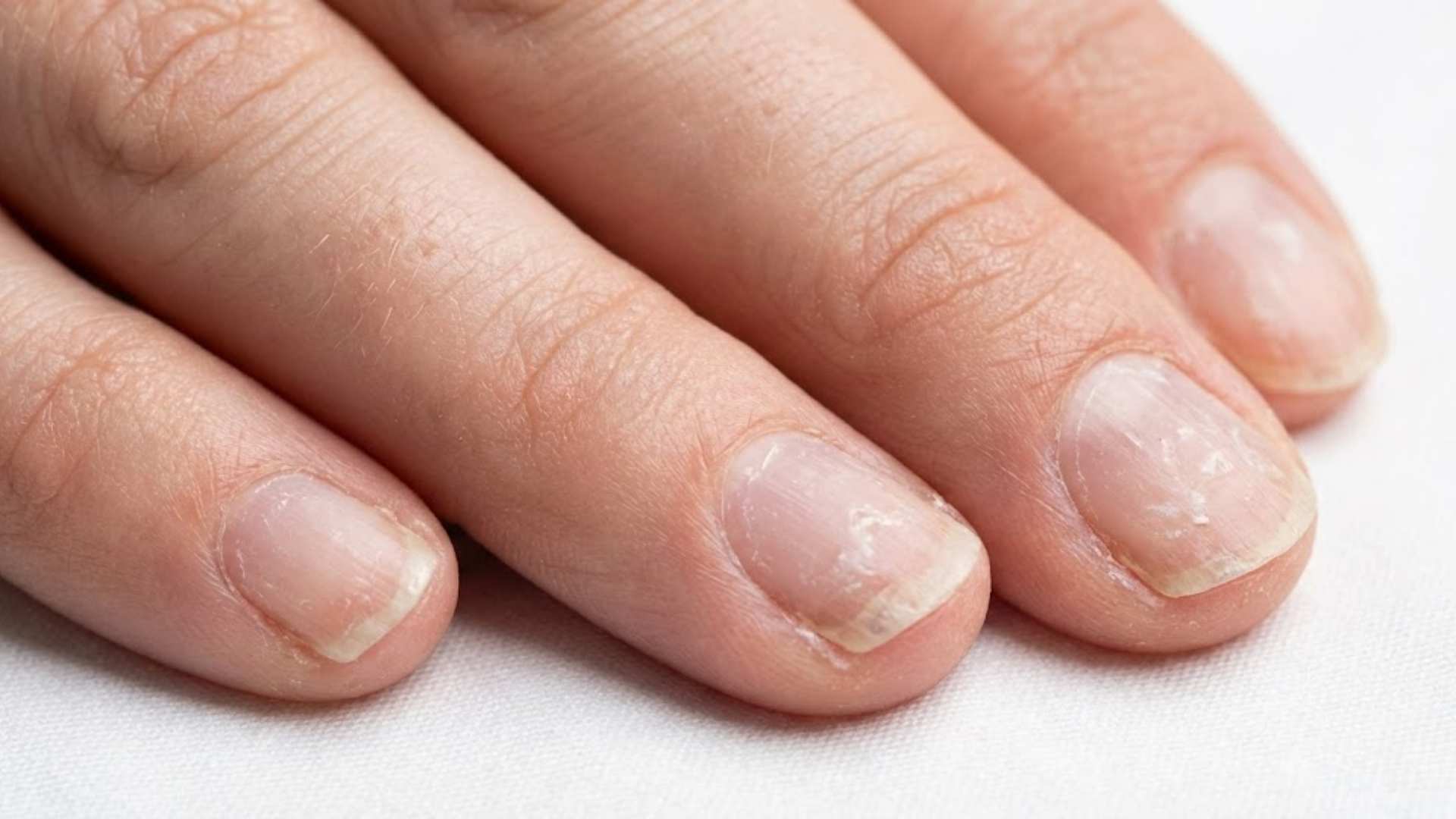
That fragile feeling is unmistakable. When your nails feel paper-thin after gel removal, you know something is off. This specific sensation is incredibly common. Many people describe their nails as feeling like thin, bendable paper after removing gel polish. This delicate state can cause worry. It tells you your nail plate has experienced stress.
The thinness is not permanent. Understanding why this happens is the first step. Knowledge leads to better, gentler care choices. When nails feel paper-thin, they need understanding, not harsh treatments.
Let’s explore what happens biologically and why this occurs.
What Paper Thin Nails Really Mean
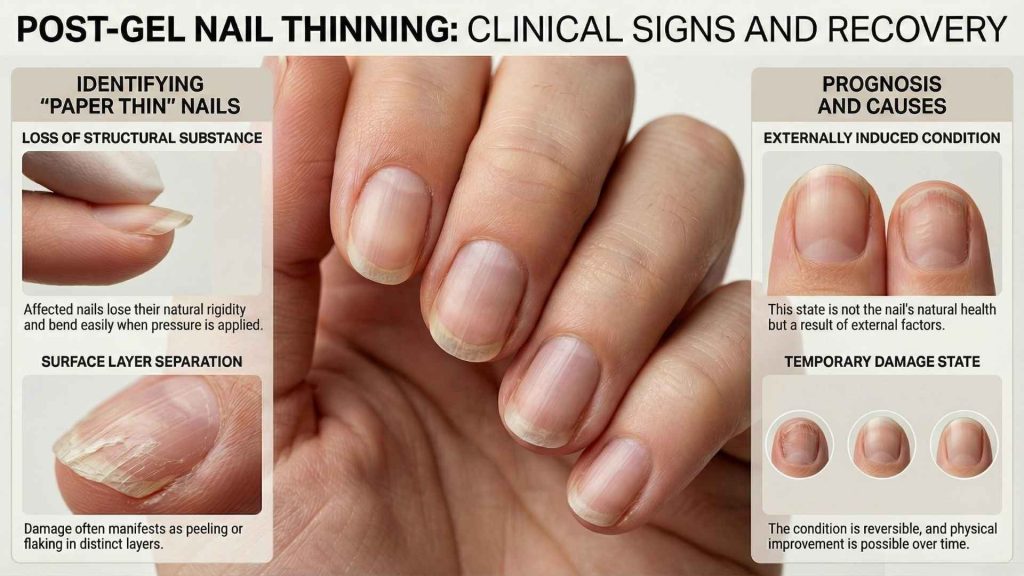
To understand this phrase, one must first recognize that a nail is not a simple organic structure. It is a complex physiological part of the body. Even though it appears thin, it can build resistance against various external forces.
Structure: Unlike paper, a nail’s thinness is not its only characteristic. It is a strong, physiological covering. Its strength comes from its structural and chemical composition.
Durability: While paper is easily torn, nails have significant hardness. Even with minimal pressure, paper can wrinkle or tear, but nails remain firm. They only become brittle or break under specific conditions.
Composition: The “nail plate” is primarily made of keratin. This protein starts at the nail root and remains attached to the skin, keeping the nail hard and protected. When this keratin is healthy, the nail remains strong and shiny.
How Gel Manicures Affect Your Nail Plate
In modern life, gel manicures are very popular for enhancing nail beauty. This makes the nails look long and shiny. However, many people do not know that it can actually damage the nail plate or the top layer of the nail.
The nail plate is a hard, smooth, and translucent part made of a protein called keratin, which protects the sensitive tissue under the nail.
Applying gel covers the nail. If it is filed or scraped off harshly, the natural protective layer of the nail is destroyed, causing the nails to become thin and weak.
Gel polish contains chemicals that weaken the structure of the nail, making them dry and brittle.
Using UV/LED lights to dry the gel can also dry out the skin around the nails.
Using chemicals like acetone to remove gel polish further thins and weakens the nails.
Common Causes of Thin Nails Post-Removal
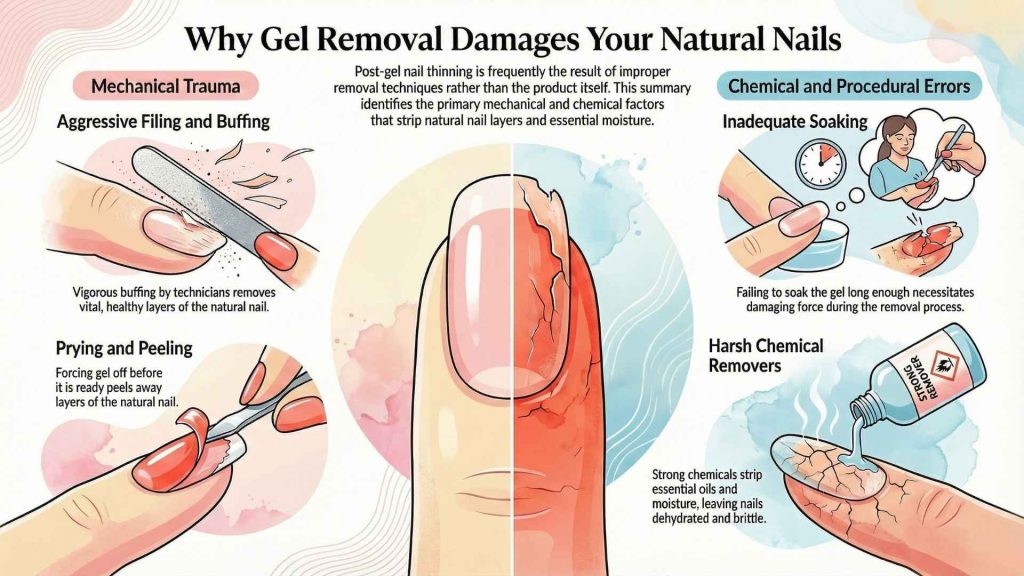
1. Improper or Aggressive Removal
Forced Peeling/Picking: Pulling or picking off gel or acrylic nails is the leading cause of damage, as it often tears away the top layer of the natural nail bed.
Excessive Scraping: Using metal tools to forcefully scrape off softened gel can damage the nail surface.
Inadequate Soaking Time: Not allowing enough time for acetone to fully break down the product, which results in having to scrape too hard.
2. Over-Filing and Buffing
E-File (Dremel) Damage: Using an electric drill (Dremel) on the natural nail during the prep or removal process can easily thin the nail plate significantly.
Excessive Pre-Prep: Filing the natural nail too deeply to help the product adhere better.
3. Chemical Dehydration
Acetone Exposure: While necessary for removal, pure acetone severely dehydrates the nails and surrounding skin, stripping away essential natural oils and leading to brittleness.
Low-Quality Products: Poor quality gels or acrylics can sometimes cause more dehydration or be harder to remove.
4. Mechanical Trauma and Habits
Aggressive Buffing: Excessive buffing to remove remaining product leaves the nails thin and sensitive.
Continuous Wear: Not giving nails a break between enhancements, which prevents them from recovering their strength.
Why Quick Fixes Often Disappoint
Common advice doesn’t always help when your nails feel paper thin after gel removal—in fact, some quick fixes can delay proper recovery. For instance, using nail hardeners right away may seem helpful, but they create a stiff outer layer on nails that are still weak underneath. This mismatch can cause the nail to crack or break more painfully.
Another approach people take is simply waiting for the nails to grow out. However, damaged nails need protection during this period. Without proper care, they can easily catch on fabrics or objects, leading to further tearing and damage.
Cutting nails extremely short is also not ideal. While it may seem like a way to prevent breakage, it removes the natural protective edge of the nail. This leaves the sensitive nail bed exposed, making everyday activities more uncomfortable.
Understanding the reason behind “paper thin” nails helps you avoid these common mistakes. With the right care and gentle handling, your nails can recover more smoothly and regain their strength over time.
Supportive Care for Your Nails
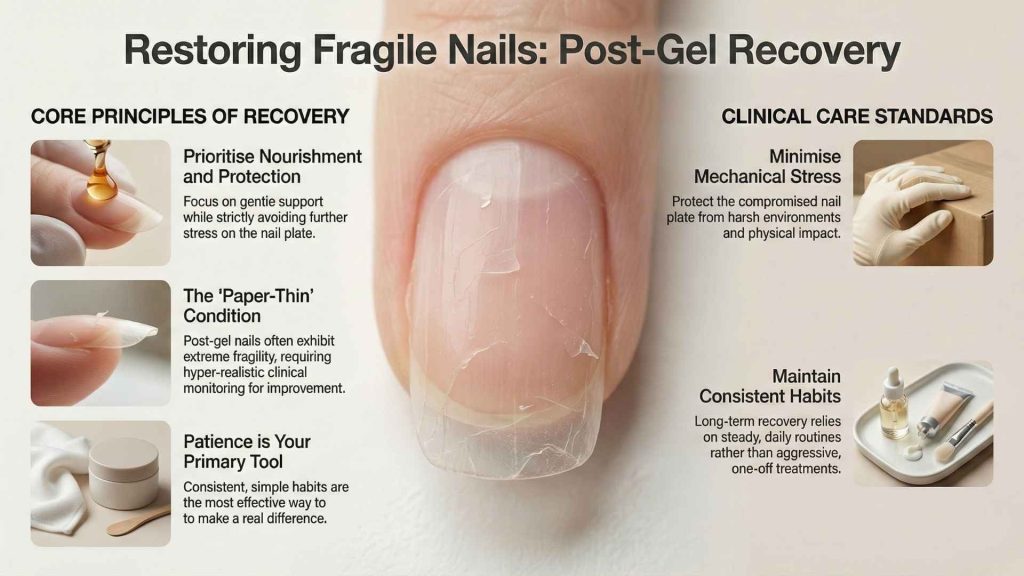
When your nails feel weak and thin, the goal should be gentle care and protection rather than aggressive treatments. Focus on restoring strength through nourishment and minimizing further damage.
Simple, consistent habits can make a noticeable difference over time, and patience plays a key role in the healing process.
A. Keep Your Nails Well Hydrated
Moisture is essential for healthy nails. When nails become dry, they are more likely to break and split. Regularly apply natural oils such as jojoba or almond oil to your nails and cuticles, gently massaging them in. Follow this with a good-quality hand cream to lock in moisture. It’s also important to protect your hands during activities like washing or cleaning—wearing gloves can help prevent excessive exposure to water and chemicals.
B. Be Gentle in Daily Activities
Handle your nails with care throughout the day. Avoid using them as tools—for example, use proper openers instead of your nails to lift or pry objects. When typing or doing routine tasks, try to reduce pressure on your nails.
For maintenance, use a fine-grit nail file and file in a single direction to prevent splitting. Keeping your nails at a moderate length with a simple shape, such as short and square, can help reduce breakage.
C. Choose Products Thoughtfully
Pay attention to the products you use on your nails. Select formulas that contain nourishing ingredients and avoid those with strong, drying chemicals. When removing polish, opt for a gentle, acetone-free remover.
If you apply nail polish, use a protective base coat to reduce damage. It’s also beneficial to give your nails occasional breaks from polish and treatments, allowing them time to recover naturally.
The Growth Cycle and Realistic Timing
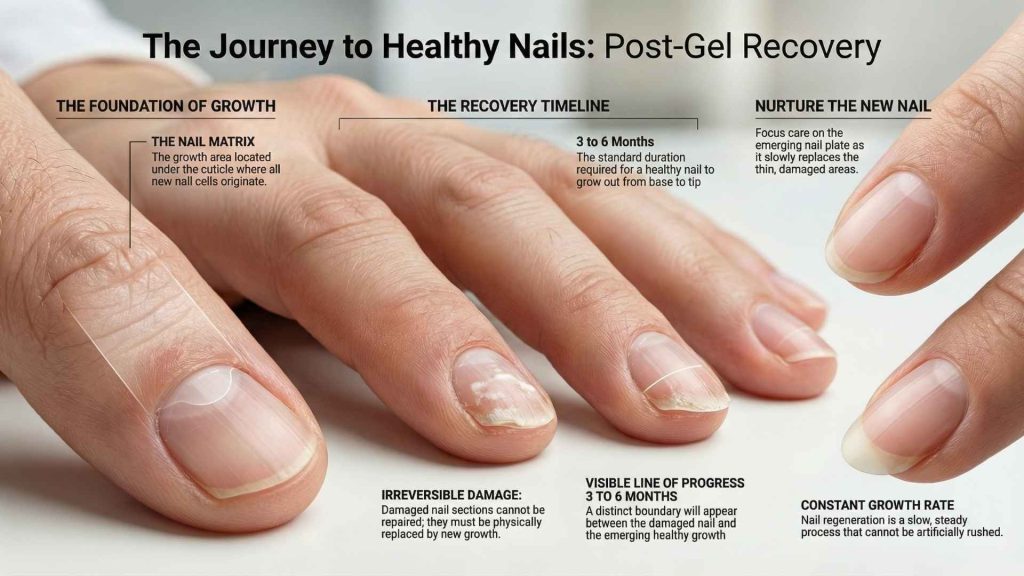
Nails grow gradually from the nail matrix, which lies beneath the cuticle. When your nails are damaged or feel thin, the affected portion cannot be repaired instantly—it needs to grow out naturally over time.
This process requires patience and usually takes around three to six months for complete renewal. As new, healthy nail starts to grow, you may notice a clear line separating the damaged part from the stronger new growth.
During this period, it’s important to take good care of your nails. Gentle handling, proper hydration, and protection will help ensure that the new nail grows in healthy and strong.
When to Seek Professional Advice
Home care can help, but it has limits—especially when your nails feel very thin after gel removal. Pay attention to warning signs from your body.
Consult a dermatologist if you notice:
- Persistent pain.
- Redness or swelling around the nail.
- Pus or any discharge.
- Nail separating from the nail bed (onycholysis).
- Unusual discoloration or dark spots under the nail.
These symptoms may indicate infection or other underlying issues, not just surface damage.
A healthcare professional can properly assess your condition, rule out medical problems, and guide you with the right treatment. Remember, healthy nails should not be painful—so if discomfort continues, it’s best to seek expert advice early.
Frequently Asked Questions
How long will my nails stay paper thin after gel removal?
The thin feeling lasts until the damaged part grows out. This typically takes several months. Consistent care supports healthier new growth.
Can I get another gel manicure soon?
It is generally not recommended. Your nail plate needs time to recover. Repeated gel applications can interrupt the healing cycle.
Are certain nails more prone to damage?
Nail thickness and health vary by individual. Some people naturally have thinner nail plates. These may show damage more readily after gel removal.
Do strengthening treatments work?
Some can help, but choose wisely. Look for protein-rich or hydrating treatments. Avoid harsh, formaldehyde-based hardeners on thin nails.
What is the safest removal method?
A gentle, patient soak-off is best. Lightly file the top coat only. Use acetone-soaked wraps for a full 15 minutes. Never force or pry the product off.
Moving Forward with Confidence
Feeling your nails are paper thin after gel removal is unsettling. Yet it is a manageable situation. Your nails possess a natural ability to regenerate. Support this process with informed, gentle care. Avoid aggressive treatments and quick fixes. Focus on consistent hydration and protection. Trust in the body’s capacity to heal. Your nails can return to their natural strength.
Disclaimer: This article is for educational purposes only. It does not replace professional medical advice. Please consult a healthcare provider for personal concerns.