
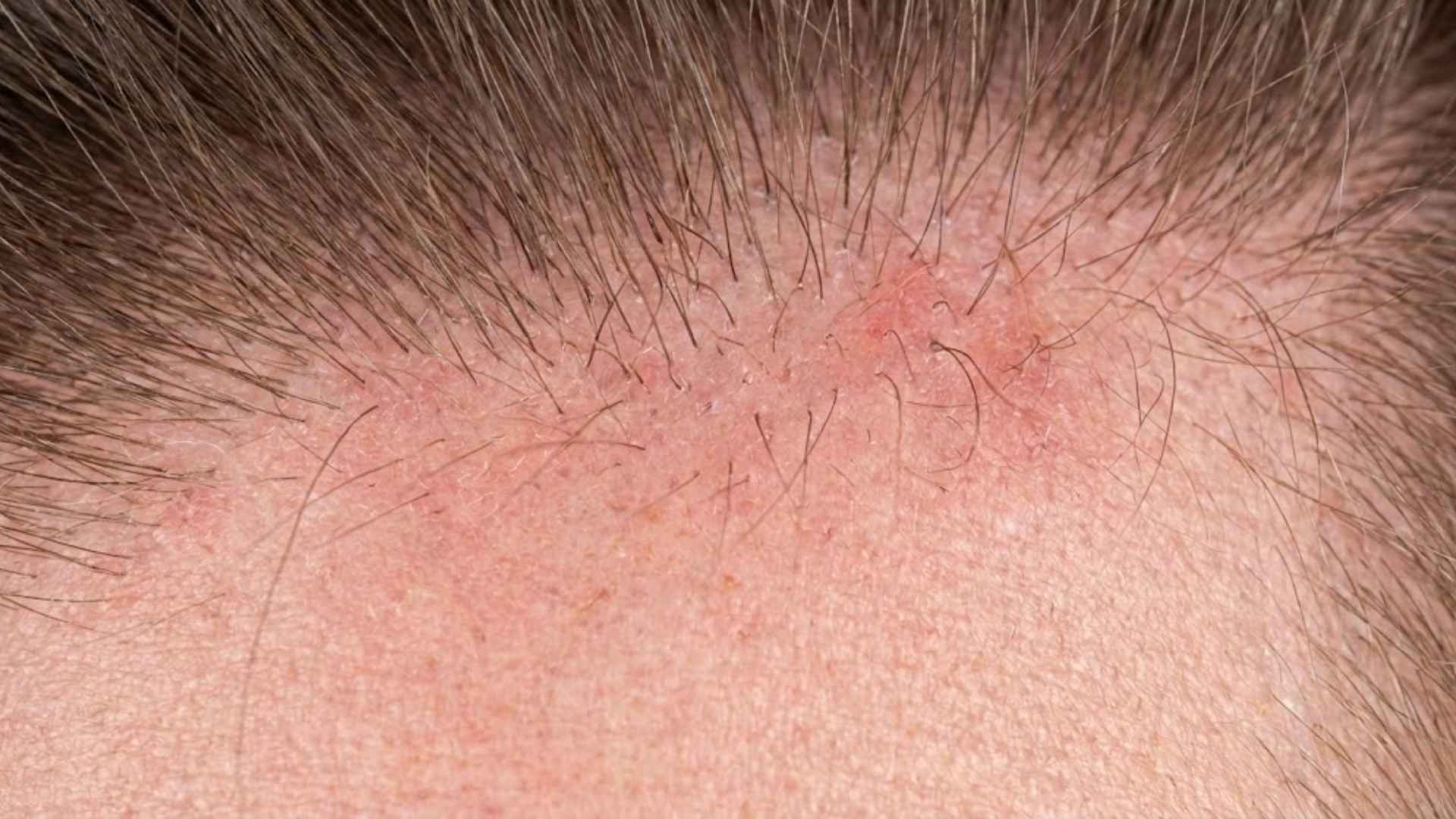
One common method for eliminating scalp itchiness involves washing your hair daily with shampoo; this typically resolves dandruff issues quite easily.
However, if your scalp continues to itch even after daily use of a clarifying shampoo—yet shows no visible signs of dandruff—something else is at play. When you scratch your scalp, a thick, waxy, white paste may emerge and accumulate under your fingernails.
Here, we will outline a 5-step method to help you alleviate scalp itchiness.
First off, advice such as “reduce stress” or “eat more green vegetables” is often given. However, this does not address the root cause of the problem. If you experience intense itching without any visible external signs, something deeper is likely occurring beneath the surface. You may be trapped in a cycle that is highly detrimental to your scalp health. This cycle involves the accumulation of mineral deposits, often accompanied by fungal overgrowth.
For instance, the scalp’s compensatory overproduction of natural oils can exacerbate the problem, making it even more severe.
What Causes an Itchy Scalp? (The Hidden Triggers)
If you have tried all the methods mentioned above yet your scalp itching persists, the reason may be that you are not addressing the issue correctly. You may have committed certain errors while attempting to find a remedy. We have identified and highlighted these “hidden triggers”—underlying causes that have been uncovered through clinical research and the shared experiences of individuals who have finally found relief.
The Hard Water Trap
Hard water contains dissolved minerals like calcium and magnesium. When these minerals mix with your scalp’s natural oils, they form a residue often called soap scum (calcium sebate).
This waxy layer can build up over time, making your scalp feel dry, itchy, and difficult to clean—even if you shampoo regularly. Ordinary shampoos often struggle to remove this buildup completely.
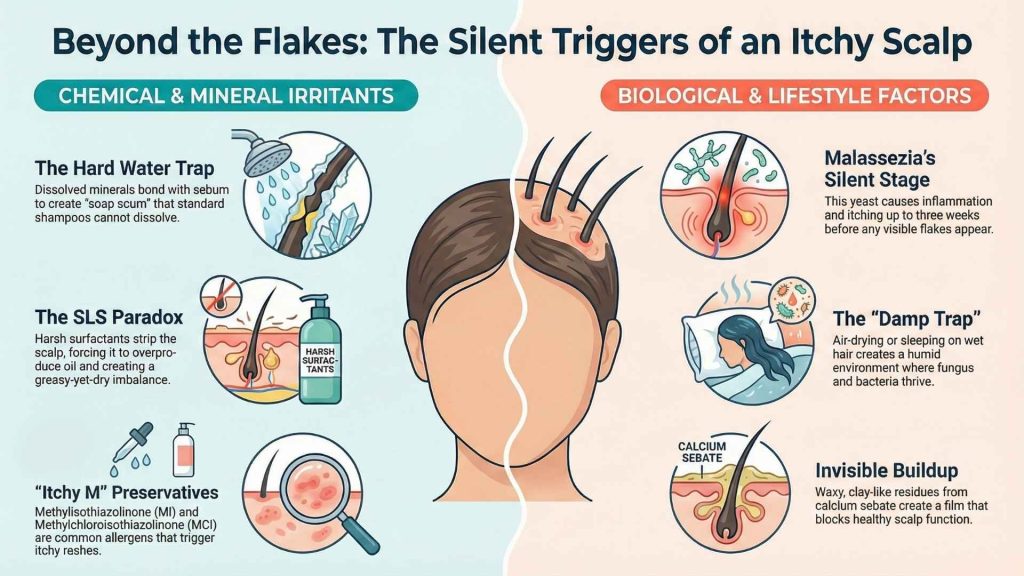
Malassezia – The Silent Trigger
Malassezia is a naturally occurring yeast that lives on the scalp. Under certain conditions, it can grow excessively and lead to irritation.
What makes it tricky is timing—itching often starts weeks before visible dandruff appears. So even if your scalp looks normal, the discomfort could already be developing beneath the surface.
The SLS Paradox
Harsh cleansing agents like Sodium Lauryl Sulfate (SLS) can strip away your scalp’s natural oils too aggressively.
In response, your skin may overproduce oil to compensate—creating a frustrating cycle where your scalp becomes both oily and dry at the same time.
The Damp Trap
Leaving your hair damp—whether by air-drying or sleeping with wet hair—creates a moist environment on your scalp.
This can encourage the growth of fungi and bacteria, leading to faster buildup of dirt and increased chances of itching and dandruff.
The “Itchy M” Preservatives
Preservatives like Methylisothiazolinone (MI) and Methylchloroisothiazolinone (MCI) are known to cause sensitivity in some people.
Even without dandruff, these ingredients can trigger:
- Scalp irritation
- Redness or rashes
- Small bumps or itching
If you’re also dealing with uneven hair texture, you might find this helpful: Why Is the Top of My Frizzy Hair So Different from the underside?
Step-by-Step Treatment Method for Itchy Scalp (Without Dandruff)
If your scalp feels itchy but shows no visible flakes, the issue is often caused by buildup, imbalance, or early-stage irritation. Follow this structured routine to cleanse, reset, and restore your scalp health.
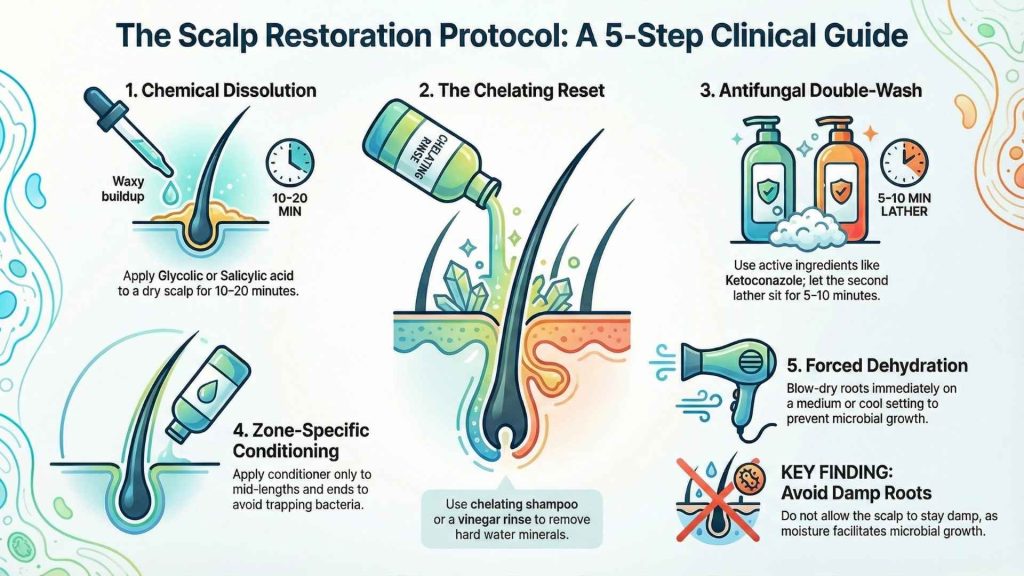
Step 1: Gentle Chemical Exfoliation
Apply a chemical exfoliant—such as a solution containing 7% Glycolic Acid or Salicylic Acid—directly to your dry scalp. Leave it on for 10–20 minutes to break down the cement-like bonds holding together dead skin cells and sebum (natural skin oils).
Step 2: Remove Mineral Buildup (Chelating Wash)
Wash your hair with a chelating shampoo to effectively remove mineral deposits that may have accumulated from the water. Alternatively, you may rinse your hair with an acidic mixture prepared by mixing 2 tablespoons of vinegar into 1 liter of water.
Step 3: Anti-Fungal Double Cleanse
Thoroughly cleanse your scalp using a shampoo containing Ketoconazole (e.g., Nizoral), Selenium Sulfide (e.g., Selsun Blue), or Piroctone Olamine. Apply the shampoo to the roots of your hair and massage your scalp vigorously; this massage step is crucial for effective treatment. To ensure that the shampoo’s active ingredients function effectively, shampoo your hair a second time. Leave the product on your scalp for 10 to 15 minutes, then rinse thoroughly with water.
The Issue:
All your efforts can be quickly undone by a dirty pillowcase. Pillowcases absorb sweat, sebum, dead skin cells, and product residue. They may also retain fabric softeners, fragrances, and oils that can further irritate a sensitive scalp
Over time, they become an ideal breeding ground for bacteria and fungi. During sleep, these impurities can transfer back onto your scalp, reintroducing dirt, grime, and even mineral residues.
Where to Insert:
This section can be included as a “Maintenance” note at the end of your routine or added as a sixth step under “Environmental Hygiene.”
For best results:
- Use clean, 100% cotton pillowcases, as they are more breathable and scalp-friendly than satin or synthetic blends
- Wash pillowcases weekly in hot water
- Use a hypoallergenic, fragrance-free detergent
This helps prevent the buildup of oil, sweat, dust, and potential irritants that can trigger scalp discomfort.
Before You Start: A Few Things to Know
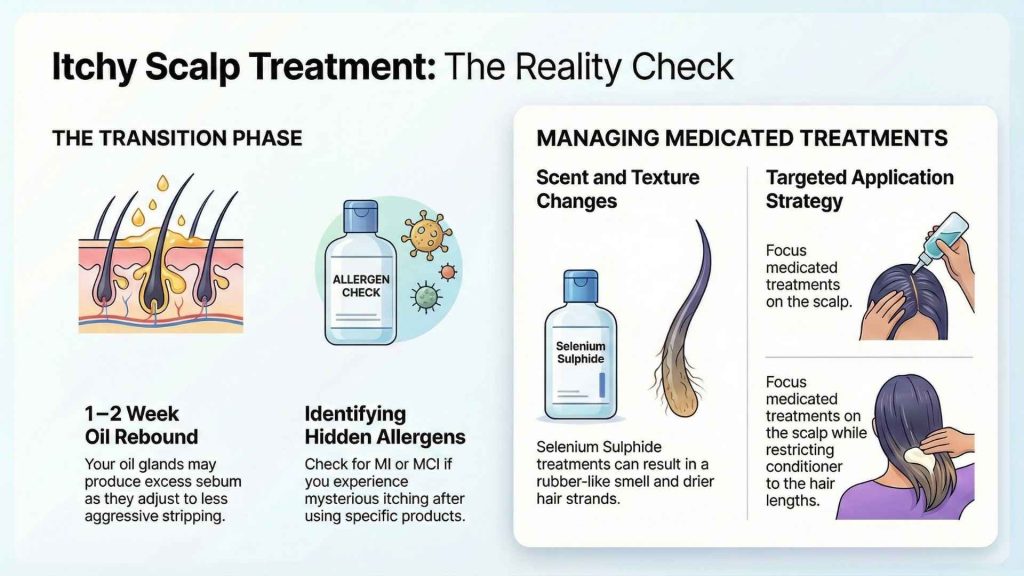
The Rebound Oil: Don’t be surprised if your scalp feels a bit oilier during the first 1–2 weeks. This is completely normal. Your oil glands are simply adjusting after being used to harsh cleansing, and things usually balance out with consistency.
Allergy Alerts: You don’t need to avoid ingredients unless your scalp reacts to them. But if you notice persistent or unusual itching after using a specific product, it’s worth checking for common irritants like MI or MCI.
Texture Changes: Medicated shampoos—especially those with Selenium Sulfide—can have a strong scent (often described as sulfur-like) and may leave your hair feeling dry. To minimize this, focus the shampoo on your scalp only, and apply conditioner just to the lengths of your hair.
Frequently Asked Questions (FAQ)
How to calm an itchy scalp immediately?
For quick relief, rinse your scalp with cool or lukewarm water and apply a soothing ingredient like aloe vera gel or a few drops of coconut oil. Avoid scratching, as it can worsen irritation. If available, use a mild, fragrance-free shampoo.
What vitamin is lacking if your scalp itches?
An itchy scalp can sometimes be linked to deficiencies in Vitamin B12, Vitamin D, or Biotin. These nutrients play a role in skin and nerve health, so low levels may contribute to dryness or sensitivity.
Can high cortisol cause dry scalp?
Yes. Elevated stress levels can increase cortisol, which may disrupt your skin’s natural barrier and oil balance—leading to dryness, irritation, or even increased itching.
What hormone causes itchy scalp?
Hormonal changes—especially involving androgens (like testosterone) and stress hormones like cortisol—can affect oil production and scalp sensitivity, sometimes leading to itching.
How often should I wash my hair with a dry scalp?
For a dry or sensitive scalp, washing 2–3 times per week is usually ideal. Use a gentle, sulfate-free shampoo and avoid overly hot water to prevent further dryness.
Final Thoughts: Restoring a Healthy, Itch-Free Scalp
An itchy scalp with a waxy, paste-like buildup is rarely about poor hygiene. More often, it’s the result of a complex interaction between your water quality, scalp microbiome, and the products you use.
Once you understand the difference between visible dandruff and this “silent” buildup, it becomes easier to move beyond generic solutions that don’t address the root cause.
This 5-step approach is designed to break that cycle. It works by:
- Dissolving buildup at the surface
- Removing mineral deposits
- Targeting microbial imbalance
Along with this, proper conditioning and keeping the scalp environment balanced play an important role in recovery.
Restoring your scalp’s natural barrier takes consistency and the right method—not guesswork. When you follow these steps carefully, you’re not just managing symptoms—you’re creating a cleaner, healthier, and more comfortable foundation for your scalp and hair.
Disclaimer: The information provided in this article is for educational and informational purposes only and is not intended as medical advice.