
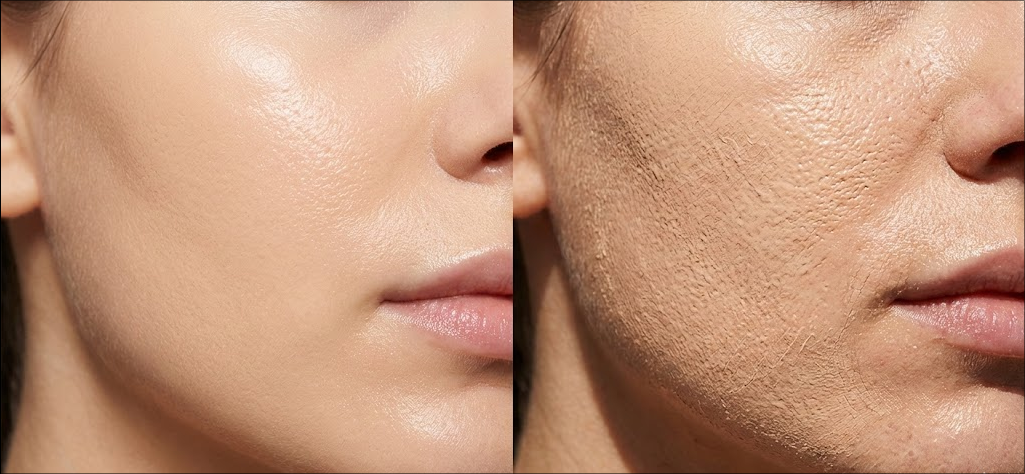
If you meticulously put on your makeup in the morning but end up with a face full of cakey and flaky mess by lunchtime, don’t think you’re some kind of anomaly. This infuriating problem is particularly common among people who swear their skin is just really oily. Your first instinct is probably to just layer on a whole lot more powder or switch to some ultra-heavy mattifying products. But actually, that usually just makes things far worse.
The truth is, the root cause of all this trouble isn’t just your skin being oily – it’s more likely to be dehydration. Yep, your skin just isn’t getting enough water, not to be confused with oil. This creates a real brain-twister: you’ve got an oily surface, but some bits look flaky and dry, and your makeup just clings to those spots, making them look even worse.
Understanding this bit of an imbalance is the first step to getting yourself a smoother, longer-lasting base under your makeup. A damaged moisture barrier can make foundation cling to dry patches — understand it better in Why Your Skin Feels Tight After Washing: Understanding Barrier Disruption.
What You’re Actually Seeing: Beyond “cakey and flaky makeup”
When people talk about “cakey makeup”, they don’t just mean a really thick layer. They mean a finish that’s essentially like plaster your foundation and concealer are just sitting on top of your skin rather than actually blending in with it. You’ll notice:
- Every little imperfection is suddenly magnified: Suddenly, every single fine line, every pore and every dry spot is on full display and they’re all looking a lot worse than they used to because of the textures of your makeup. The skin’s surface is compromised, the product cannot form a uniform layer.
- Flaking everywhere: Those dry, tiny patches on your skin get really prominent and your makeup starts to gather around them.
- Uneven separation – the worst kind: Your makeup just starts to break apart and look all patchy and “splotchy”, and it seems to happen most in the areas around your nose, chin and forehead.
The Core Issue: Oily Yet Dehydrated Skin
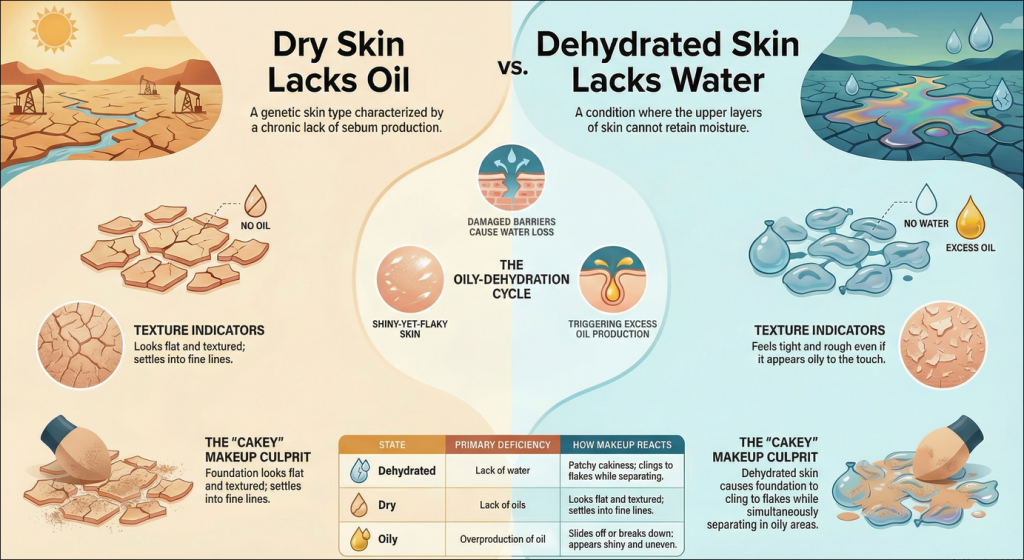
The key to stopping that cakey, flaky makeup in its tracks is knowing where you stand with your skin’s hydration levels. There’s a crucial difference that a lot of people get wrong:
- Dry Skin: basically a skin type that’s just struggling to produce any decent oil.
- Dehydrated skin: on the other hand , this is a skin condition where it’s just having trouble retaining water – it can happen to any skin type, even oily.
Getting oily, dehydrated skin is a bit of a common cycle . When the moisture barrier gets damaged, water just leaks right out of the skin and leaves the surface feeling dry and flaky. Then your body tries to compensate by spitting out even more oil, and that’s when things get really frustrating – a shiny, cakey mess that just won’t play ball with makeup.
The table below gives you a quick rundown of how dehydrated skin stacks up against the other usual suspects:
| Characteristic | Dehydrated Skin (A Condition) | Dry Skin (A Type) | Simply Oily Skin (A Type) |
|---|---|---|---|
| Primary Deficiency | Lack of water in upper layers. | Lack of natural oils (lipids). | Overproduction of oil (sebum). |
| Texture & Feel | Can feel tight, rough, or show fine flaking, yet may also be oily to the touch. | Often feels tight, rough, or scaly all over. | Consistently smooth, slick, or greasy. |
| How Makeup Reacts | Foundation clings to dry flakes but separates in oily areas, leading to patchy cakiness. | Makeup settles into lines and emphasizes all-over dryness, looking flat and textured. | Makeup may “slide off” or break down quickly due to oil, appearing shiny and uneven. |
| Underlying Cause | Often related to barrier damage from harsh products, environment, or routine. | Largely genetic; sebaceous glands produce less oil. | Largely genetic; sebaceous glands are overactive. |
Why Common Solutions Often Backfire
If your skin is dehydrated and oily, standard makeup advice is probably not going to cut it , and here’s why following those tips might just be backfiring on you:
- Powder overload: I mean, yeah, using loads of mattifying powder might soak up excess oil but it also pulls moisture out of your skin – which just ends up leaving you with a dry, flaking mess on top of a cakey texture.
- The no-moisturising myth: There’s this common misconception that oily skin just doesn’t need moisturising – but actually that’s just a recipe for disaster. Without a lightweight hydrator, your skin is already running on empty. So when you apply foundation, it just clings to all the dry bits instead of looking smooth and even.
- Cleansing products that are just too harsh: Wiping all the oils out of your skin with a really drying cleanser is basically just causing more damage. On the surface, your skin might feel squeaky clean, but underneath, it’s just triggering your oil glands to go into overdrive – which is the last thing you want.
- Mixing up product types: Putting a water-based primer under a silicone-based foundation is a classic mistake, it just causes a load of pilling and separation, rather than actually blending properly. And as a result, your foundation just doesn’t last long before it breaks down in an uneven, patchy mess on your skin.
- Exfoliating or not: Not getting rid of dead skin cells properly just means your foundation has something to grab onto, highlighting every bump and imperfection. But then again, scrubbing too hard with those physical exfoliating things can just strip your skin barrier even further.
Building a Routine for Makeup That Stays Smooth, Not Cakey and Flaky
The whole point of doing this is to get your skin in a decent state of hydration, balance and protection. If your skin is dehydrated, then what’s underneath your makeup just looks like cakey, flaky mess – and you’ve got no chance of getting a smooth application.
If your skin stings when applying products, you may also relate to Face Burns While Applying Moisturizer or Lotion: What’s the Fix.
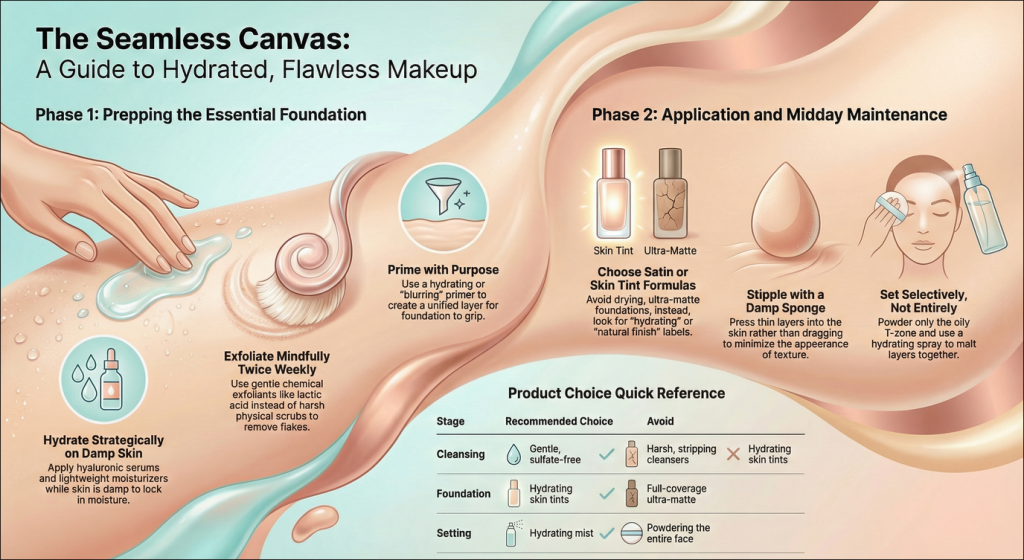
1. Skincare Prep: The Essential Foundation
How your makeup performs really depends on how your skin is doing underneath.
- Clean Your Skin Properly: Don’t go in for those harsh, sulfate-based cleansers, they’ll just strip the skin. Instead use a gentle cleanser that takes care of the impurities without ripping the skin apart.
- Hydrate Your Skin While It’s Most Vulnerable: Whilst the skin is still damp after a good cleanse, apply a hydrating serum with ingredients like hyaluronic acid and glycerin in it. These humectants help draw water into the skin and then use a lightweight moisturiser to seal it all in.
- Exfoliate Carefully: Chemical exfoliants (like lactic acid and PHA) are best – they dissolve the dead skin cells without any physical rubbing. Don’t do this on the same day you intend to wear a full face of makeup.
- Use a Primer to Give Your Makeup a Chance: Pick a primer that addresses hydration and texture that create a blurring effect can really smooth the skin’s surface and make your foundation go on smoothly.
2. Makeup Application and Selection
- Choose Your Formula Wisely: Steer clear from all-day ultra-matte, full coverage foundations that are basically just going to suck the moisture out of your skin. Go for stuff that claims to be hydrating, gives you a satin finish, or just a natural look. These type of formulas are gentler on skin that’s a bit dry or uneven.
- Apply in Thin, Layered Patches: Start off with an teeny tiny amount, just a little dot the size of a pea, and then work your way out from the middle of your face. When using a damp makeup sponge, try to press the product into your skin rather than kinda dragging it around (which is especially bad if you have flakes – it’ll just end up making them look worse). Use a gentle pressing motion to keep your skin looking smooth.
- Set Makeup Selectively: Instead of powdering your entire face, use a finely milled translucent powder only on your oiliest areas (typically the T-zone). A hydrating setting spray is crucial; it melts all layers together, reduces the powdery look, and adds moisture back.
Also Read : Why Does Acne Get Worse Before Your Period?
3. Midday Recovery, Not Repair
When makeup starts to look patchy:
- Blot First: Gently press a blotting paper on oily areas to remove excess sebum without removing makeup.
- Re-Hydrate: Lightly mist your face with a hydrating facial spray. This can help re-melt product together and soothe dryness.
- Press, Don’t Rub: If needed, gently press a barely-damp sponge over any areas where product has gathered or flaked.
When to Consider Professional Skincare Guidance
While adjusting your routine can dramatically improve your skin’s texture and makeup application, it’s important to recognize when underlying issues may require professional insight. If you experience persistent redness, inflammation, severe flaking that doesn’t improve with hydration, or cystic acne, these could be signs of conditions like eczema, psoriasis, rosacea, or hormonal imbalances. A board-certified dermatologist can provide a proper assessment, rule out medical conditions, and recommend targeted treatments or a skincare regimen tailored to your skin’s unique biology, which no general article can replace.
FAQ’S
Adding more powder on top of already dry skin just makes the whole thing look like I’ve splattered chalk all over my face . Its also sucking up what little moisture is left in my skin, which just makes dehydration even worse. If my skin is super dehydrated you’re often better off spraying it with a super light hydrating mist instead of slapping on even more powder
Actually it can , big time. Dehydration isn’t the same as just not having enough oil , you can be producing loads of oil and still have a face that’s as dry as the Sahara. Your sebaceous glands can just be overactive because your skin surface is crying out for water, and that’s a super common combo.
A good rule is to wait about 2-3 minutes for your moisturizer and primer to absorb. This allows them to set and create a smooth canvas. Applying foundation too soon can cause products to mix and pill on the skin, leading to uneven application.
Double cleansing—using an oil-based cleanser first to dissolve makeup and sunscreen, followed by a water-based cleanser—can be very helpful. It ensures a completely clean canvas without the need for harsh rubbing, which can irritate dehydrated skin. A thorough cleanse helps prevent residue buildup that can block hydration and make makeup apply unevenly.
Not necessarily. Silicone-based primers are excellent for creating a smooth, blurred surface over pores and fine lines. The key is compatibility: use a silicone-based primer with a silicone-based foundation (look for “dimethicone” high in the ingredients list). Mixing it with a water-based foundation can cause separation.
Final Thoughts
Achieving a smooth, long-lasting makeup application is less about finding a miracle product and more about understanding the canvas you’re working on. The cycle of oily yet dehydrated skin is a common but addressable challenge. By shifting your focus from simply combating oil to actively nourishing your skin’s hydration levels and protecting its barrier, you create a more resilient and even base. This approach requires patience and observation, as your skin adjusts to a more balanced routine. The result is not only better-performing makeup but also healthier, more comfortable skin overall.
Disclaimer: This article is for educational purposes only and does not replace professional medical advice. For personalized guidance on skin conditions and treatments, please consult a board-certified dermatologist.