
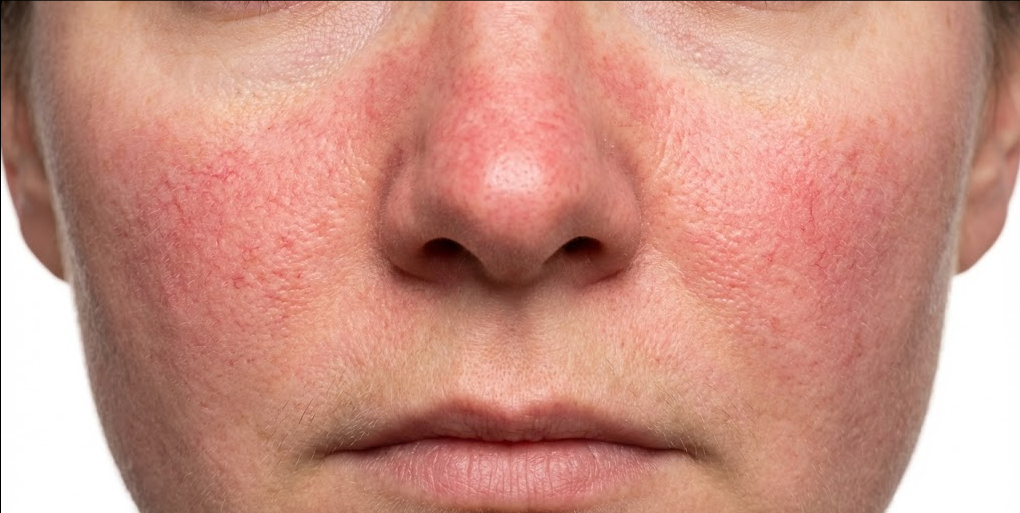
Have you ever noticed when you drink coffee and your face gets really warm all of a sudden? This is something that happens to a lot of people. It is called flushing. When your face gets red and warm like that it can be a little surprising.
Usually it is not a deal and it goes away on its own.. Sometimes your face can stay red for a long time or get really red and that can be a problem. It might mean that something else is going on with your body. This guide will tell you why flushing happens what can cause it and what you can do to make it better.
If redness appears alongside mouth-area breakouts, read: Small Pimples Appear Around Your Mouth: Cause & Prevention.
The Science of the Blush: Explained
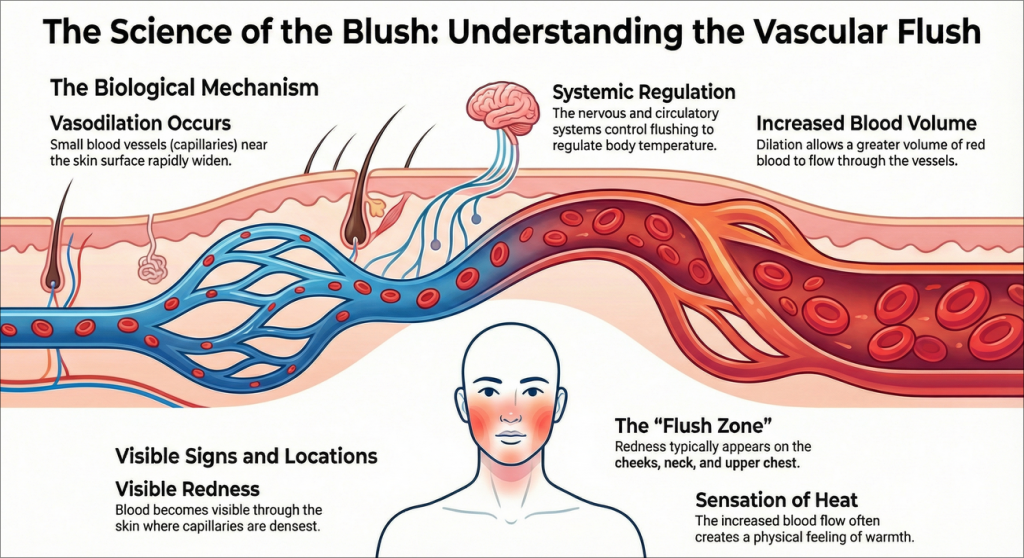
At its core, whitening of the skin is a vascular manifestation. It occurs when small blood vessels (capillaries) near the surface of the skin rapidly expand.
This expansion makes the blood flow more in these vessels. The blood is red. When it flows more you can see it through the skin. The increased blood flow, in these vessels becomes visible.
Vasoconstriction is a normal regulatory process controlled by the nervous and circulatory systems of the body. It is essential for many bodily functions, including temperature regulation and the supply of oxygen and nutrients to tissues.
Skin Flushing Causes
Flushing be caused by multiple triggers, from everyday occurrences to medical conditions. Understanding those triggers is key to cure.
Everyday, Temporary Triggers
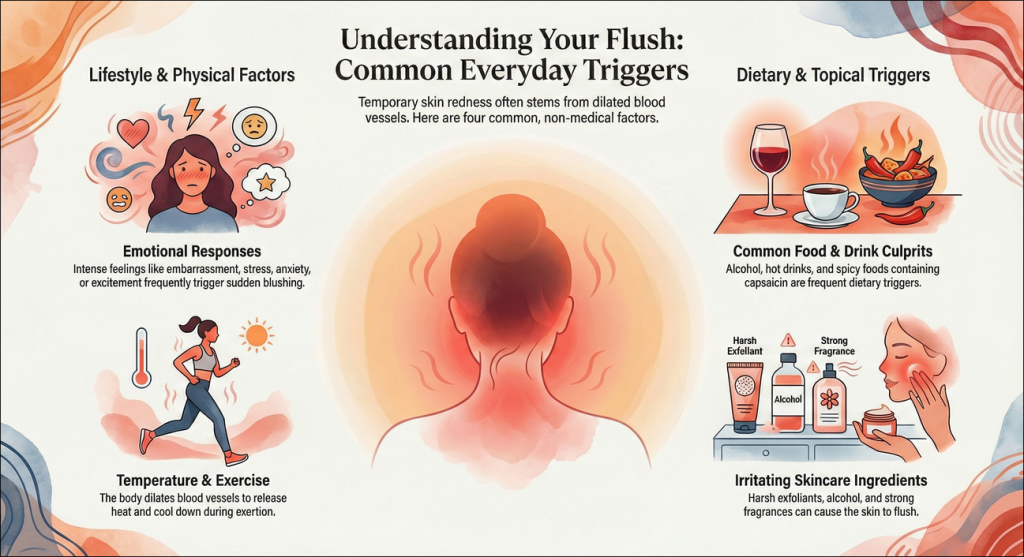
Most people get red in the face because of things that’re not serious and do not last long like :
- Emotional Responses: When we feel embarrassment or stress or anxiety or excitement our faces can turn red. This is because these feelings are causes of blushing. Blushing is what happens when our skin gets red because of responses, like embarrassment or stress or anxiety or excitement.
- Dietary Influences: Alcohol is one thing that can do this. So are spicy foods, which have something called capsaicin in them. Hot drinks are also a problem. These things are often the cause of issues. Dietary influences like alcohol and spicy foods can be bad for us. We should be careful, with drinks too.
- Temperature & Exercise: Your body dilates blood vessels to release heat and cool down.
- Skincare Products: Ingredients like alcohol, strong fragrances, or harsh exfoliants can irritate skin and cause a flush.
Flushing as a Symptom of Skin Conditions
When flushing is frequent or maybe taking too much time get normal, it may be linked to some dermatological conditions.
- Rosacea: This common chronic condition often starts with easy, frequent blushing or flushing. Over time, redness may last longer or become permanent. Common rosacea triggers mirror general flushing triggers: sun, stress, heat, and certain foods.
- Other Conditions: Inflammatory conditions like seborrheic dermatitis, allergic reactions, or sensitivities can also present with facial redness.
Systemic and Medical Triggers
In some cases, flushing is linked to internal processes.
- Hormonal Changes: The hot flashes of menopause are a primary example.
- Medications: Certain drugs for blood pressure, cholesterol, or other conditions list flushing as a side effect.
- Other Factors: Intense physical pain, fever, or certain rare medical syndromes can also cause flushing.
Rosacea and Flushing: The Hidden Connection
The causes of skin redness have an intricate connection. Rosacea requires special attention as it is strongly linked to severe redness. It’s not just simple redness; it’s associated with increased tissue sensitivity and blood vessel instability.
The main symptoms indicating a connection between redness and rosacea are:
- Persistent Redness: Redness which is not fading naturally, centered on the cheeks, nose, chin, or forehead.
- Visible Blood Vessels: Small, spider-like veins (telangiectasia) may appear.
- Additional Symptoms: Burning or stinging sensations, acne-like bumps (but without blackheads), or eye irritation.
Managing Flushing: Practical and Proactive Strategies
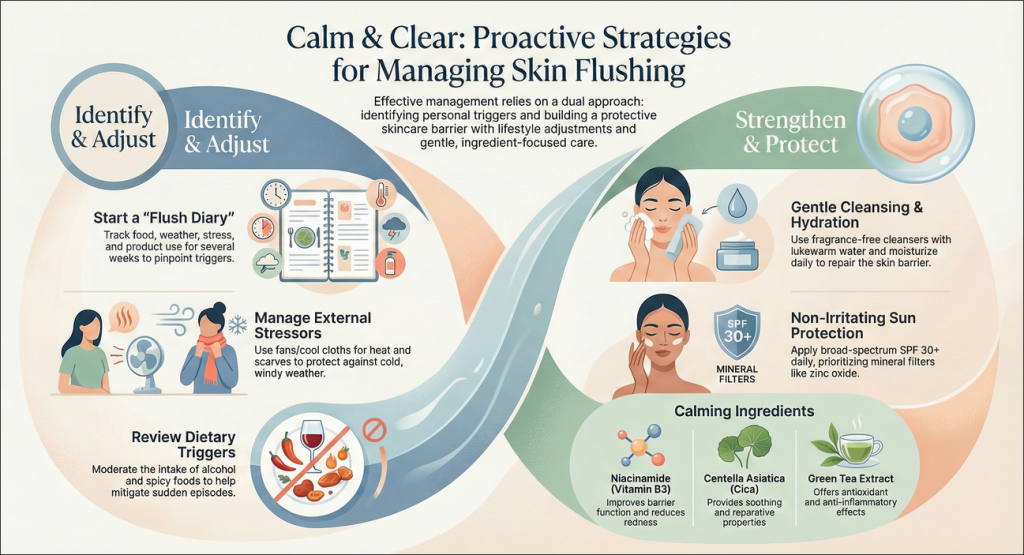
If you want to manage your Skin Flushing properly then you need to focus on identifying personal triggers, building a supportive skincare routine that prevents it and making thoughtful changes in your daily routine.
1. Identify Your Personal Triggers
Keep a diary for a few weeks. This is a good thing to do. It helps you figure out what makes you feel a way. Note:
- Food, drinks, and medications
- Skincare products you are using
- Environmental conditions like weather or maybe sun exposure
- Emotional state and activities
- Timing and severity of flushing episodes
2. Adopt a Gentle Skincare Routine That Prevents Flushing
If you want to strengthen the skin barrier and avoid irritation, you need to keep in mind these:
- Cleanse Gently: Just use a mild gentle cleanser that is fragrance-free with lukewarm water. Absolutely avoid any form of scrubbing.
- Moisturize Regularly: A good moisturizer helps repair and maintain the skin’s protective barrier. Look for something that is LLP(Light Liquid paraffin) free and make sure it has soothing ingredients.
- Use Sunscreen Daily: If you have sensitive skin, harsh sunlight can trigger flushing. Use a broad-spectrum sunscreen (SPF 50 or higher) suitable for sensitive skin. Mineral filters like zinc oxide are often well-tolerated.
- Introduce Products Slowly: Always patch-test new products on a small area of skin before full application.
3. Consider Helpful Ingredients
Before buying skin-care products check for these ingredients that will calm down your skin and has barrier-supporting properties:
- Niacinamide: It is a form of vitamin B3 that can help improve skin barrier function and reduce redness, in short Niacinamide helps the skin to stay healthy.
- Centella Asiatica (Cica): Cica is known for its soothing and reparative properties.
- Green Tea Extract: Has antioxidant and anti-inflammatory effects.
- Ceramides: Lipids can help restore and maintain the skin’s natural barrier.
4. Implement Lifestyle and Environmental Adjustments
- Manage Temperature: Use fans, cool cloths, and stay hydrated in heat. Protect your face with a scarf in cold, windy weather.
- Review Diet & Drink: Moderating known dietary triggers like alcohol and spicy foods can help.
- Practice Stress Management: Techniques like paced breathing, meditation, or gentle yoga can help mitigate stress-induced flushing.
Symptoms that may indicate your need to consult a professional
Flushing when occurring rarely is normal, but you should consult a healthcare provider or dermatologist if you notice these signs:
- Persistence: Flushing is too persistent or is becoming more frequent.
- Severity: If it is very intense, painful or it is causing distress.
- Additional Symptoms: Flushing accompanied by diarrhea, rapid heartbeat, pustules, or skin thickening.
- Unknown Cause: You cannot link it to any obvious trigger.
Consulting a professional is always appreciated in case of any skin related issue that is persistent and frequent. They can always provide an accurate diagnosis, rule out any underlying medical condition possibility and discuss appropriate treatment options.
The table below summarizes key characteristics to help differentiate common causes:
| Feature | Common Emotional/Dietary Flushing | Rosacea-Related Flushing | Hormone-Related (e.g., Menopausal) Flushing |
|---|---|---|---|
| Primary Trigger | Spicy food, alcohol, embarrassment | Sun, stress, heat, many foods | Fluctuating hormone levels |
| Duration | Short-lived (minutes) | Can be prolonged (hours) or become persistent | Episodic, often 2-5 minutes |
| Common Location | Cheeks, neck, chest | Central face (cheeks, nose, chin) | Face, neck, chest (feels “hot”) |
| Associated Signs | Feeling of warmth | Visible blood vessels, bumps, burning sensation | Sweating, chills afterward |
If your skin barrier feels compromised or itchy, see: Dry Itchy Skin Patches: The Actual Problem and Cure.
Frequently Asked Questions
Can a vitamin deficiency cause facial flushing?
Very unlikely in balanced diets but severe niacin (vitamin B3) deficiency can cause a condition that involves red rash(Flushing). More importantly, high dosage of niacin supplements are known to cause temporary intense flushing as a side effect. Just consult a professional before taking new supplements and you are good to go.
Why does my face get red and hot for no reason?
It might not be obvious but there is always a reason. “Invisible” triggers like mild stress, hormonal shifts, a reaction to a product, or the early stages of a condition like rosacea.
Is flushing linked to high blood pressure?
Facial flushing is not directly related to high blood pressure. However, a sudden, spike in blood pressure could cause flushing. When it comes to high blood pressure, you absolutely should consult a doctor.
How can I tell if my flushing is rosacea?
Indicators include flushing triggered very easily, redness primarily in the center of your face that takes longer to fade, and the development of persistent background redness, visible blood vessels, or bumps. A dermatologist can provide a definitive diagnosis.
Can flushing be cured?
It totally depends on the cause. If it is caused by temporary triggers then it will resolve on its own. For chronic conditions like rosacea, while there isn’t a permanent cure, the symptoms—including flushing—can be very effectively managed and controlled with a consistent care plan.
Are there skincare ingredients I should avoid if I flush easily?
Yes, if your skin is reactive, it’s wise to be cautious with products containing high concentrations of alcohol, synthetic fragrances, essential oils (like peppermint or eucalyptus), menthol, and strong chemical exfoliants (like some AHAs), as they can provoke or worsen flushing.
Conclusion: Navigating Flushing with Clarity
Skin flushing is something that happens to a lot of people. It can be caused by different things. To really understand what is going on and make it stop you need to pay attention to when it happens. You have to figure out what makes your skin flush. By learning your personal triggers, adopting a gentle and consistent skincare approach, and knowing when to seek expert advice, you can gain greater control. The goal is not necessarily to eliminate every blush—some are a natural part of being human—but to ensure your skin’s responses don’t undermine your comfort or confidence.
Disclaimer: This article is for educational purposes only and does not replace professional medical advice. Always consult with a qualified healthcare provider or dermatologist for any concerns about your skin health.