
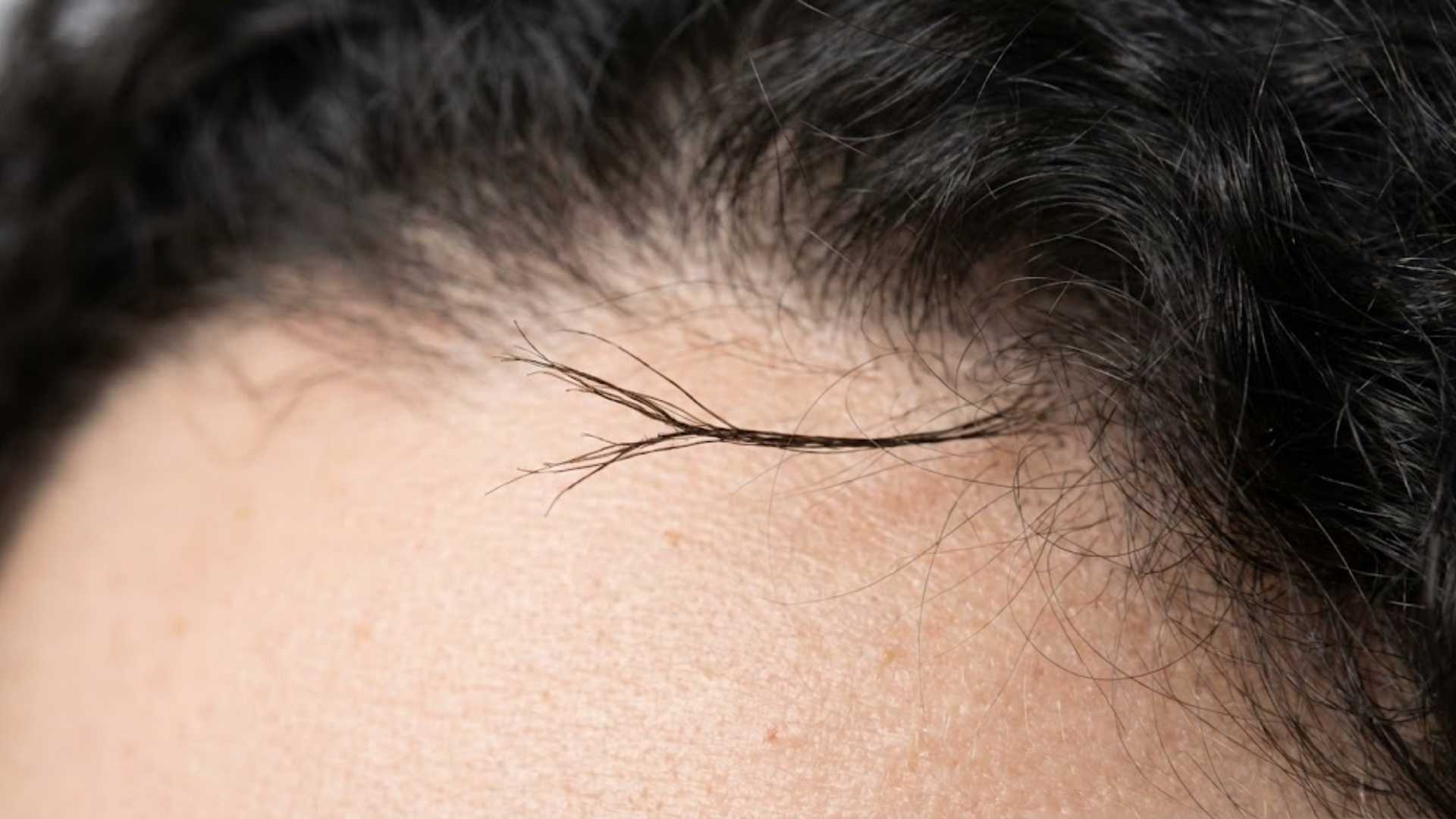
Split Ends That Travel Up the shaft are a common hair frustration. You spot a split end. But it’s not at the tip. It’s halfway up your hair length. This is the puzzling case of split ends that travel up the shaft. So here’s something strange – split ends can actually move up the hair shaft.
I know, sounds odd. But once you get what’s happening, it makes caring for your hair way easier. We will explore the ‘why’ behind this issue. This knowledge leads to better, calmer decisions for your hair.
Chronic dryness at the ends often appears alongside oilier roots — learn more in
Greasy Roots But Dry Frizzy Ends: Your Full Guide
What Does “Traveling” Actually Mean for a Split End?
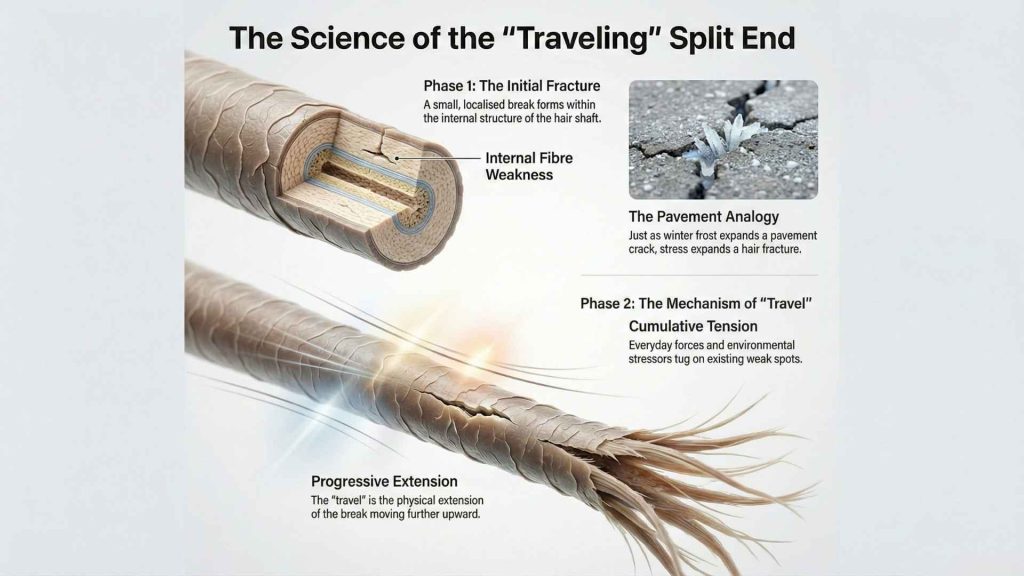
The term is a bit misleading. The split itself isn’t moving upward. Think of it like a crack in a sidewalk. Winter frost makes that crack longer. Stress makes the hair’s fracture longer too. A small weakness forms in the hair fiber. Everyday forces then tug on that weak spot. This makes the internal break extend further upward. That’s the so-called “travel” you are seeing. It’s progressive damage, not magic.
Your Hair’s Simple Built-in Armor
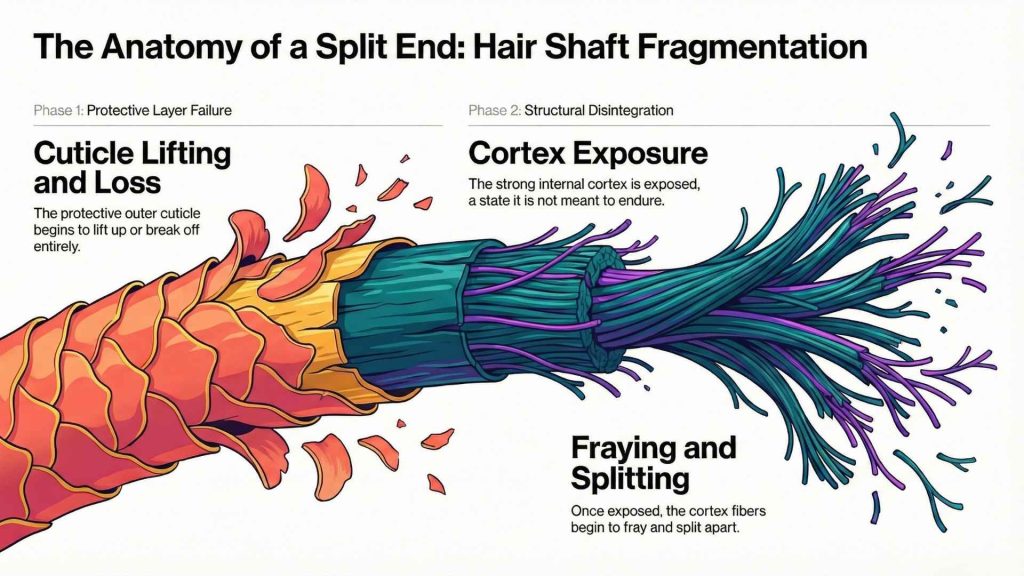
To get it, picture a single strand. It has a built-in protective system. The outer layer is called the cuticle. It’s made of tiny, overlapping scales. These scales should lie flat. Their job is to shield the inner core. That core is the cortex. The cortex gives hair its strength. It’s where your hair’s color lives too. Damage starts when those outer scales get ruffled. They can lift up or break off entirely. This exposes the strong cortex underneath. The cortex isn’t meant to be exposed. It then begins to fray and split apart.
The Real Causes Behind This Traveling Damage
So why does this happen to you? Typical advice often misses the mark. This problem has specific, sneaky causes. They usually work together over time.
1. Your Daily Habits Create Silent Stress
This is the biggest, quietest culprit. It’s the wear and tear from ordinary life.
- Friction is a constant enemy. Your hair rubs on cotton pillowcases every night. Wool coat collars and rough backpacks add more friction.
- Tension from styles has a cost. That sleek high ponytail pulls on the same section. So does a tight bun day after day.
- Rough handling breaks hair. Brushing tangled hair from the top down snaps strands. So does vigorous towel-drying.
- The wrong tools cause snags. Old hair ties with metal parts grab hair. Clips with sharp edges can chip the cuticle.
2. How Heat and Color Treatments Contribute
Chemical processes create zones of weakness. This is especially true with “overlap.” That means applying new color over old color. The same mid-length area gets processed repeatedly. It becomes overly porous and weak. Heat styling follows the same lazy pattern. You likely flat-iron the same middle sections most. That area never gets a break from high heat. The protein structure there slowly breaks down. Brittle, splitting hair is the final result.
3. Outside Elements Play a Role Too
Your environment actively works on your hair. Dry, indoor heat or desert air pulls out moisture. This makes hair less flexible and more brittle. Summer sun does more than give highlights. UV radiation degrades hair protein over time. Even your shower water might be a factor. Hard water leaves mineral deposits on the shaft. This buildup can make hair feel stiff and straw-like.
Why General Advice Feels So Useless
“Just trim it more” is frustrating advice. It feels pointless when damage is widespread. Cutting an inch won’t fix a split four inches up. “This product repairs splits” is often misleading. Nothing truly mends the broken cortex back together. Products can temporarily smooth the appearance.
They help prevent future damage very well. “Be more gentle” is simply too vague. What does that mean on a busy Tuesday morning? This advice gap is where people feel stuck.
Persistent surface frizz may also signal structural damage — read
The Frizzy Halo That Won’t Smooth Down: A Complete Guide
What People Find Helpful in Reality
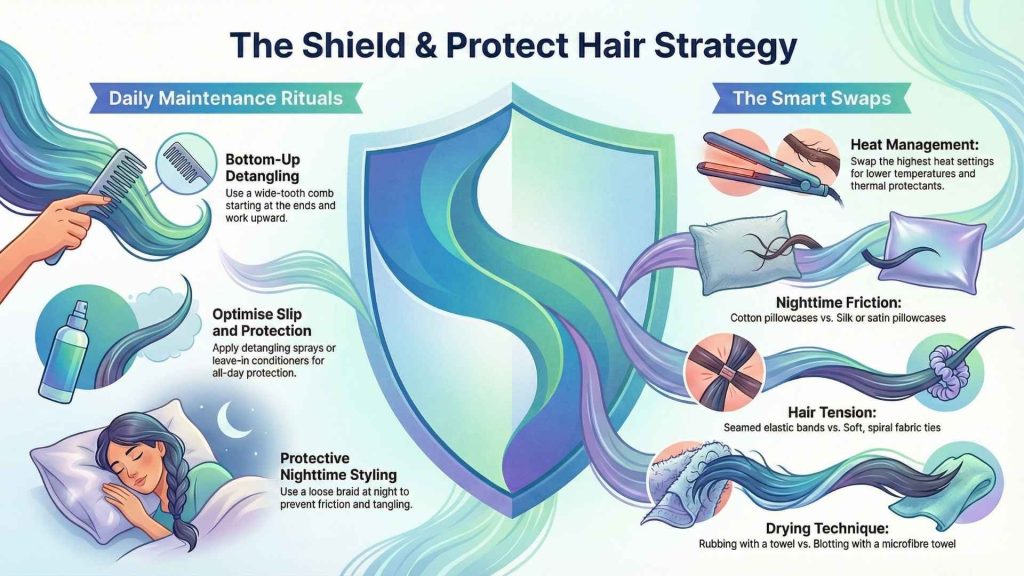
Progress comes from a shield-and-protect approach. The goal is to stop the daily damage. This gives new growth a chance to come in healthy. Switching your pillowcase to silk or satin is huge. It eliminates hours of nightly grinding friction. Using a detangling spray or conditioner is key. It lets a wide-tooth comb glide through hair. Always start combing from the very bottom first. Work upward only after the ends are smooth. A light leave-in can provide all-day slip and protection. For many, a loose braid at night is a game-changer. Consistency with these small habits makes the real difference.
| Focus Area | Common Mistake | Better Choice |
|---|---|---|
| Nighttime Routine | Sleeping on cotton pillowcases. | Using a silk or satin pillowcase. |
| Hair Ties | Using elastic bands with seams. | Choosing soft, spiral fabric ties. |
| Drying Hair | Rubbing wet hair with a towel. | Blotting gently with a microfiber towel. |
| Heat Tool Use | Using the highest temperature setting. | Lowering the heat and applying protectant. |
The Value of a Professional’s Opinion
Sometimes you need a stylist’s trained eyes. They assess your hair’s condition objectively. They see breakage patterns you might miss entirely. A good stylist performs precise, strategic trims. This removes the worst splits to stop their progress. They can also review your home care routine. Their product suggestions match your hair’s true needs. Book a consultation if you feel overwhelmed. Think of it as a fact-finding mission. You are gathering expert insight to inform your own care.
Answering Your Real Questions
Can hair oil stop a split from traveling?
Oils can smooth the hair’s surface. This reduces damaging friction temporarily. But oils cannot heal the broken internal structure. The split remains.
Will my hair recover if I just stop heat styling?
“Recover” isn’t the right word for existing splits. They are permanent fractures. However, stopping heat prevents new damage. Your new growth will be much healthier.
Is this just something fine hair gets?
Fine hair can be more fragile, true. But any hair type can experience this. Coarse hair damaged by chemicals is just as prone. Your habits are the main factor.
How often should I trim to manage this?
There’s no perfect schedule for everyone. It depends on your hair’s speed and condition. A stylist can give you a personalized plan. It’s about smart trimming, not constant trimming.
What about bond-building treatments?
They can be excellent supportive treatments. They help reinforce the hair’s internal bonds. This strengthens hair against future stress. They don’t erase splits already there.
Could this signal a health problem?
Suddenly, severe breakage can be a red flag. Thyroid issues or nutrient deficiencies affect hair. It’s wise to mention it to your doctor. Rule out any internal causes first.
Thoughts
Split ends that travel up the shaft indicate ongoing stress. It’s a clear sign from your hair. Listen to what it’s trying to tell you. The solution lies in reducing daily damage. Focus on friction, tension, and heat patterns. Be realistic about what trims and products can do. Your goal is to protect the new hair growing in. Nurture the hair at your scalp with good care. With patience and understanding, you will see improvement. Your hair’s story can change for the better.
Disclaimer: This article provides educational information only. It is not a substitute for professional medical or hairstyling advice. For personal concerns, please consult a qualified expert.