
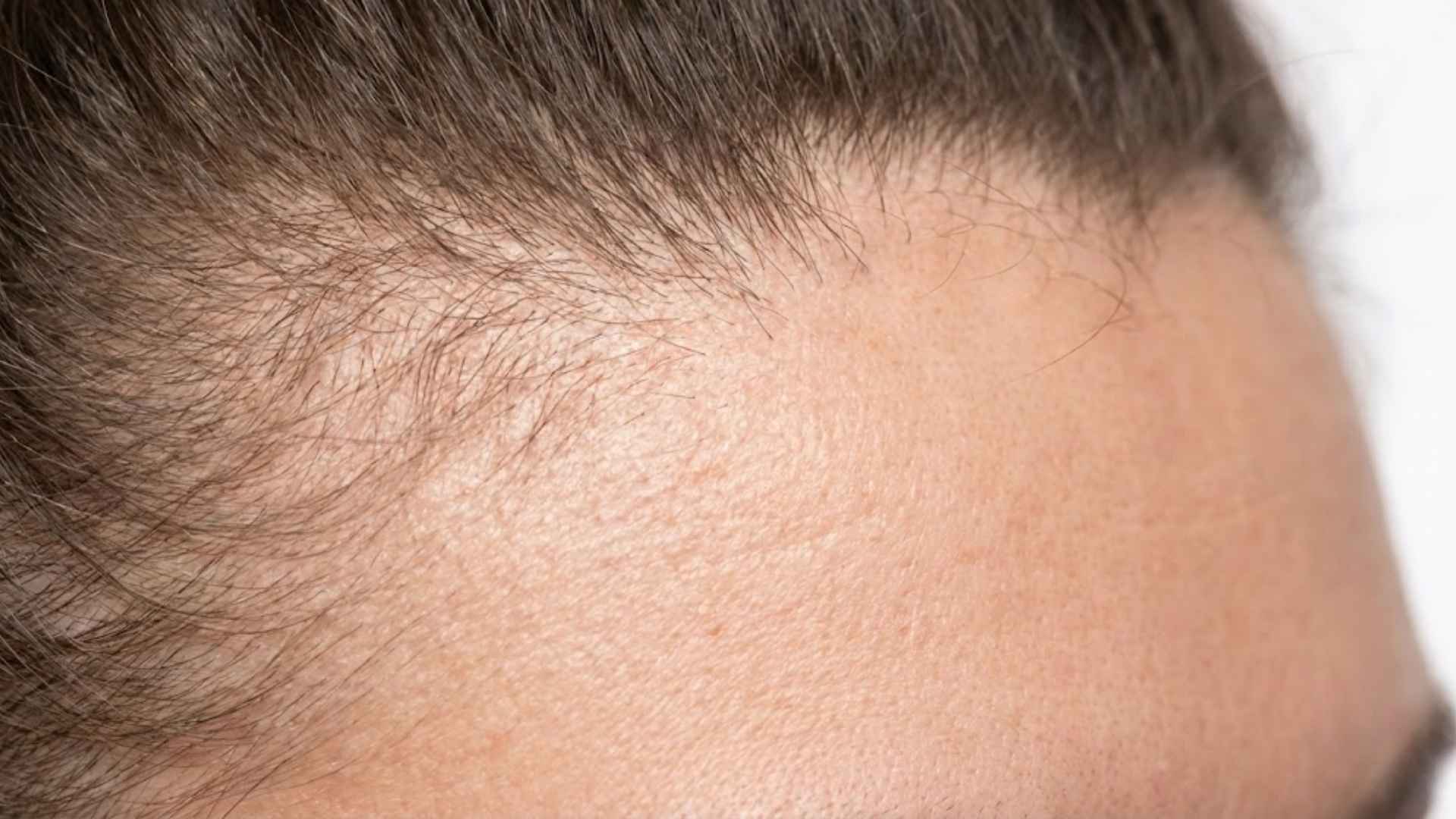
There’s something really personal about watching your thinning edges and hairline change over time. The truth is, way more people deal with this than you’d expect.. Many people share this quiet concern. The journey often starts with confusion and worry. Quick fixes and strong promises usually flood your search.
This guide offers a different path. We believe in understanding first. We will walk through the possible reasons slowly. You will learn about thoughtful care approaches. Our goal is to replace fear with useful knowledge. Let’s explore your thinning edges and hairline with a calm, clear perspective.
Tight hairstyles may be contributing to edge thinning — read
Understanding Sore Scalp from Tight Hairstyles: A Guide to Comfort and Care
What Defines Thinning Edges and Hairline Changes?
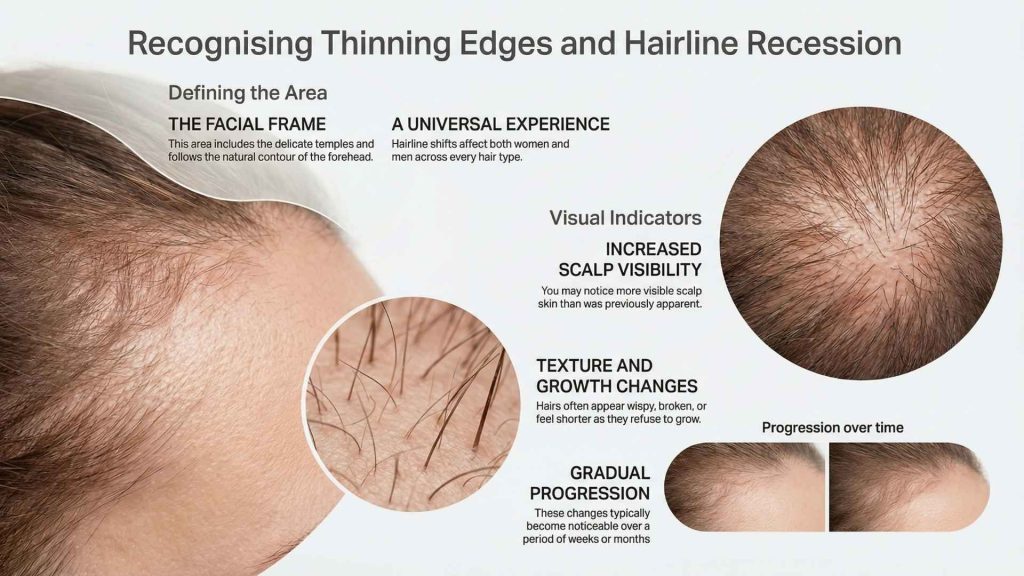
Let’s clearly define the experience. Your thinning edges and hairline frame your face. This area includes the delicate temples. It runs along the forehead’s contour. Changes here become noticeable over weeks or months. You might see more scalp skin than before. The hairs may look wispy and broken. They might feel shorter and refuse to grow. Sometimes the hairline itself seems to recede. This shift can happen with any hair type. It affects both women and men. Understanding this normalizes the experience. You are not facing something unknown.
The Delicate Nature of Your Frontal Hairline
Why does this specific area seem so vulnerable? Your frontal hair follicles are unique. They are often finer and more fragile. These roots sit more shallowly in the skin. This makes them sensitive to physical stress. They also react differently to internal shifts. Your body’s hormonal messages echo here first. This biological design explains a lot. It shows why this zone needs special attention. General hair care rules might not apply. Your thinning edges and hairline demand specific understanding.
Unraveling the Common Causes Behind the Change
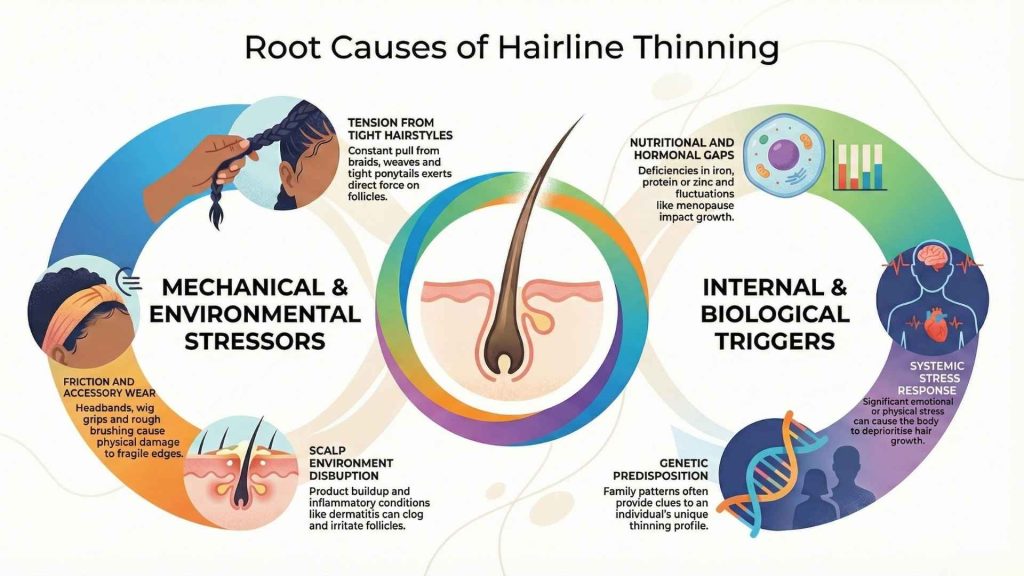
A single reason is rare. Multiple factors usually weave together. Imagine them as threads in a tapestry. Your unique picture is personal. Identifying possible contributors brings power. It moves you from victim to observer. Here are the main categories experts consider.
Physical Stress and Tension Factors
This is the most discussed contributor. It involves direct force on the follicle.
- Tight hairstyles create constant pull. It’s pretty common to spot braids, ponytails, and weaves as go-to styles.
- Friction from accessories causes wear. Think of headbands, wig grips, and helmet straps.
- Rough styling techniques break hairs. Vigorous brushing damages fragile edges.
- Even habitual touching adds subtle stress.
Your Body’s Internal Landscape
Your hair reflects your inner health. Internal changes manifest outwardly.
- Nutritional gaps impact growth cycles. Iron, protein, and zinc are key players.
- Hormonal fluctuations are powerful triggers. Postpartum and menopause stages are typical.
- Significant stress alters bodily priorities. Hair growth can temporarily slow down.
- Some genetic predispositions play a role. Family patterns offer clues.
The Scalp Environment and Inflammation
The skin’s health where the hair grows is critical.
- Dealing with seborrheic dermatitis often means itching and flaking—that annoying dandruff. This inflammation really irritates your hair follicles and messes with their normal cycle.
- On top of that, leftover product buildup ends up clogging those little pores where your hair grows from. Heavy butters and gels are often culprits.
- Allergic reactions to products create redness. This irritates the delicate frontal scalp.
Why Generic Advice Fails for Thinning Edges and Hairline
Well-meaning tips often disappoint. “Just use castor oil,” they say. “You need more vitamins.” This advice assumes one universal cause. It rarely addresses your specific situation. Oils cannot combat persistent physical pulling. Vitamins may not soothe an inflamed scalp. This mismatch creates frustration. It can make you feel you failed. The truth is the advice was incomplete. Effective care requires a personal match. You must align the solution with the likely cause.
Building a Gentle and Consistent Care Routine
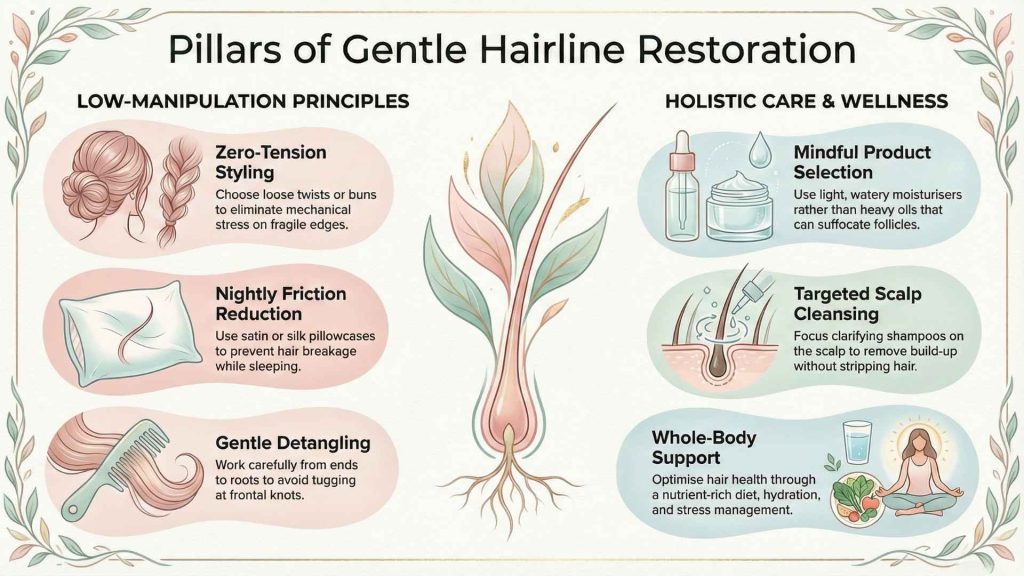
Hope lies in informed, consistent action. People find success through patience. The goal is reducing harm first. Creating a peaceful environment comes next. This allows natural recovery processes to begin. Consider these pillars of a gentle routine.
The Principle of Low-Manipulation
To do better with your hairline, you should strictly follow the open hairstyle. It will help you to achieve better results in a significantly shorter amount of time. I would suggest using a satin or maybe silk pillow at night for better hair care. Otherwise, the fraction while sleeping can be significantly higher than usual.
And remember one thing for sure, while combing your hair, never hurry to finish the comb. Take your time and start from the bottom, and slowly go up to the roots. Don’t get angry or stubborn when you feel any kind of knot while combing. Otherwise, they will get worse without any critical reason.
If you’re noticing excessive shedding as well, see
Hair Falling Out in Clumps in the Shower: Understanding the “Why” Behind the Shed
Mindful Product Selection
Here are some more natural-sounding versions:
I’ve learned it pays to be really mindful about what goes on your scalp. When you wash, really concentrate that clarifying shampoo right where it matters—at your roots, where all the gunk builds up. And for moisture? I lean toward something light and water-based. It’s like skincare for your scalp—heavy oils can end up clogging things up, which is the last thing you want.
And here’s something I can’t stress enough: always patch test anything new, especially around your hairline where the skin tends to be more sensitive.
Supporting Overall Well-Being
Your hair is actually a pretty good mirror of your overall health. So, what really helps? Think about your plate. Those hair follicles thrive on the same wholesome foods you do. Nourish yourself fully, and you nurture them, too.
And for stress? Don’t just bottle it up. Find your release valve. It could be a quiet walk, five minutes of deep breathing, or simply losing yourself in a favorite hobby. Whatever helps you unwind truly matters.
And yeah, drink your water. I know everyone says it, but there’s a reason—your whole body runs on it, hair included.
When to Seek a Professional Opinion for Thinning Edges and Hairline
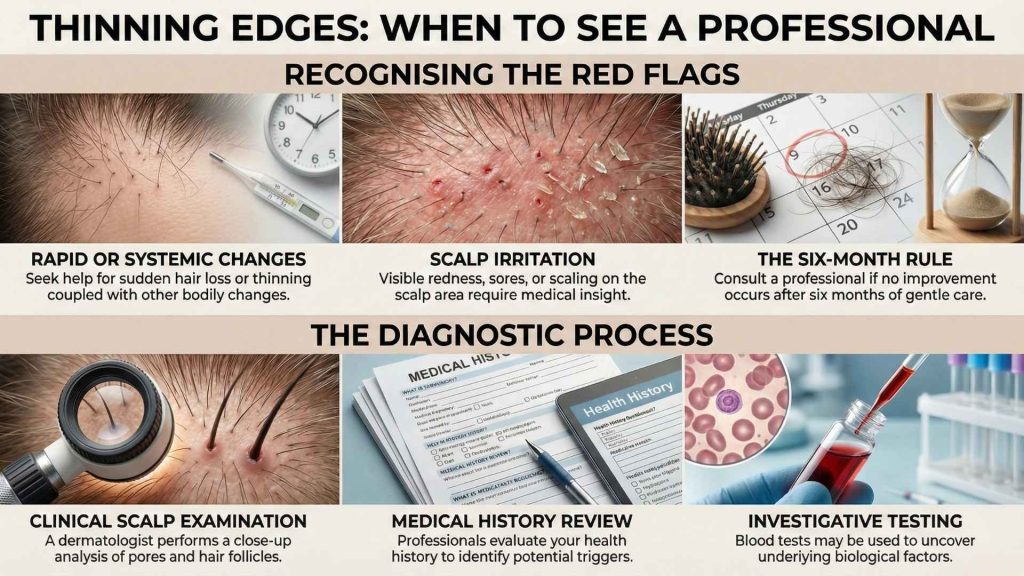
Look, doing things yourself only gets you so far. Sometimes, you really need to talk to someone who knows their stuff—and that’s perfectly okay. It might be time to see a professional if:
- You’re shedding noticeably more hair than usual.
- Your scalp has red patches, sore spots, or persistent flaking.
- You’ve been gentle and consistent for six months, but see no improvement.
- The hair loss comes along with other unexpected changes in your body.
A dermatologist can examine your scalp thoroughly and review your health history together. They may also suggest blood tests to look for any factors that could be contributing. All of this helps paint a clearer picture of what’s going on—and helps you decide what to do next.
Frequently Asked Questions
Physical tension from hairstyles is a leading contributor. Internal and inflammatory factors often combine with it.
Follicles can recover if not permanently scarred. Removing the primary cause is the essential first step for regrowth.
By using these serums extensively, you will face damage to your hair and skin very soon. They mostly glorify the effect of the advertisement.
It is a extreamly slow process that rarely helps people. The best advise is always to take advice from the doctor.
Six to twelve months is sufficient for a noticeable result. It is a time taking process because Hair growth cycles are inherently slow.
Yes, of course! Your overall diet directly affect on your hair. You must fulfill all the nutrients required for your hair.
Disclaimer: If you face a major health issue related to hair fall and any other symptoms which looks unreal than the best advice is to visit a doctor asap for the best result.