
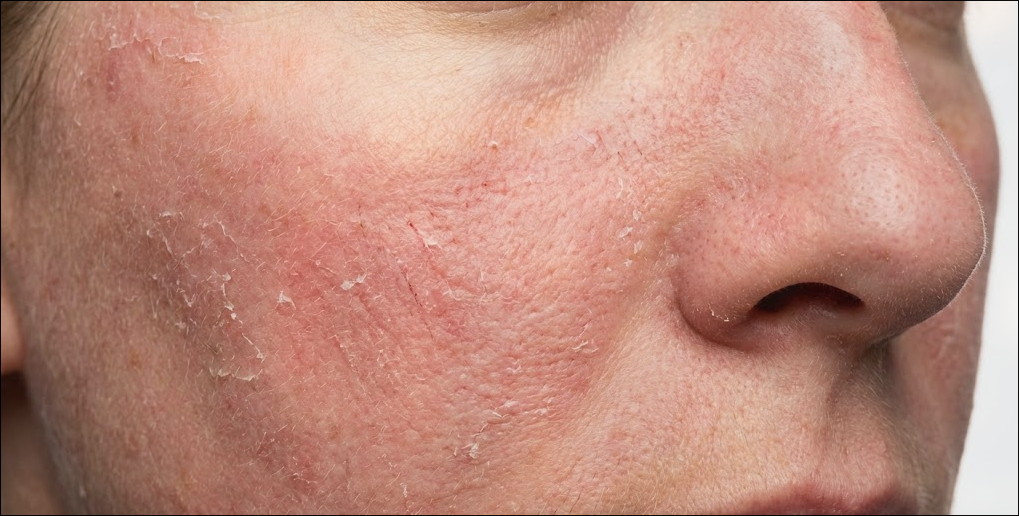
That dry, tight feeling on your face right after washing is something lots of people are all too familiar with. But lots of folk get this one wrong, thinking their skin is squeaky clean when really its trying to tell you something. What that feeling is saying is that your skin’s protective layer is getting a bit out of whack – it’s a pretty clear sign that your skin’s balance has been knocked off kilter.
This article gets to the root of all that – it looks at why this happens, and how it’s all to do with your face wash the pH levels, the type of surfactants and what the weather is like. By getting a handle on what’s actually going on, you can make better choices for your skin and end up with something that’s healthy in the long run, not just fix the symptoms of a dodgy routine. Barrier damage can cause product irritation — especially if your moisturizer burns when applied.
What Causes the “Tight” Feeling After Cleansing? A Two-Part Problem
The tight sensation after washing is not normal, it’s your skin’s way of telling you it’s been damaged. And that damage usually comes down to two main things, stripping your skin of its essential oils and knocking your skin’s pH out of balance. Think of these two issues as two sides of the same coin – disturb one, and the other usually suffers as a result.
1. Stripping the Skin’s Natural Oils (The Lipid Barrier)
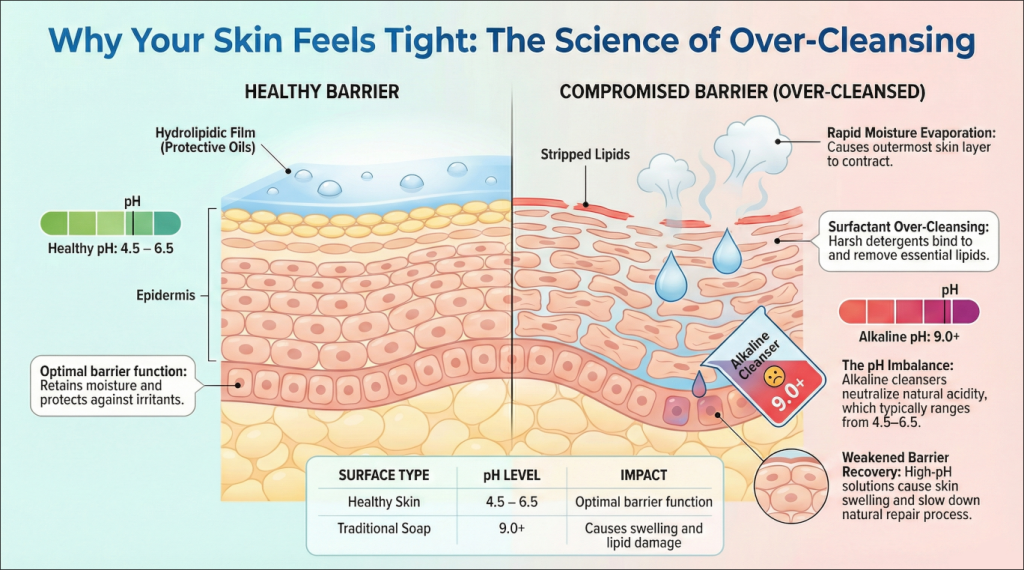
Your skin has a protective layer called the hydrolipidic film. This delicate mix of sweat, sebum and skin cells is vital for keeping your skin hydrated and preventing unwanted gunk from getting in. It’s not just a layer of oil on the skin – it’s a real superhero that helps keep everything ticking over.
Cleansers work by using special molecules called surfactants which can bind to all the things you don’t want on your skin and wash them away. But some cleansers are a bit too good at what they do is they get rid of the bad stuff and also the good stuff that your skin really needs to stay healthy. When you strip your skin of its natural oils, it can start to shrivel up and contract as it gets dry and dehydrated. And that’s when you start to get that annoying tight, dry, itchy feeling.
2. Disrupting the Acid Mantle (pH Imbalance)
Your skin’s natural pH is slightly acidic – usually around 4.5 to 6.5 and it’s a vital bit of kit for keeping your skin healthy. It helps all the enzymes that keep your skin barrier working properly to do their job. It keeps the bad bacteria at bay and helps keep your skin’s microbiome in balance.
Most traditional soaps and cleansers are too alkaline for your skin. When you apply them, it throws your skin’s natural acidity out the window. Research has shown that high-pH soaps can cause all sorts of problems – from swelling in the top layer of skin to making it harder for your skin to repair itself. Your skin has some built in safeguards to help it get back to normal but if you keep using harsh cleansers, it can take a long time for your skin to recover. And that’s when you start to feel that tight sensation every time you wash.
Why Alkaline or “Harsh” Cleansers Are Often the Culprit
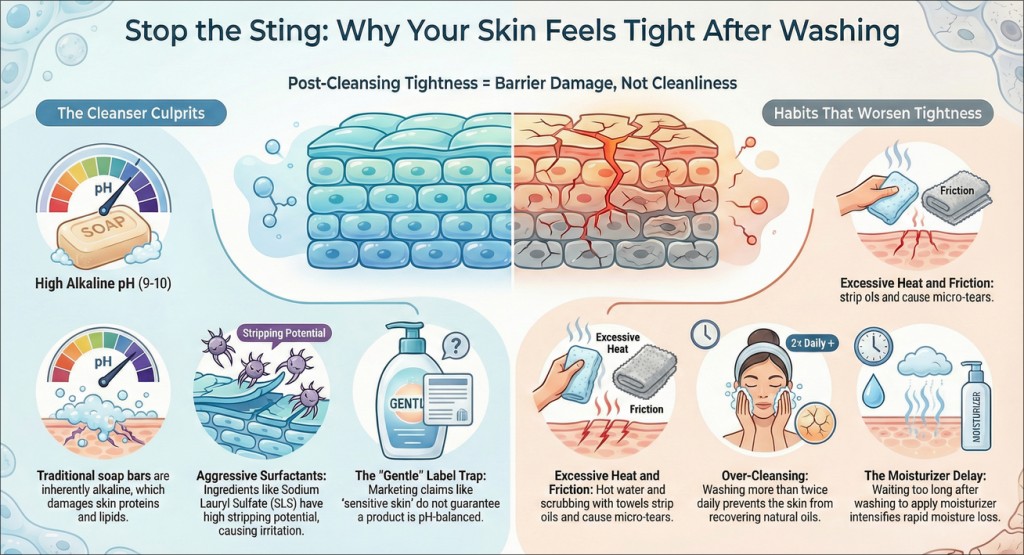
The term “harsh” in skincare refers to a formulation’s potential to damage skin proteins (keratin) and lipids. Alkaline soaps (pH 9-10) are classic examples, but the issue is more nuanced than just pH. The specific type and blend of surfactants are equally important.
- Traditional Soap Bars: Often made via saponification of fats with lye, these are inherently alkaline. Their primary surfactant is soap, which is excellent at cutting through oil but has a high potential to disrupt the skin’s lipid barrier and pH.
- Strong Synthetic Surfactants: Ingredients like Sodium Lauryl Sulfate (SLS) are potent anionic surfactants. While effective foamers and cleansers, they are known for their high defatting potential and can cause significant protein denaturation, leading to dryness, irritation, and that characteristic “squeaky” feel that many misinterpret as clean.
- The “Gentle” Misconception: Marketing terms are not regulated. A product labeled “for sensitive skin” or “gentle” may still cause tightness if its pH is too high (even if it’s sulfate-free) or if it contains other subtly irritating components like certain fragrant essential oils, alcohols, or preservatives. The end result—tight skin—is your most reliable, personalized indicator.
It can also make makeup sit unevenly — explained in Cakey and Flaky Makeup: Why It Happens & How to Fix It.
Beyond the Cleanser: Other Contributing Factors
While the cleanser itself is probably the main culprit, there are several associated habits that can really kick the problem into high gear, turning a minor issue into a real pain point.
- Water Temperature and Quality: Using scalding hot water – which is great for stripping away oils, can make a big difference in how much damage you do. And if you’re washing with water that’s got a high mineral content, like calcium and magnesium, you’ll often end up leaving a residue on your skin that interacts with your cleanser in ways that can leave you feeling dry and irritated.
- Over-Cleansing or Incorrect Timing: Washing your face too often is a pretty common mistake that most people don’t need to do it more than twice a day and if you overdo it you’re gonna strip your skin of its natural oils. For some people, washing at night and just rinsing with water in the morning is enough.
- Physical Friction and the way you wash: You’d think that scrubbing away at your skin with a washcloth or a cleansing brush would be no big deal, but the truth is it can actually cause tiny little tears in your skin that make it harder for your barrier to function properly. Use your fingers and rub in gentle circular motions, and then just pat your skin dry – dont rub it with a rough towel.
- The Post-Cleansing Window: Right after you wash, your skin is at its most vulnerable to moisture loss – basically, its wide open and susceptible to drying out. If you wait too long to put a moisturizer on you’ll just end up feeling tighter and drier than you would have if you didnt wait that long. Even 60 seconds can make a difference.
A Practical Guide to Choosing a Truly Gentle Cleanser
Getting away from products that make your skin feel tight means becoming a bit of a detective when it comes to reading labels, focusing in on two key points: pH and the way your cleanser gets clean.
1. Prioritize pH-Balanced Formulas
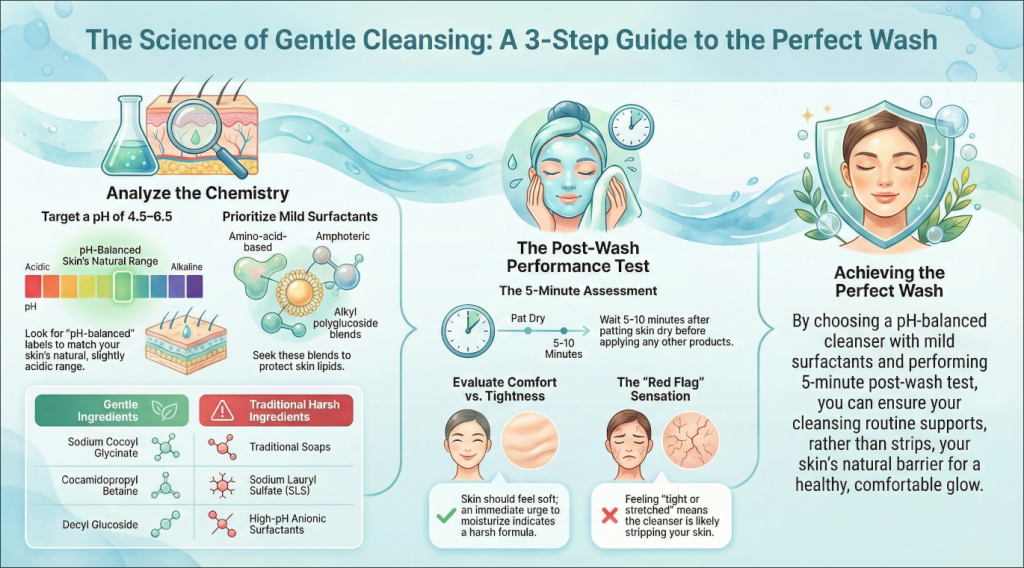
Your goal is to find a cleanser that’s got a pH that’s close to what your skin’s meant to be (around 4.5 to 6.5). You can often spot these ‘pH balanced’ products by looking out for synthetic detergent bars (syndets) and liquid cleansers, they’re more likely to be neutral or slightly acidic compared to old-fashioned soap bars. And the good news is that more and more brands are now starting to list the pH on their packaging or even on their website.
2. Understand Surfactant Hierarchies
Not all surfactants are made equal. Today’s gentler cleansers use clever blends that get the job done without doing any damage.
- First Stop: Amino Acid Based Surfactants – Think sodium cocoyl glycinate or potassium cocoyl glutamate – they’re based on fatty acids and amino acids, are super gentle and feel really nice on the skin.
- Great Options: Mild Amphoteric Surfactants – Like cocamidopropyl betaine – you’ll often find these in “no-tear” formulas and they’re pretty much always gentle and well-tolerated.
- Good Alternatives: Alkyl Polyglucosides – such as decyl glucoside or lauryl glucoside – they’re made from sugar and fat, are gentle and actually biodegradable.
These types of surfactant are often mixed together and are a heck of a lot less harsh than traditional soap surfactants or strong chemicals like SLS or Sodium Laureth Sulfate (SLES).
3. The “Feel Test” and Other Product Textures
The best test you can do is just stop what you’re doing and have a good feel of your skin about 5-10 minutes after patting it dry – without applying any other product just yet. It should feel clean and comfortable – not tight, stretched or itchy and if you’re feeling the urge to slap on some moisturiser to sort out the discomfort, the
The Critical Role of Post-Cleansing Hydration and Barrier Support
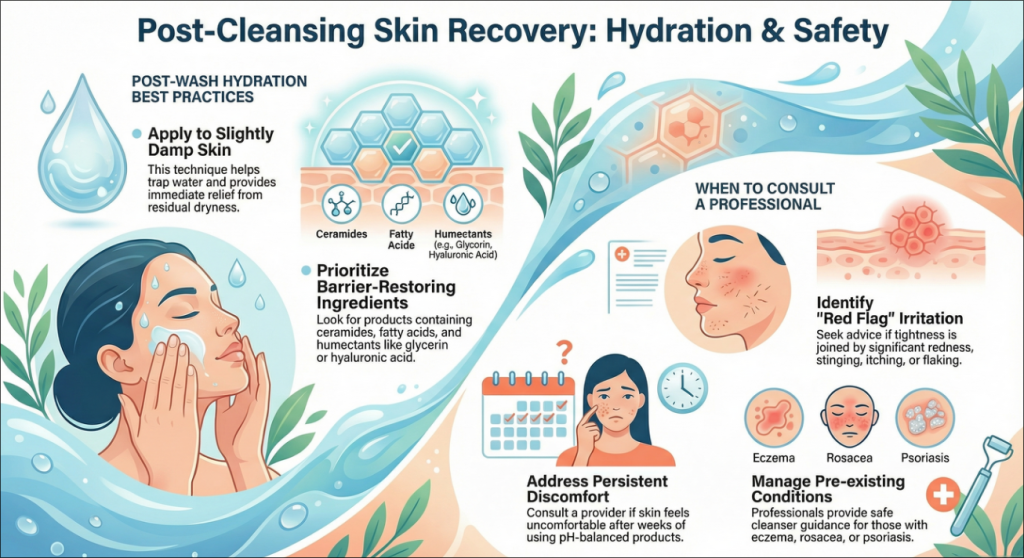
Cleansing, even with a mild product, can be a pretty stressful experience for your skin. So, right after washing, is probably the best time to give your skin a bit of TLC. What you want to do is apply a moisturizer or treatment serum to your skin while its still slightly damp. Applying it to damp skin helps to trap the moisturizer (and that’s where the magic happens) and lets all those hydrating ingredients do their thing.
The key products you’re looking for after cleansing are:
- Humectants: Things like Glycerin, hyaluronic acid, panthenol which pull in moisture from the air and help your skin stay hydrated
- Emollients: Think of these as the skin’s smoothest friends – squalane, jojoba oil, sunflower oil and even some fatty acids that just make your skin feel silky and glides on nice.
- Occlusives & Barrier-Identical Lipids: Just a tiny bit of petrolatum, some ceramides, cholesterol. These barrier repair guys do a great job of locking in moisture and literally repairing the lipid barrier in your skin.
Troubleshooting: If You’ve Switched Cleansers But Still Feel Tight
If you’ve adopted a pH-balanced, gentle cleanser but tightness persists, consider these less obvious factors:
- Your water might be very hard. Installing a simple shower filter can sometimes make a noticeable difference.
- You might be over-correcting. Using overly rich, occlusive creams on damp skin can sometimes trap heat or feel uncomfortable. A lighter, hydrating lotion might be better initially.
- Your barrier may need more time. If it was significantly compromised, it can take several weeks of consistent, gentle care (gentle cleanser, diligent moisturizing, sun protection) to fully recover.
- Consider the rest of your routine. Potentially irritating actives like retinoids, exfoliating acids, or vitamin C should be paused until the tight, uncomfortable feeling completely resolves.
When to Consider Seeking Professional Advice
While tweaking your cleanser and routine can usually sort out that post-wash tightness, it’s worth knowing when things might be a bit more serious. If you’re starting to get a bit worried, it’s a good idea to pay a dermatologist or doc a visit if:
- That tight feeling is going hand in hand with some pretty significant redness, or if you’re getting stinging, burning, itching, and your skin is looking a bit rough and scaly.
- Your skin is still feeling pretty awful even after you’ve simplified your skincare to only the gentlest, most fragrance-free products with the perfect pH balance, and you’ve been doing that for a few weeks.
Also Read : Face Burns While Applying Moisturizer or Lotion ? Read the Fix.
- You’ve been diagnosed with a pre-existing skin condition like eczema, rosacea, psoriasis or seborrheic dermatitis, and you’re just not sure what cleansers are safe to use and won’t trigger an attack.
A pro can help rule out something more serious like early stage rosacea or hidden dermatitis and give you the specific, one-on-one medical advice you need.
Frequently Asked Questions
No, it is not a normal or desirable sensation. It is a common sign that your skin’s natural protective barrier has been temporarily compromised by a cleanser that is too stripping or alkaline. Healthy cleansing should result in skin that feels refreshed and comfortable, not constrained.
“Gentle” is basically a marketing term and it doesn’t really mean much. Your cleanser might be free of all the harsh stuff but still be too alkaline for your skin, or contain a type of surfactant that just isn’t working well for you. Your skin’s tight feeling is probably your body’s way of saying that this product just isn’t for you – even if the label says it’s gentle.
Not all of them, no. Some of the older style soap bars can be pretty drying but there are a lot of newer bars out there that are formulated to be gentler and are built around synthetic detergents. The key is to look for words like “syndet” or “non-soap” on the label.
Oh yeah, water temperature can definitely play a role in this. Hot water is a major solvent and it strips away even more of your skin’s oils, which can make things worse. If you can and it’s usually the best thing to do, try using lukewarm or even cool water for washing your face
Yes, this is a top tip that really works. Slap on some moisturiser to your face while it’s still slightly damp (after you’ve given it a gentle pat with a towel that is) and it’ll really help lock in the moisture, feel instantly more comfortable, and help your skin get its barrier back on track by not losing all that lovely water.
The time it takes can vary a lot. If the tightness was just because your new cleanser was a bit too harsh, you might start to notice things get a bit better within a week or so of switching to something gentler. But, if your skin has been badly damaged over time, it can take a few weeks of being nice to it, and making sure to put suncream on every day, to get it all sorted out.
Conclusion
The feeling of tight, dry skin after washing is a clear, physiological message from your skin, not a badge of cleanliness. By understanding that this common sensation results from the stripping of essential lipids and a disruption of your skin’s delicate acid mantle, you can move away from harsh, alkaline cleansers and toward products that truly support your skin’s long-term health. The ultimate goal is a cleansing routine that leaves your skin feeling clean, comfortable, resilient, and balanced—not tight, strained, or signaling distress. Making this informed shift, guided by your skin’s feedback, is a fundamental step toward achieving lasting skin comfort and a robust, healthy barrier.