
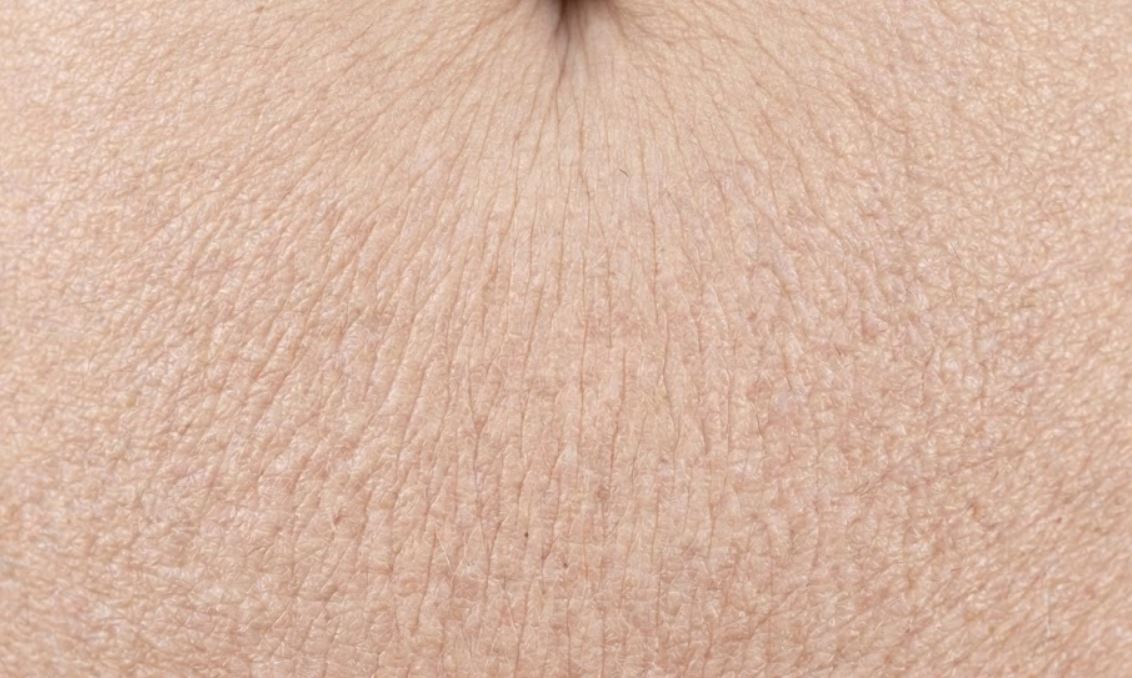
Being aware of alterations in the skin on your belly, like a looser texture or crinkly thinness, is likely inevitable. This process is often described as loss of firmness, or “snap-back,” – the skin no longer appears to feel and support how it used to.
The objective of this paper is to offer a distinct educational view on this subject. We will also discuss the reasons behind those biological changes and other popular elements that guide skin behavior. And describe the range of care approaches people are contemplating. Our aim is to help you make some sense of why you’re seeing what you are. And clarifying biological reality from common misperceptions, so you can navigate your understanding with a bit more clarity.
What People Typically Notice and Experience
The experience of loose stomach skin on the abdomen is often described in specific ways. People commonly report:
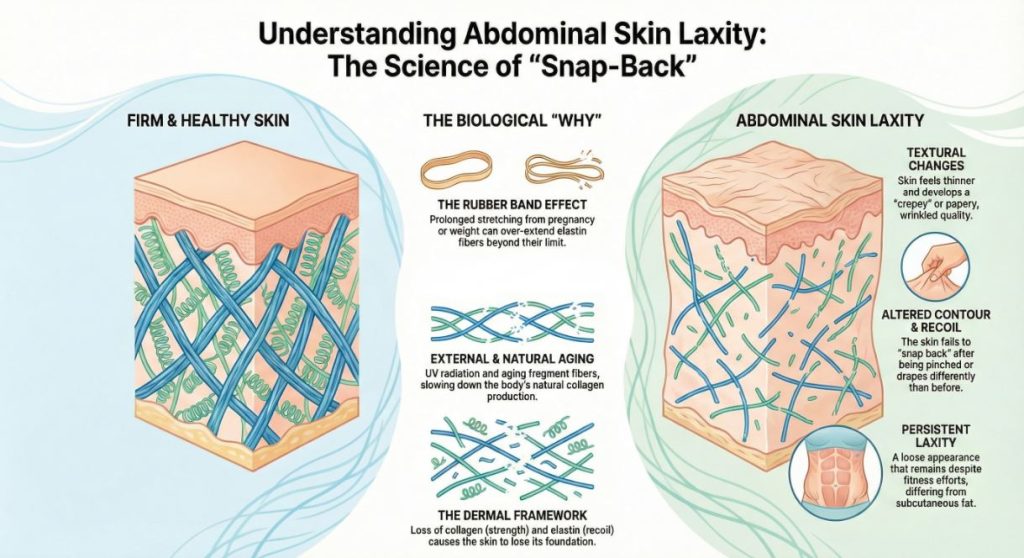
- Texture Changes: The skin may become thinner, more delicate, or have a creased paper-like texture called “crepey.”
- Changed Shape: Skin loses elasticity and does not bounce back when pinched or may hang more loosely. It is particularly evident in the wake of a large weight loss.
- The Skin Feels Loose: Even with a strong fitness regimen, the skin still feels like it appears somewhat loose and not of subcutaneous fat.
- Sensitivities: The skin around this area can occasionally feel more sensitive or irritated.
It’s crucial to distinguish this from general abdominal bloating or subcutaneous fat. The sensation and visual focus here are on the skin’s structure and elasticity itself, not what lies beneath it. You may also find helpful: Why Thigh Chafing Gets Worse in Summer & How to Manage It
The Biology of Skin Elasticity: Why Skin Changes
To understand why skin can become loose or crepey, it’s helpful to know what gives skin its natural firmness. The key lies in two components within the skin’s dermis layer: collagen and elastin.
- Collagen provides structural support and strength—it’s the framework.
- Elastin provides the ability to stretch and recoil—it’s the elasticity.
Several biological processes can affect these critical components:
- The Natural Aging Process: As time passes, the body’s natural production of collagen and elastin slows. Existing fibers can also become fragmented or lose their organization. This gradual change is a universal factor in how skin behaves over a lifetime.
- The Impact of Sustained Stretching: When skin is repeatedly stretched over time, the elastin fibers in the middle layer of skin break down, which causes the skin to lose its ability to snap back after being stretched. Skin is quite elastic, but once tension has been sustained for a certain length of time, there’s only so far it can bounce back. You can think of it as a rubber band that has been extended a long time. And it may not stretch back to its pre-length.
- Support structures damaged: External forces — such as exposure to the sun’s ultraviolet (UV) radiation — can damage collagen. And elastin fibers in the deep layer of skin, or dermis — a process called photoaging. This can break down the skin’s scaffold, resulting in a loss of firmness and crepe-like texture.
Common Triggers and Contributing Factors
While biology sets the stage, specific life events and factors can accelerate or highlight these changes on the stomach area:
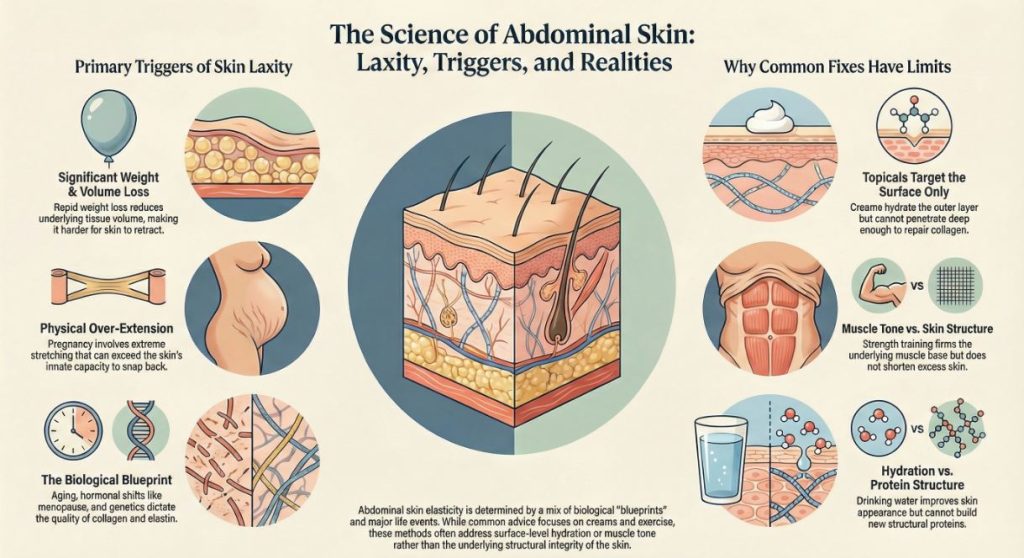
- Significant Weight Loss: This is a primary trigger that people identify. Rapid or substantial weight loss reduces the volume of tissue supporting the skin, and the skin’s ability to contract to the new contour depends heavily on age, genetics, and how long the weight was carried.
- Pregnancy: The abdominal skin undergoes extreme stretching to accommodate a growing baby. Post-pregnancy, the degree to which the skin retracts varies significantly from person to person.
- Aging and Hormonal Shifts: The decline in hormones like estrogen during menopause can further impact collagen production. And skin hydration, making changes in skin texture and laxity more apparent.
- Genetics: Your genetic blueprint plays a decisive role in the quality of your collagen and elastin. And your skin’s innate capacity for elasticity.
- Lifestyle History: A history of sun exposure (including tanning) on the abdomen, smoking, or significant fluctuations in weight over time can all influence the skin’s long-term resilience.
Why Standard Advice Can Feel Confusing or Ineffective
A common point of frustration, as seen in community discussions, is trying popular advice with disappointing results. Understanding why this happens can manage expectations. Related guide:
Understanding Self-Tanner Streaks on Elbows and Knees
- Topical Products Have Limits: Creams, lotions, and oils primarily affect the outer layer of skin (epidermis). They could enhance hydration, which in turn might plump and smooth fine lines. The appearance of crepiness appears to be diminished; they can’t penetrate the skin deeply enough to really rebuild/replenish/repair from inside (heat or age) collagen and elastin in the dermis. They are good for the well-being of the skin, but will not exfoliate and do nothing for loose skin.
- Hydration vs. Structure: Drinking ample water is vital for overall skin health and turgor, but it does not directly create new structural proteins. Dehydrated skin can look worse, but well-hydrated skin still operates within its genetic and biological structural limits.
- Strength Training Reshapes Muscle, Not Skin: Exercising to strengthen core muscles can help with posture, fill in some volume, and create a firmer or harder next base. This can result in a visible change in the appearance of your abdomen. But it does not actually change the extensibility or size of the skin that overlies the muscle.
Care Approaches and Professional Options: A Spectrum for Understanding
People explore various paths to address skin concerns. It’s important to frame these as approaches with different mechanisms and considerations, not as guarantees.
Skin-Focused and Lifestyle Approaches
These are centered on supporting overall skin health and creating the best possible environment for the skin.
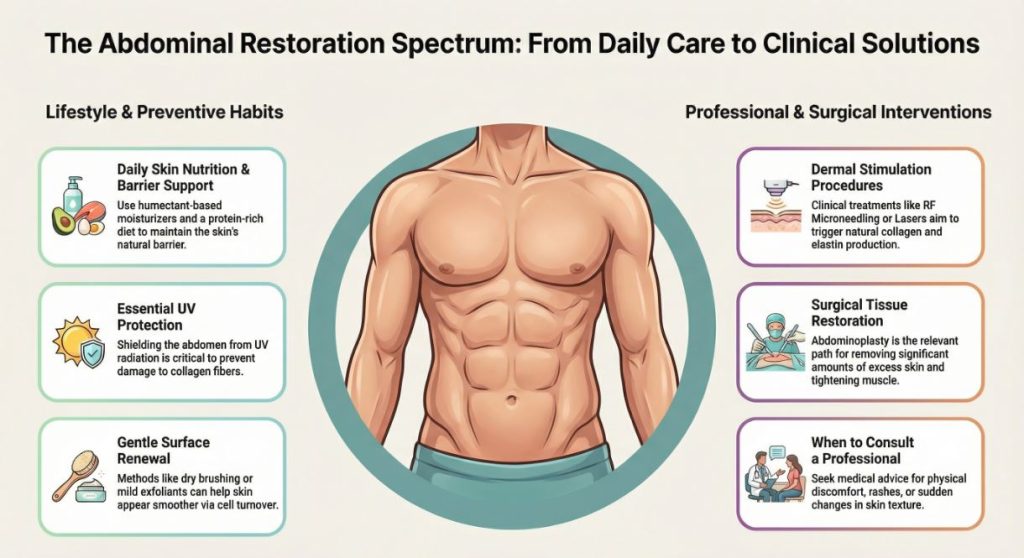
- Hydration, hydration, hydration: Humectant moisturizers keep the skin barrier intact and help to prevent trans-epidermal water loss and temporarily improve texture.
- Mild exfoliation – Things like dry brushing or using mild chemical exfoliants could be useful in surface cell turnover, which makes skin look smoother (maybe).
- Good-for-You Food: Eating a diet high in quality protein (the foundation for pretty much all collagen production), vitamin C (it helps make new collagen), and other antioxidants can promote your body’s natural upkeep processes.
- Sun Protection: Protecting the abdomen from UV radiation is one of the most evidence-based ways to prevent further damage to collagen and elastin.
In-Office Professional Procedures
For concerns related to skin structure, certain clinical procedures exist. Their role is to target the deeper layers of the skin (dermis) to stimulate a healing response.
- Radiofrequency (RF) Microneedling: Small needles and radiofrequency energy are utilized to induce controlled micro-injuries in the dermis to stimulate collagen and elastin production.
- Laser Treatments-Designed lasers aimed at the dermis will heat the layers to help stimulate collagen changes.
- Ultrasound Therapy – You can target deeper tissue layers and encourage tightening by using focused ultrasound energy while treating ultherapy.
Surgical Intervention
For significant amounts of loose skin, where the primary goal is the removal of excess tissue, surgical consultation is the relevant path.
- Abdominoplasty (“Tummy Tuck”): This is a surgical procedure that removes excess skin and fat from the abdomen and tightens the underlying muscle. It is considered when the amount of skin is substantial and non-surgical methods are not applicable.
When Seeking Professional Guidance Is Appropriate
This topic naturally intersects with professional medical fields. It is appropriate to consult a healthcare provider, a board-certified dermatologist, or a plastic surgeon when:
- The extra skin results in constant physical discomfort, such as rashes, chafing, or infections of the skin folds.
- You want to know what is causing your skin changes in particular.
- You need to learn all available clinical or surgical options that apply to your situation, including how they work, the realistic results, and other factors you should know about.
- You notice any sudden or unusual changes to how your skin looks or feels.
A professional can provide a personalized assessment of your skin’s condition, the factors involved, and explain procedures in a clinical context, helping you move from general information to personal understanding. Learn more about skin texture concerns: Rough Bumps on Back of Arms: A Guide to Keratosis Pilaris
Frequently Asked Questions
Can loose stomach skin ever “tighten up” on its own?
The skin itself has a small physiologic capacity to retract (most notably in younger patients or with less amounts of weight loss). It is a process that can last anywhere from many months to several years. “Unfortunately, within the biological constraints of elastin, aging and large alterations in weight lead to stretched out skin with an inability to retract entirely to its former state,” says Dennis.
Is crepey, loose skin on the stomach just a result of aging?
Aging is a universal contributing factor due to declining collagen production. However, it is rarely the sole cause of the abdomen. The stomach area is particularly susceptible to the combined effects of aging and significant life events like weight changes or pregnancy, which differentiates it from crepey skin that may appear on thinner-skinned areas like the inner arms solely from age.
Do “skin tightening” creams really work?
Many creams can temporarily improve the appearance of skin by providing intense hydration, making fine lines and crepiness less noticeable. Some may contain ingredients like retinoids that can, over the long term, encourage collagen production in the dermis. However, no topical cream can replicate the effect of removing or significantly tightening substantial loose skin, as its action is surface-level compared to the structural issue.
You May Also Ask
What is the most important thing to do first when addressing this concern?
The most beneficial step first is recognising that what affects your skin may not be how you perceive it. Differentiating muscle from fat and skin is essential. Then it’s about good (constant, evidence-based) skin health practice (hydration, shielding, feeding)” she adds. Then any additional decisions you may want to make about professional procedures can be approached from a place of information, not panic.
Can building muscle replace or fix loose stomach skin?
By developing abdominal muscles, the appearance may be enhanced by achieving a more toned and tighter foundation. Some of it can “fill out” the space under the skin, which may give the skin a smoother appearance. But for all that, it doesn’t actually change anything about what the skin itself is—how long it is, how stretchy or bumpy. It is an adjunct to body contouring; it is not specifically designed for skin laxity.
How much does genetics determine loose stomach skin after weight loss?
Genetics is one of the most common causes. They dictate your skin’s natural elasticity, the quality of your collagen and how it reacts to being tugged or pulled. That’s why two people who are the same age and lose the same amount of weight can have starkly different experiences with skin retraction.
Conclusion
There are a variety of factors that lead to loose or crepey skin on the stomach, and it is about more than simply age: when we talk about this subject, we’re addressing the way in which our bodies tend to break down collagen and elastin across our lives, as well as how those biological responses affect our skin tissue. The path to comprehending it lies in disentangling real, yet too-often exaggerated, possibilities of topical and lifestyle interventions from the potent determinism of genetics and time.
Why we’re more likely to be skeptical than reactive. Consider the approach: the most direct way to your best skin? Navigating with intention means managing those expectations: take good care of your health, support it with mindful care, and understand that while professional procedures work on structural principles. commonly they’re treating symptoms. With clear, biological explanations, you can get beyond generic advice and understand your options in a way that makes sense for you and those who will make this journey with you.
Disclaimer: This article is for educational purposes only and does not replace medical advice. Please see your dermatologist or physician for treatment options tailored specifically to your individual skin care needs.