
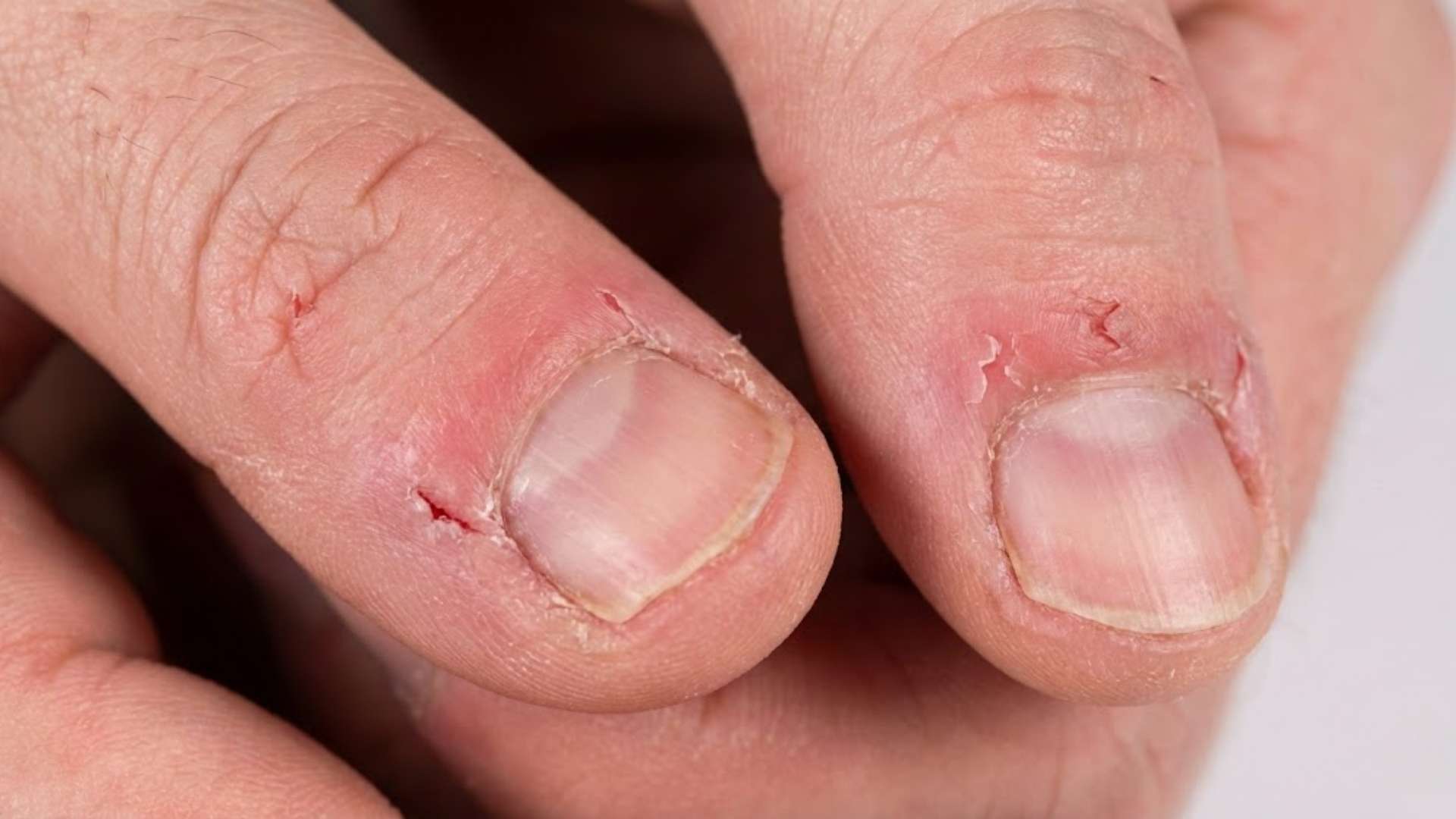
Painful hangnails that keep tearing are a common complaint. That sharp, sudden pain is all too familiar. You have another painful hangnail. It tore again. You might carefully trim it. You apply some lotion. Yet it returns in the same spot. This cycle is deeply frustrating. This is more than bad luck. It is a sign. Your skin is sending a message. Understanding that message is the first step. Lasting relief comes from patience, not quick fixes.
If peeling is also contributing to the problem, check out Nails Peeling in Layers at the Tips: Causes and Care Tips.
Why This Hurts So Much
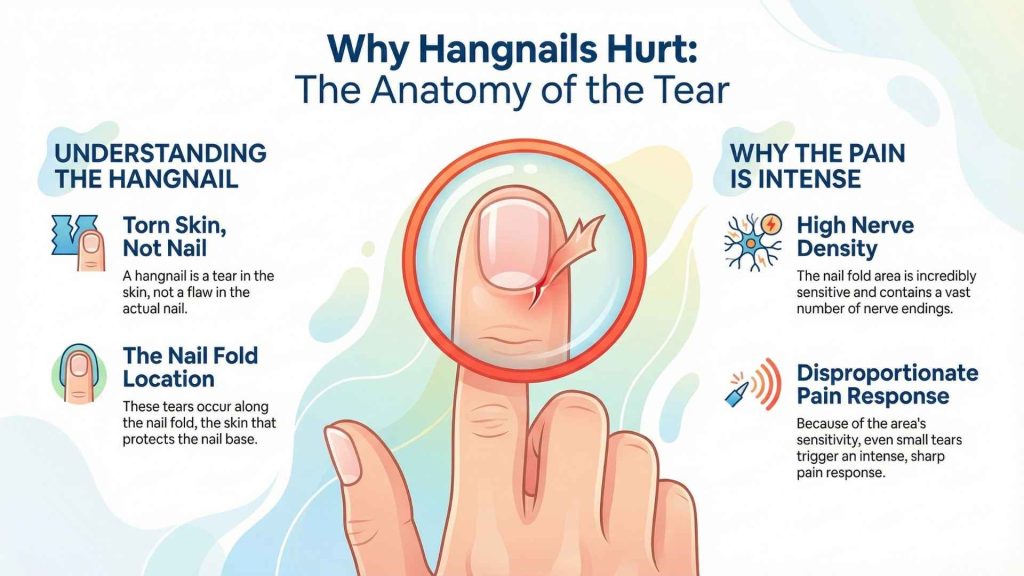
Let’s clear up a common myth first. A hangnail is not your nail. It is torn skin. This skin sits along your nail fold. The nail fold protects your nail’s base. It is incredibly sensitive. This area has many nerve endings. A small tear here hurts a lot. The pain feels disproportionate. This sharp pain is your first clue. You are dealing with damaged skin, not a nail flaw.
The Vicious Cycle of Damage
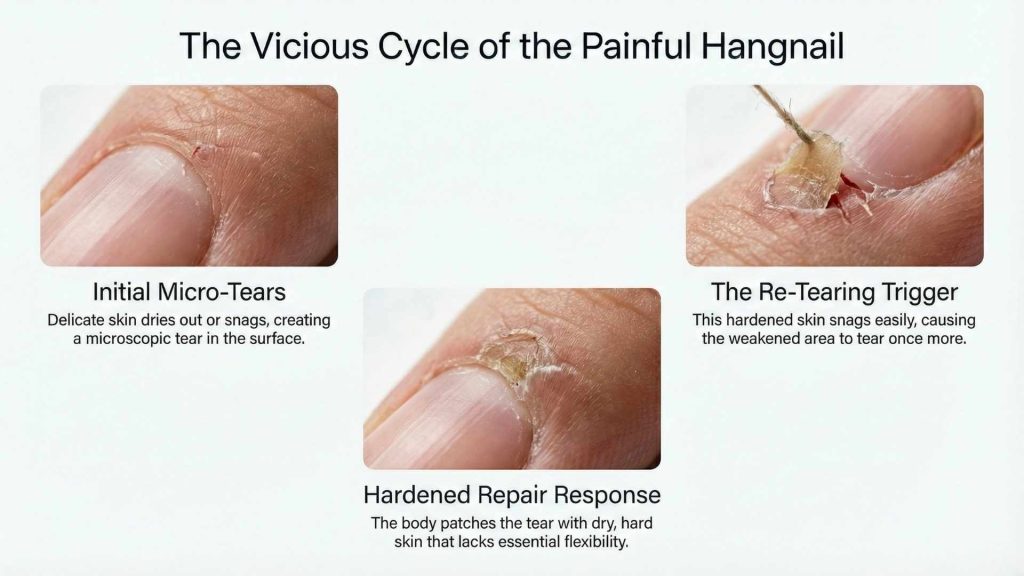
Painful hangnails that keep tearing follow a pattern. It is a cycle of damage and repair. The cycle has clear stages. First, the delicate skin dries out or gets snagged. Then, a microscopic tear forms. Your body tries to patch it quickly. It sends resources to heal. This can create dry, hard skin around the tear. This hardened skin lacks flexibility. It is prone to snagging again. So the area tears once more. The cycle repeats. You feel stuck. Each time, the skin weakens. Breaking this loop requires a new approach.
Common Culprits Behind the Tears
Many daily habits fuel this problem. See if any sound familiar.
- Chronic Dryness is the top cause. Skin needs moisture to bend, not break. Winter air sucks moisture out. So does heating and air conditioning. Frequent hand washing dries skin. Using harsh soaps makes it worse.
- Mechanical Damage happens without thinking. Do you bite your skin or cuticles? Do you pick at loose skin? Many people do this subconsciously. Aggressive manicures are another trigger. Cutting cuticles can damage the protective seal.
- Your Job or Hobbies play a role. Do you type all day? Do you work with paper, fabric, or clay? These materials create constant friction. Gardening without gloves exposes skin to dirt and dry plants. All these activities stress the nail fold.
If nail biting is making hangnails worse, read Biting Nails When Anxious: Why It Starts & How to Respond.
Where Standard Advice Falls Short
General tips are well-meaning. They often miss the mark for chronic cases. “Just moisturize” is not a complete plan. It ignores the root cause. “Don’t pick at it” is very hard to follow. The advice to “clip it” can backfire. Clipping dry, hard skin might cause a deeper tear. This resets the healing cycle. Your goal must be different. You must support long-term skin resilience. Quick fixes will disappoint you.
A Gentler Path to Resilient Skin
The goal is barrier repair, not just clipping. Your skin needs consistent care. This method focuses on protection and patience.
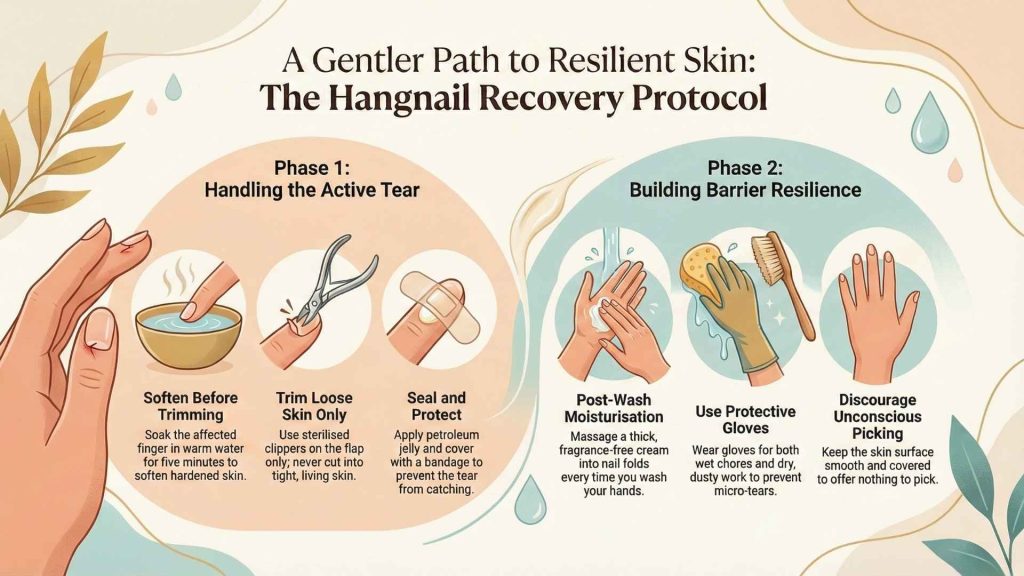
Step 1: Handle the Current Tear Gently
Do not rush this process. Be slow and careful.
First, wash your hands with a mild soap.
Soak the affected finger in warm water. Do this for five minutes.
This softens the hardened skin beautifully.
Use clean, sterilized nail clippers. Only trim the loose skin flap.
Never cut into tight, living skin.
Pat the area completely dry with a clean towel.
Apply a plain ointment like petroleum jelly.
Cover it with a small bandage if it catches on things.
Step 2: Build a Stronger Skin Barrier
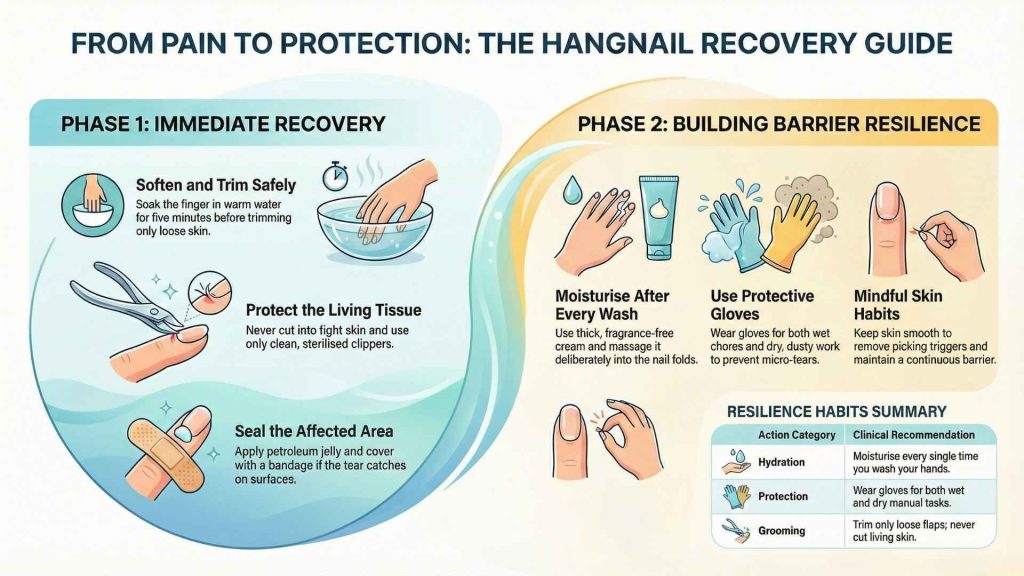
This daily step stops future painful hangnails that keep tearing. Moisturize every single time you wash your hands. Use a thick, fragrance-free cream. Massage it into your nail folds deliberately. Protect your hands with gloves for wet chores. Wear gloves for dry, dusty work too. This simple habit prevents countless micro-tears. Be mindful of unconscious picking. Keep the skin smooth and covered. A smooth surface offers nothing to pick.
When to Seek Professional Guidance
Home care works for most people. Sometimes you need expert insight. Consult a dermatologist or doctor if you see pus. Seek help for spreading red streaks. Get advice for severe swelling or throbbing pain. Talk to a professional if the area won’t heal. Do this after two weeks of careful care. They can check for infection. They can also identify other skin conditions. This ensures you get the right treatment.
Your Questions Answered
Why do I get them on the same finger?
That spot has weaker skin now. Previous damage creates a vulnerability. Consistent care can strengthen it over time.
Is it okay to use nail glue on a tear?
We do not recommend this. Glue can trap bacteria. It also causes a harsh, rigid patch. Flexible ointment is a safer choice.
Could my diet cause this problem?
Overall skin health needs good nutrition. Severe dryness might link to some deficiencies. Focus on drinking enough water daily. Eat a balanced diet rich in healthy fats.
How long until my skin stops tearing?
There is no set timeline. With perfect care, you may see improvement in weeks. Deeper damage needs more time. Consistency is your greatest tool.
Are some people just prone to hangnails?
Yes, some have naturally drier skin. Others have jobs that are very hard on hands. Your biology and environment both matter. Careful habits help everyone.
What is the best overnight treatment?
Apply a generous layer of healing ointment. Then wear soft cotton gloves to bed. This deeply moisturizes without any mess.
Moving Beyond the Cycle
Painful hangnails that keep tearing test your patience. They are a signal from your skin. Listen to that signal. Shift your focus from removal to reinforcement. Your skin wants to heal itself. It needs the right conditions. Provide consistent moisture and protection. Avoid the triggers you can control. Be gentle with your hands. This is not a race. Lasting change happens slowly. Your hands work hard for you every day. They deserve this thoughtful care.
Disclaimer: This article offers educational information only. It is not medical advice. Please consult a healthcare professional for personal concerns.