
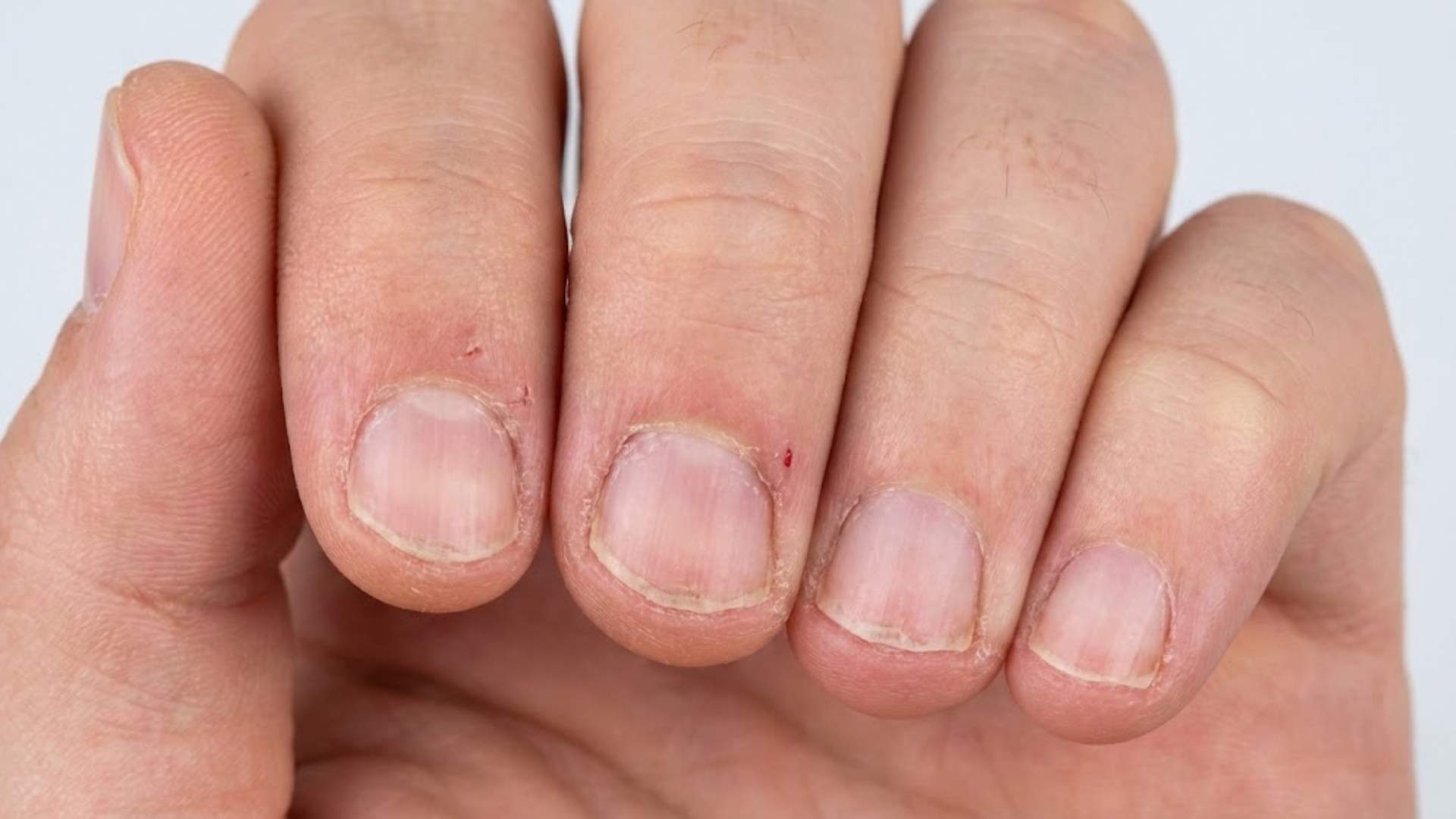
Many people find themselves biting nails when anxious. This behavior often feels automatic. It can happen during stress or deep thought. People usually notice it after the fact. This article explores this common experience. We will look at the underlying reasons. Our focus is on providing clear understanding. We offer no diagnosis or medical claims.
Recurring hangnails can be part of the cycle — learn more inPainful Hangnails That Keep Tearing: Stop the Cycle.
What You Might Notice First
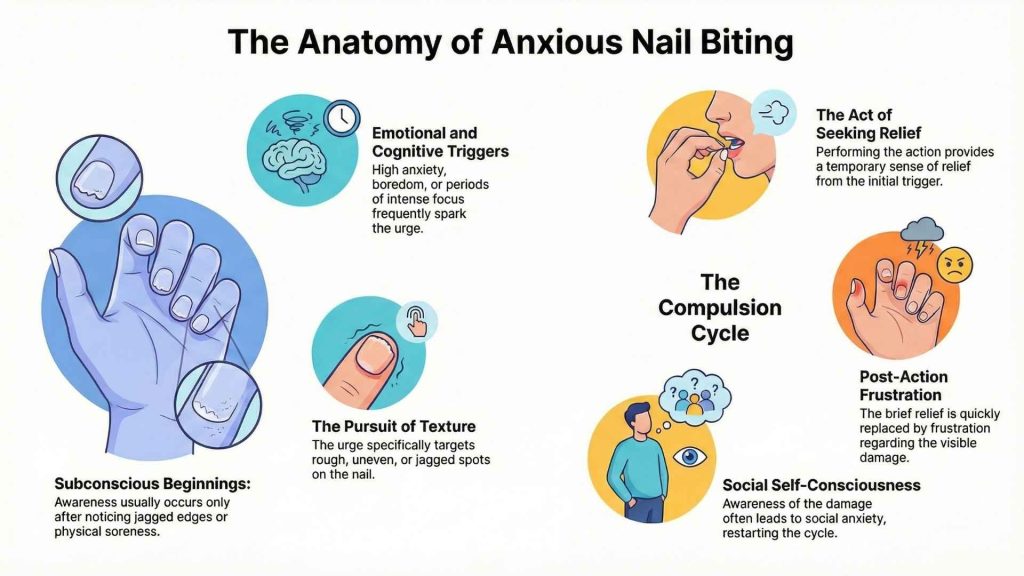
Biting nails when anxious often begins unconsciously. Awareness comes later for most individuals. You might see a jagged nail edge. Perhaps you feel soreness on a fingertip. Social self-consciousness can also trigger awareness. Many seek a specific nail texture. The urge targets rough or uneven spots. It happens in various states.
High anxiety is a common trigger. Boredom or intense focus can also spark it. Temporary relief frequently follows the action. Frustration about the damage comes later. This cycle repeats for many people.
The Anxiety and Nail Biting Connection
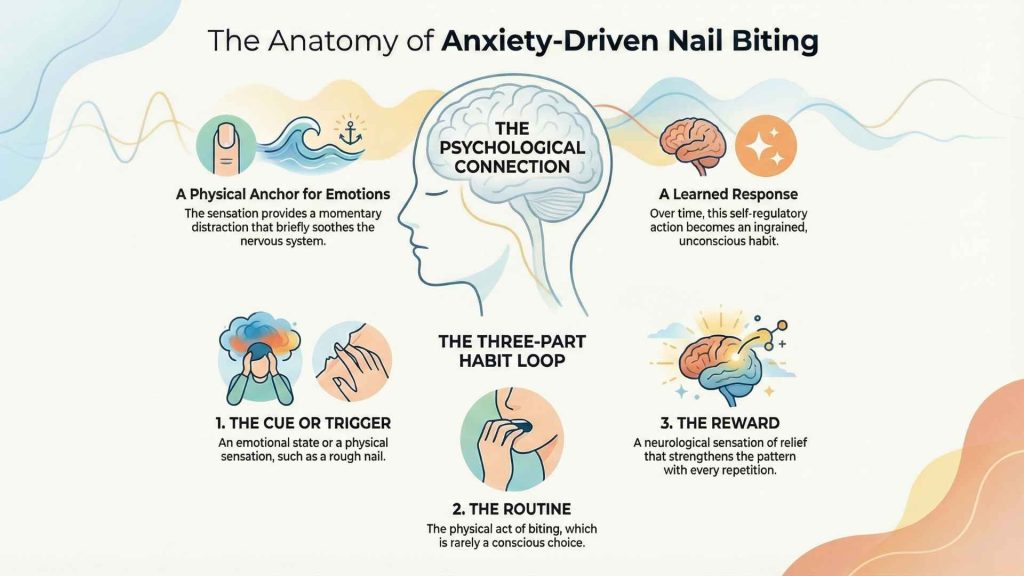
Why does biting nails when anxious occur? The behavior links to self-regulation. It provides a physical anchor for feelings. The sensation offers momentary distraction. This can soothe the nervous system briefly. It becomes a learned response over time. The action is rarely a conscious choice.
The Habit Loop Explained
A powerful habit loop drives this behavior. It has three key components. First, a cue or trigger starts it. This could be an emotional state. A sensory cue like a rough nail works too. Second, the routine is the biting itself. Third, a reward reinforces the pattern. This reward is not a conscious prize. It is a brain sensation like relief. This loop strengthens with every repetition.
If your nails are also splitting, seeWhy Are My Nails Peeling in Layers? Causes & Care.
Common Triggers and Contributing Factors
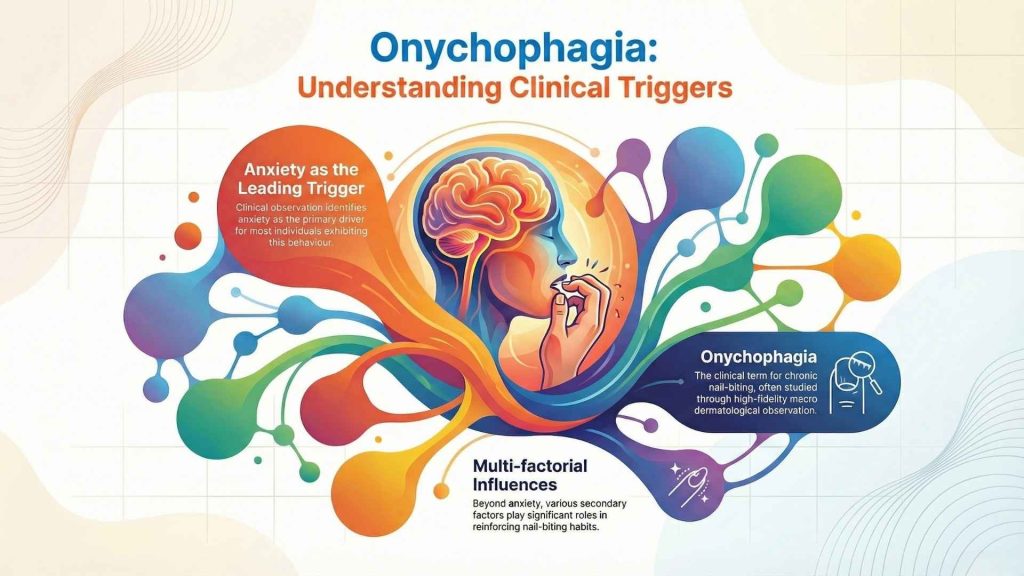
Anxiety is a primary trigger for many. However, other factors play significant roles. Understanding them offers better insight.
- Sensory Seeking: The physical act provides specific feedback. The feel of biting is itself the goal.
- Arousal Levels: It modulates both high and low arousal. Stress increases arousal needing soothing. Boredom lowers it needing stimulation.
- Learned Behavior: Childhood observation often introduces the pattern. Family members may model the action.
- Perfectionism: An imperfect nail or cuticle can trigger the urge. The attempt to “fix” it starts the cycle.
Why Standard Advice Often Fails
Common tips are everywhere online. “Just stop” is a typical suggestion. Bitter polish recommendations are frequent. “Keep your hands busy” is another. These address only the surface behavior. They ignore the cue and the reward. This is why they feel confusing. They also seem ineffective long-term. Bitter polish can lose its effect. People grow accustomed to the taste. Fidget toys may not match the needed sensation. This mismatch causes discouragement. It can feel like a personal failure. The strategy is simply incomplete.
Helpful Patterns: A Kinder Approach
A multi-layered perspective works better for most. This involves awareness and compassionate response. Building understanding is the critical first step.
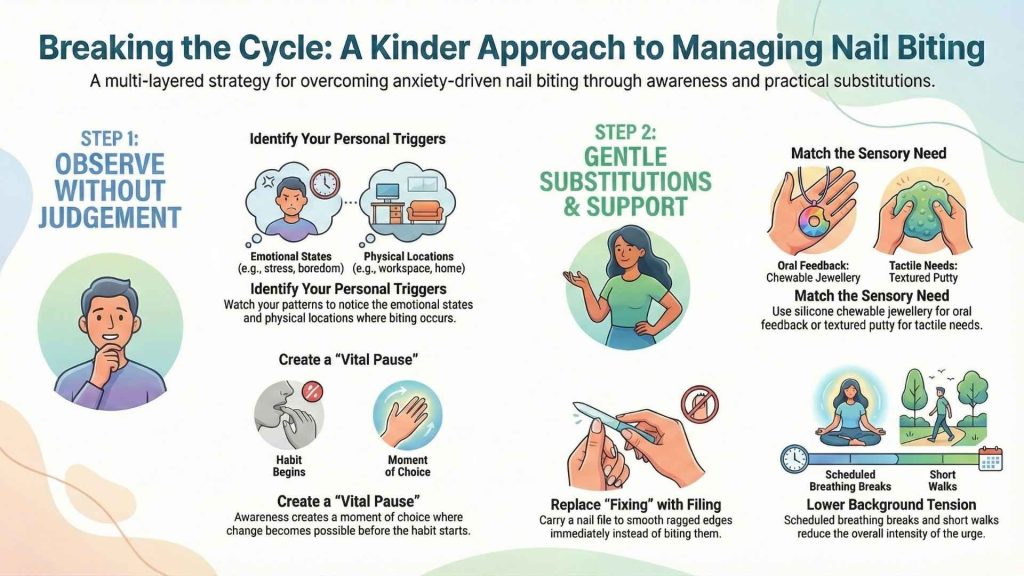
Start With Observation, Not Judgment
Watch your own patterns without criticism. Notice the times when biting happens. What emotional state were you in? Where were you physically located? This data reveals your personal triggers. Awareness creates a vital pause. That pause is where change becomes possible.
Explore Gentle Substitutions
Find alternatives that meet similar needs. The goal is a less damaging response. Effective substitutes vary per individual.
- For Oral Sensation: Try safe, silicone chewable jewelry. It provides similar oral motor feedback.
- For Tactile Needs: Keep textured objects nearby. A smooth stone or moldable putty helps.
- For “Fixing” Urges: Carry a nail file. Smooth ragged edges immediately instead.
Incorporate Calming Daily Practices
General stress management reduces urge intensity. This supports your overall effort. Consider short daily mindfulness exercises. A brief walk can regulate your system. Scheduled breathing breaks are also useful. Lowering overall tension changes the background. This makes the urge less powerful.
When Professional Support Makes Sense
Knowing a boundary is wise. Professional guidance can be very beneficial. Seek support for specific reasons. Repeated physical injury is a key sign. Infections or dental damage matter too. Feeling overwhelmed by the behavior is another. Significant distress indicates help may be needed. Other anxiety symptoms might also be present. A healthcare professional can offer assessment. Therapists understand habit reversal training. Dermatologists treat skin and nail damage. This step is about proactive care.
Frequently Asked Questions
It can be a body-focused repetitive behavior. A professional makes that diagnosis. Severity and distress determine the classification.
Not necessarily. It can be a form of stimming. Neurodivergent individuals may use it for regulation. However, it is also very common generally.
The behavior modulates arousal levels. Boredom is a low arousal state. Biting provides stimulating input in that moment.
Framing it as willpower is often unhelpful. The habit loop operates automatically. Understanding the cycle is more effective.
Often, yes. The nail matrix can heal. New nail growth is usually healthy. Protection from damage is essential.
They can be a helpful deterrent initially. Their effect may fade over time for some. Pairing them with other strategies is best.
Conclusion
Understanding biting nails when anxious requires patience. Recognize the complex pattern behind it. Change involves increased self-awareness first. Experiment with kindness toward yourself. Reduce pressure for immediate perfection. This path leads to informed decisions. Professional support remains a valid option. Your well-being is the ultimate goal.
Disclaimer: This article is for educational purposes only. It does not replace professional medical advice. Always consult a qualified healthcare provider.