
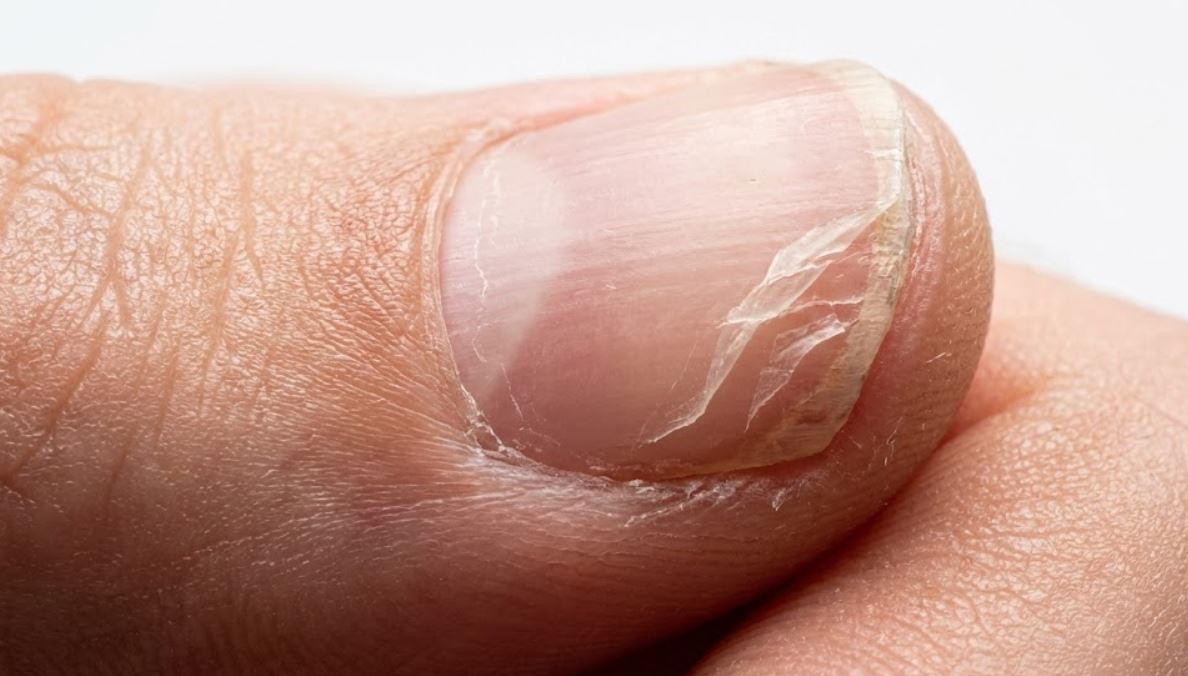
It starts subtly. You see the small, clear flap at the edge of a fingernail. As you drag your finger along it, it snags in the thin layer. Soon enough, it could peel even further back to reveal a delicate, ragged substrate underneath. This phenomenon – nails that crack horizontally across the free edge of the nail, peeling in “layers” or like an onion– is such a source of frustration. It dulls nails, can catch on clothes, and can make polish application tough.
The impulse is frequently to look for an easy fix or a tonic. But the issue of peeling nails isn’t usually one of a specific deficiency; it’s typically interference in the nail’s complex growth mechanism or an insult to its structure from the outside.
This article will get into the multi-layered biology of the nail to explain why peeling occurs, go through the most common causes behind it, and touch on a holistic approach to care that encourages natural strength in the nail.
If the peeling is mostly happening at the very ends, check Nails Peeling in Layers at the Tips: Causes and Care Tips.
What You’re Actually Seeing: The Nail’s Layered Structure
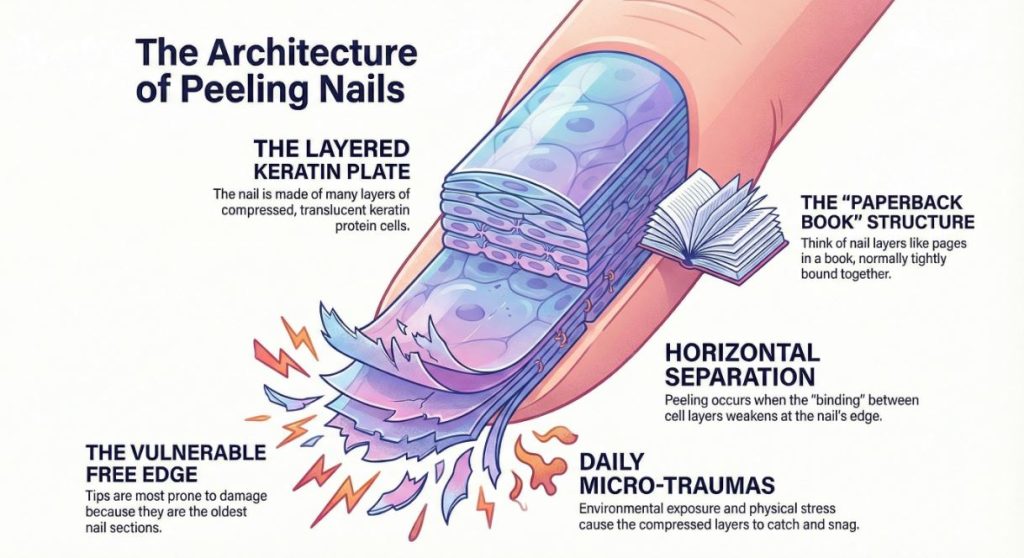
To talk about peeling, it helps to come to terms with what, exactly, a nail is. The nail plate — the hard part we see — isn’t a solid piece. It’s mostly keratin, a tough form of protein that is packed into many layers of flat, thin, tightly packed cells.
Think of it as a paper book. In perfect condition, the pages (cell layers) are closely stacked. Peeling occurs when the “linking” at the free edge ( tips) breaks or is severed allowing these layers to peel away from each other side-to-side. The tip is most vulnerable because it is the oldest part of the nail, has endured the most environmental exposure, and bears the brunt of daily micro-traumas.
Why Do the Layers Separate? Common Triggers and Contributors
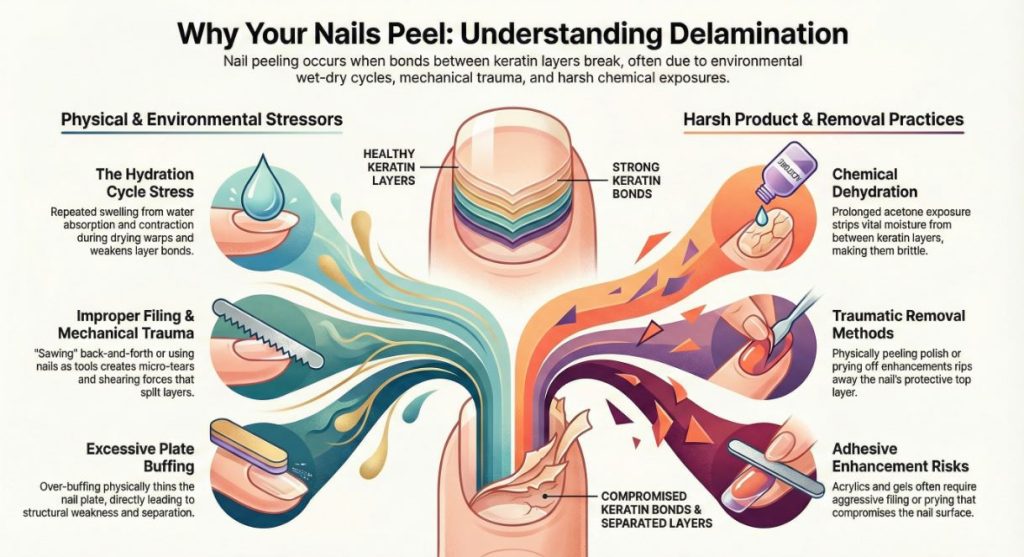
Peeling is rarely due to one cause. It’s usually the result of a combination of factors that compromise the bonds between nail layers. These can be grouped into external stressors and internal influences.
External Stressors: Physical and Chemical Damage
These are the most common drivers of peeling nails.
- Repetitive Wetting and Drying: This is the chief villain. The keratin layers can take up some water, causing them to swell a little. When they dry, they contract. Cyclic expansion and contraction (from washing hands, cleaning, and swimming) put stress on the bonds between layers, leading to a separation over time, in a way similar to how exposure to moisture over and over warps layered materials.
- Mechanical Trauma and Improper Filing: This is a significant, often overlooked factor.
- Sawing Back and Forth: Filing in a heavy back-and-forth motion, particularly with a coarse-grit file, leads to micro-tears and frays the keratin layers of the edge, which encourages peeling.
- Overbuffing on the nail plate: Buffing takes away layers of your natural nails. Buffing too much will thin the nail plate, which itself creates weakness and separation.
- Nails as Tools: Prying cans, scraping off labels or typing with your nails instead of fingertips may apply shearing forces on the free edge and can separate layers.
- Harsh Nail Product Practices:
- Bad Polish Removal: Acetone and other strong removers are incredibly drying. When a cotton pad is soaked and sat on the nail for some time, it removes essential moisture from the gaps in between keratin layers. When the polish is peeled away, it takes the top layer of your nail right along with it.
- Sticky nail enhancements: The way that press-ons, acrylics or gels are typically taken off involves a lot of aggressive filing and ripping that can tear away the top layer of your nails.
Internal and Biological Influences
While less common than external causes, these factors affect the quality of the new nail being formed.
- Natural Nail Physiology: Some people simply have a thinner nail plate or produce less cohesive keratin layers, and are therefore more likely to peel. This can be genetic.
- Short-term Physical Stress: Change or interference in nail growth can be seen with illness, after surgery, from high fevers, or during episodes of high stress. You could see a horizontal ridge or a period of thinner, more brittle growth that appears weeks later as the nail grows out.
- Nutritional Status: While not the first cause to assume, long-term, significant deficiencies can play a role. Keratin production relies on adequate protein. Minerals like iron and zinc are also involved. A varied, balanced diet typically provides these.
Why Generic Advice Can Feel Confusing or Ineffective
When searching for solutions, you may encounter contradictory guidance. This confusion often stems from oversimplifying the problem.
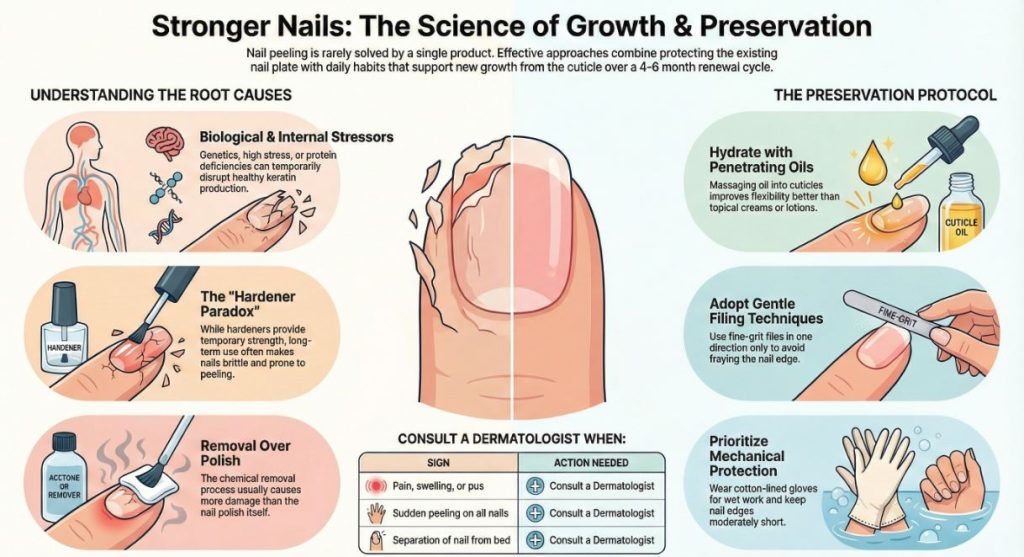
- The “Moisturize vs. Harden” Paradox: You can listen to “moisturize your nails,” and you can then hear another one, which says, “use a nail hardener.” These can seem at odds. The truth is context-dependent. When nails are dehydrated and brittle, you need to provide them with oils to increase flexibility. A protective hardener can be of temporary help if the nails are soft and weak. Many regular hardeners are over-hardening, which will make the nail brittle with continued use and can exacerbate peeling. The key is being in tune with what your nail looks like whenever it is healthy.
- The Myth of the Single Supplement: There is no universal “nail vitamin” that will stop peeling if the primary cause is external damage. While certain supplements may improve nail thickness in some individuals, they have no effect if the peeling is due to mechanical trauma or moisture cycles.
- “Just Stop Using Polish”: This common suggestion isn’t always necessary. A non-dehydrating, gentle base coat can sometimes act as a protective barrier. The greater issue is often the removal process, not the polish itself.
Patterns of Care That Support Nail Integrity
The goal is not to “fix” the already-grown nail plate but to protect the free edge from further damage and support the growth of healthy new nail from the cuticle. This requires patience, as it takes 4-6 months for a fingernail to fully renew. If torn skin around your nails is part of the issue, see Painful Hangnails That Keep Tearing: Stop the Cycle.
Adjusting Your Nail Care Technique
- File Gently and Correctly: Use a fine-grit file. File in one direction only, from the side toward the center, to smooth the edge without fraying it. Avoid shaping when nails are wet and soft.
- Keep Nails Moderately Short: A shorter free edge is less prone to levering forces and trauma.
- Be Mindful of Polish Removal: Use an acetone-free remover for regular polish. Soak a cotton pad, press it on the nail for 30 seconds, then gently wipe down toward the free edge—don’t scrub back and forth. Never peel or scrape off polish.
- Use a Protective Layer: When doing wet work, wear gloves with a cotton liner.
Supporting Hydration and Protection
- Apply Nail and Cuticle Oil: This is one of the most effective habits. Oils are small molecules that can penetrate the nail plate better than creams. Massaging oil into the cuticle and nail plate hydrates the layers and improves flexibility. Apply after washing hands.
- Choose Products Carefully: Look for gentle, nourishing formulas. If using a hardener, opt for a “protective” or “bonding” type that reinforces the nail surface without over-hardening. Use it for a limited period.
When to Consider a Professional Opinion
While peeling nails are often a cosmetic concern, certain patterns warrant a conversation with a healthcare provider. Consider scheduling an appointment with a dermatologist if you notice:
- In peeling, there is also heavy discoloration, thickening, or separation of the entire nail from the bed.
- Sudden onset peeling w/o a known external cause in all of the nail plates simultaneously.
- Pain, swelling, redness, or pus around the nail.
- Persistent peeling despite several months of consistent, gentle treatment; in some cases, with other symptoms such as fatigue or hair loss.
A specialist can help determine that there is no underlying condition and offer personalised advice.
FAQ Section
The polish itself is rarely the direct cause. However, the removal process is a major contributor. Harsh removers dehydrate the nail layers, and physically peeling off polish can rip away the top layer of the nail plate. Using gentle removers and avoiding peeling are crucial steps.
It can be, but it’s not the most common cause. Significant, long-term deficiencies in protein, iron, or zinc can affect nail strength. However, for most people, external physical and chemical damage is the primary driver. If you suspect a deficiency, a healthcare provider can offer appropriate testing.
There’s no one-size-fits-all answer. Going bare allows for consistent oil treatments. However, a gentle base coat and regular polish can sometimes act as a protective shield. The critical factor is the health of your removal routine. If you choose Polish, commit to removing it gently.
Fingernails grow about 3-4 millimeters per month. Since the peeling occurs at the free edge (the oldest part), you must protect the existing nail while the new, healthy nail grows. It typically takes 4 to 6 months of consistent, gentle care to see a completely new, unpeeled nail plate.
Some can, depending on their formula. Traditional “hardeners” can over-harden nails, making them rigid and brittle, which increases the likelihood of splitting. Look for products labeled as “nail strengtheners,” “protective,” or “bonding” that work by reinforcing the nail surface with flexible ingredients.
This pattern strongly suggests an external, mechanical cause. The nails that peel are likely the ones you use more often as tools (like your dominant thumb and index finger) or that sustain specific trauma.
Conclusion
Peeling nails are in essence, a symptom of wear and tear on a very complex piece of kit. The answer isn’t to look for a quick fix, but to get from a cycle of harm into a cycle of care. By knowing the layers of your nails, you can recognize and avoid the triggers that lead to breaking your nails — whether it’s from filing a certain way, washing dishes, or removing polish.
The most effective approach is often the simplest: consistent protection from moisture extremes, gentle handling, and regular hydration with oils. With patience and attentive care, you can support the growth of stronger, more resilient nails from the base up.
Disclaimer: This article is for information only and should not be used for the diagnosis or treatment of medical conditions. It is not on any diagnosis, prescription or treatment plan. If you have any chronic nail concerns and for a healthy medical condition, we recommend seeing a professional, such as a dermatologist.