
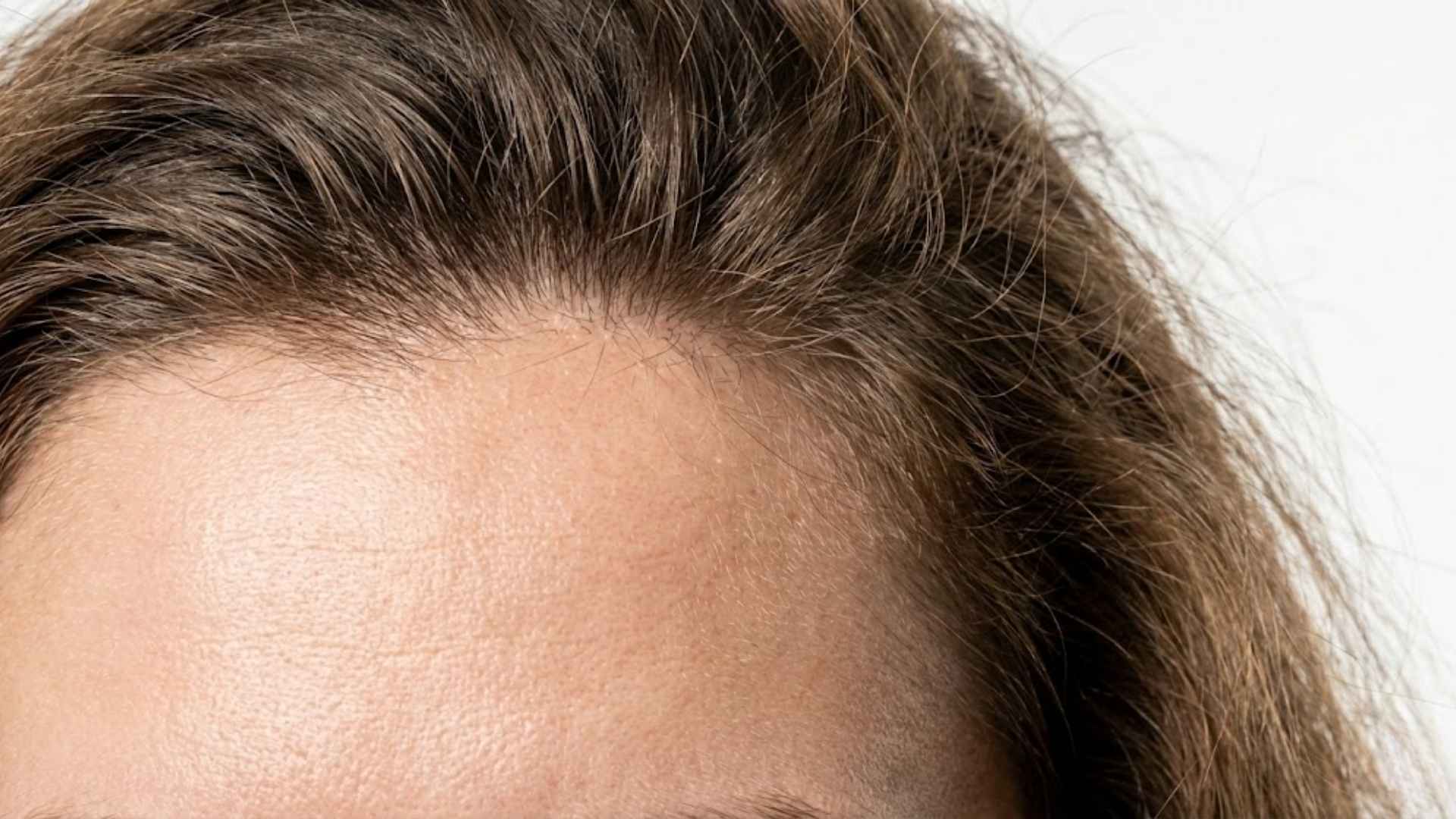
The struggle with greasy roots but dry frizzy ends is a common hair puzzle. You see oily shine at your scalp. Yet your ends feel parched and look frayed. This contradictory condition frustrates many. Grasping the underlying cause brings clarity. It transforms your approach to hair care. Let’s decode what your hair is trying to say.
If buildup is making your roots greasy faster than usual, see Hair Feels Sticky After Washing? – Here Is Your Solution.
Why Greasy Roots But Dry Frizzy Ends Happen
This situation stems from a natural oil distribution problem. Your scalp produces sebum to condition hair. Sebum should travel down each strand. It often doesn’t reach the very ends. This leaves roots oily and ends deprived. The ends become dry and raised, causing frizz. It is one connected issue, not two.
The Sebum Travel Roadblocks
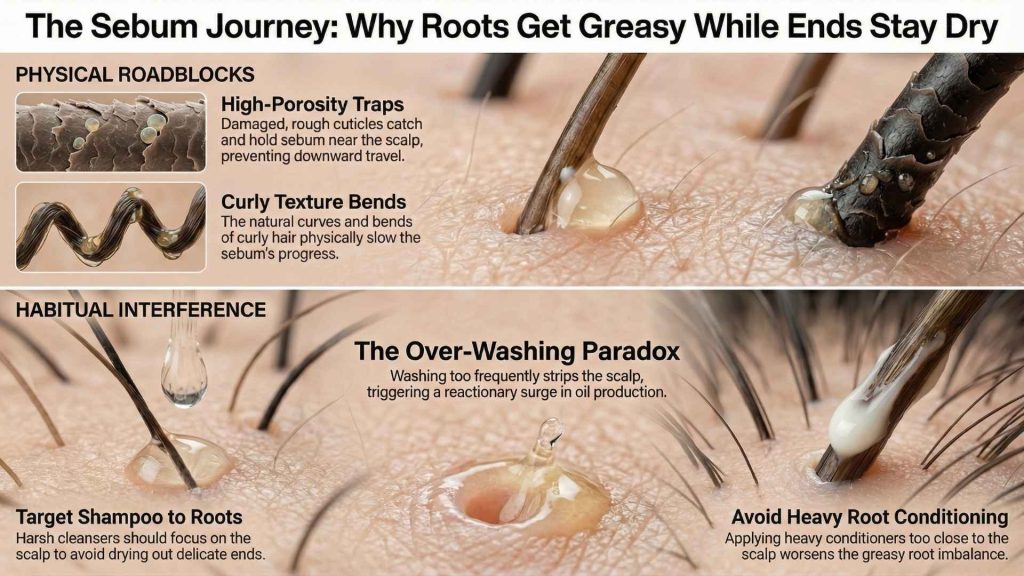
Several factors stop oil from traveling. Hair porosity is a major player. Damaged, high-porosity hair has a rough cuticle. This rough surface traps sebum near the top. Curly hair textures also complicate this journey. The natural bends slow sebum’s progress downward.
Your daily habits might be interfering. Washing too frequently can backfire. It strips the scalp, triggering more oil production. Harsh shampoos focus only on the roots. They often neglect the delicate ends. Heavy conditioners might also weigh down roots. Incorrect application worsens the imbalance.
How Common Advice Falls Short
Generic tips can increase your frustration. “Just wash less” might make roots greasier. “Moisturize more” could overwhelm your scalp. A single product rarely addresses both zones. This problem requires a dual-zone strategy. Different areas need different solutions.
Caring for Greasy Roots But Dry Frizzy Ends
Successful care means treating two distinct zones. Your scalp and roots need gentle cleansing. Your mid-lengths and ends crave focused hydration. This targeted approach manages both concerns well.
Your Washing Strategy
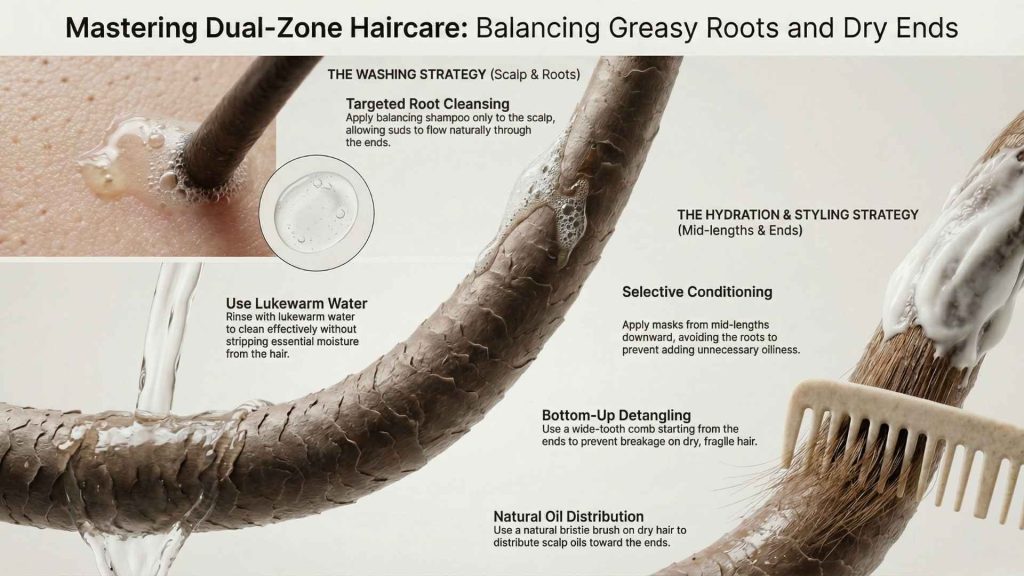
Start with your shampoo choice. Use a gentle, balancing formula. Apply it only to your scalp and roots. Massage it thoroughly with your fingertips. Let the suds flow through the ends. This cleanses them without direct stripping. Rinse with lukewarm water for best results.
Your Conditioning Strategy
This step is crucial for dry ends. Choose a nourishing conditioner or mask. Apply it from the mid-lengths downward. Concentrate the product on your driest areas. Avoid applying it directly to your roots. Leave it on for several minutes before rinsing. This hydrates without adding scalp oiliness.
Styling and Daily Habits
Adjust your styling for better balance. Use a wide-tooth comb on wet hair. Start detangling carefully from the ends upward. Apply leave-in products to the lower half. Avoid applying them near your scalp. Use heat protectant before any styling tools. Focus this protection on your fragile ends.
Consider your brushing technique too. A natural bristle brush can help. It distributes small amounts of scalp oil. Brush from roots to ends gently. Do this only when your hair is dry. Over-brushing can stimulate more oil production.
Dry ends can eventually lead to breakage and splitting — explained in
Making Sense of Split Ends That Travel Up the Shaft
When to Seek Professional Guidance
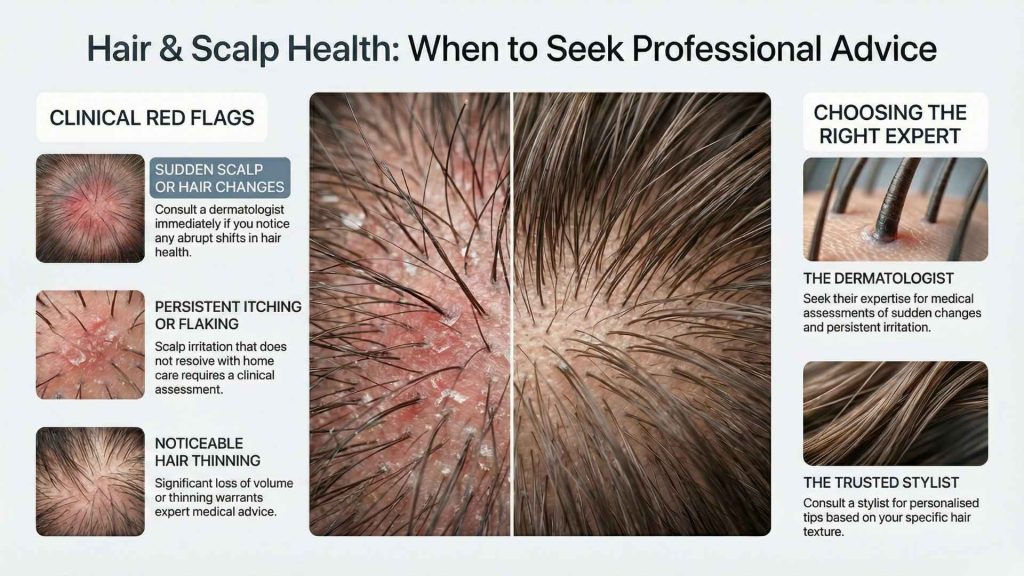
This home care approach helps most people. Certain signs suggest a professional opinion. Consult a dermatologist for sudden changes. Persistent scalp itching or flaking needs assessment. Noticeable hair thinning warrants expert advice. A trusted stylist can also offer personalized tips. They can evaluate your hair’s specific texture and needs.
Frequently Asked Questions
Can I train my hair to need less washing?
This training concept has limited evidence. Focus on gentle, scalp-focused cleansing instead.
Should I ever put conditioner on my roots?
Avoid heavy conditioners on greasy roots. Lightweight formulas can be applied higher up.
Are hair oils bad for my greasy roots?
Apply oils only to your very ends. Keep them far away from your scalp area.
Is cold water better for washing hair?
A final cool rinse can smooth the cuticle. It may add shine to dry, frizzy ends.
How often should I trim my hair?
Regular trims remove the driest split ends. This prevents frizz from traveling upward.
Final Thoughts
Managing greasy roots but dry frizzy ends is possible. Patience and the right strategy are key. Understand your hair’s unique geography first. Treat your scalp and ends as separate zones. Consistent, gentle care creates the best results. Your hair can find its healthy, balanced state.
Disclaimer: This article provides educational information only. It is not professional medical advice. Please consult a dermatologist for personal concerns.