
That initial yawn of the day should not be accompanied by a stiff jaw, an acute pain near your ear, or an audible click or pop. If it is, you’re not alone. Morning jaw pain, combined with sounds in the jaw and unusual spots of wear on your teeth, is a very common phenomenon that results from the complexity of your jaw joint and our unconscious rituals at night.
This article will explain just what might be going on, why it tends to crop up most frequently in the morning and how all of the pieces (from joint shape to sleep position) fit together. With rational clinical explanations for why the patient has that symptom, this aims to give rigour and a basis on which decisions can be made.
If your jaw discomfort is accompanied by tooth sensitivity, read Teeth Hurt When Drinking Cold Water? (5-Step Fix).
The Mechanics Behind the Click: Your Jaw Joint Explained
To understand the clicking and discomfort, it helps to visualize the joint at work. On each side of your head, your temporomandibular joint (TMJ) acts as a sophisticated hinge and sliding mechanism connecting your jawbone to your skull. It’s one of the most frequently used joints in your body.
One small, shock-absorbing cartilage disc inside the joint is a critical part of the system. It rests between the bones and ideally should glide with your jaw as it opens and closes when you speak or chew. The most common sound that people hear is the clicking or popping noise emanating from this disc. As the jaw shifts, this disc can momentarily slip or be pushed out of place and back into normal position with a popping sound. It’s similar to the sensation of a gentle knuckle crack, but located just in front of your ear.
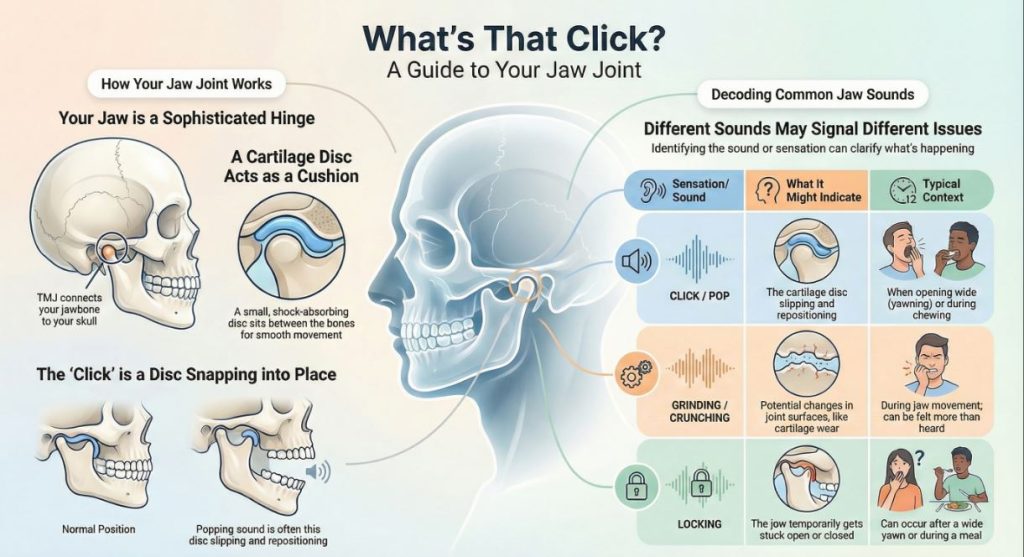
Table: Common Jaw Sounds and Sensations
| Sensation/Sound | What It Might Indicate | Typical Context |
|---|---|---|
| Clicking or Popping | Often the cartilage disc slipping and repositioning. | When opening wide (yawning) or during chewing. |
| Grinding or Crunching | May suggest changes in the joint surfaces, such as cartilage wear. | During jaw movement, sometimes felt more than heard. |
| Locking | The jaw temporarily gets stuck open or closed. | Can occur after a wide yawn or during a meal. |
Why Morning? The Nighttime Connection to Jaw Symptoms
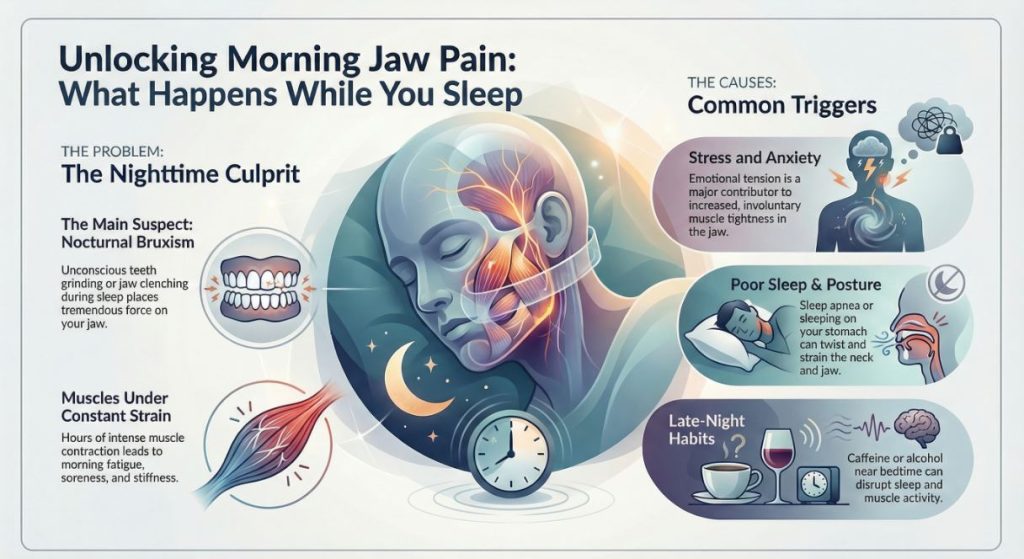
Symptoms that are most pronounced upon waking provide a strong clue about their origin. During the day, you have conscious control over your jaw. At night, involuntary habits take over, and your body’s position can add strain.
Nocturnal bruxism — the fancy word for clenching your jaw or grinding your teeth in your sleep — is the biggest link to morning pain. This isn’t a purposeful action, but rather a parafunctional habit (a movement that falls outside the parameters of ordinary function) that puts strong, sustained force on your jaw muscles and joints. Your muscles are tensed for hours, so there you finally get that stiff body upon waking up.
Common Triggers of Nighttime Jaw Clenching
- Stress and Anxiety: Emotions like stress are two of the more commonly cited causes, which can also lead to increased muscle tension in the body, including the jaw.
- Sleep Disruption: Things that can interfere with sleep, such as sleep apnea or waking up throughout the night, could result in more jaw clenching, giving in to the body’s attempt to compensate for poor quality of sleep.
- Posture and Alignment: Stomach-sleeping with the head turned can force your neck and jaw into an unnatural position. Bad daytime posture, particularly a forward head position from working at an office desk, can also develop tension at night.
- Diet: Caffeine and/or alcohol intake prior to sleep could increase muscle function or disturb sleep, which might contribute to bruxism.
If chronic bad breath is also part of the picture, see Bad Breath That Won’t Go Away? Why Home Fixes Fail.
Differentiating Between Occasional and Persistent Symptoms
Not every jaw click or morning of tightness signals a problem that needs intervention. It’s useful to distinguish between occasional, harmless occurrences and patterns that may benefit from professional attention.
- Occasional, Painless Clicking: A clicking sound that occurs when you stretch your mouth very wide and doesn’t hurt or restrict movement could be the joint ligaments stretching for a moment beyond their usual length, in which case it’s not really anything to worry about.
- Persistent or Painful Symptoms: If you repeatedly have these symptoms, it may be time for a closer look… Jaw clicking or popping that happens when you chew (or talk). There is pain in your jaw, face or temples. Jaw fatigue while eating or any limitation in opening your mouth comfortably.
Patterns and Approaches People Find Helpful
Many individuals find that certain adjustments help manage their symptoms. It’s important to frame these as general patterns of self-care that people report, not as prescribed solutions. Effectiveness varies from person to person.
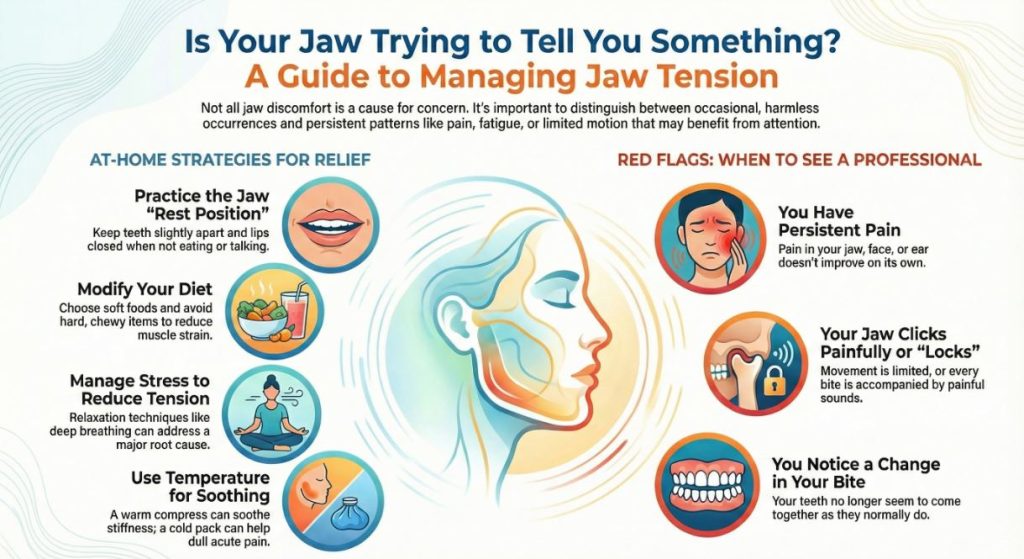
- Conscious Jaw Alignment: One of the easiest and most impactful habits is to learn how to keep your teeth slightly separated with your lips closed when not eating or speaking. This “resting position” can provide your jaw muscles with an occasional respite during the day.
- What to Eat and What to Avoid: Switching to softer foods during pain flares (e.g. soups, eggs, cooked vegetables) and avoiding overly chewy, crunchy or hard ones (Bagels, nuts, hard candy) gives tired jaw muscles less work to do.
- Temporary Application of Temperature: Some people find that a warm compress held to the side of the face can soothe stiff muscles, while a cold pack can help dull acute pain. Experimenting to see which feels better is a common approach.
- Stress Awareness and Management: Since stress is a major contributor, exploring general relaxation techniques—such as deep breathing, gentle stretching, or mindfulness—can address a potential root cause of muscle tension.
When Understanding Leads to Seeking Professional Insight
While many episodes of jaw discomfort are temporary, certain signs indicate that discussing your symptoms with a dentist or doctor is a prudent next step. Professional evaluation is particularly advisable if you experience:
- Persistent pain in your jaw, face, or ear that doesn’t improve.
- Consistent clicking or popping that is painful or occurs with every bite.
- Difficulty opening your mouth fully or a sensation of your jaw “locking” in place.
- Noticeable changes in your bite, such as your teeth not coming together as they used to.
- Headaches or earaches that start upon waking and seem connected to jaw tension.
A doctor can perform an exam that includes looking for your jaw’s range of motion, listening for sounds, and feeling the areas around the joint for muscle tenderness. They may suggest imaging to see the shape of the joint. Their job is to explore what might be going on under the surface – bruxism, problems with your bite, and jawbone inflammation are all possibilities – and present you with a suite of management solutions relevant to your individual situation.
FAQ’s
Can jaw clicking eventually go away on its own?
Yes, it’s possible, especially if it’s related to a temporary period of stress or muscle tension. Many cases of jaw discomfort are short-term and resolve with self-care. However, persistent clicking associated with underlying joint structure or bite issues may not resolve without addressing those factors.
If my jaw clicks but doesn’t hurt, should I be concerned?
Not necessarily. Pain-free clicking, especially only during wide yawning, is often not a medical concern. However, many professionals suggest that even painless, frequent clicking during normal activities is worth mentioning at your next dental check-up, as it can be an early sign of joint mechanics that could change over time.
What’s the difference between TMJ and TMD?
TMJ refers specifically to the temporomandibular joint itself—the anatomical structure. TMD stands for temporomandibular disorder, which is the umbrella term for any condition causing dysfunction and symptoms (like pain, clicking, or locking) in that joint and its surrounding muscles. In everyday conversation, people often say “TMJ” when they mean “TMD.”
You May Also Ask
I think I grind my teeth at night. What should I do first?
Bringing this up with your dentist is an excellent first step. They can look for telltale signs of wear on your teeth and discuss the potential benefits of a custom-fitted oral appliance (like a night guard). These devices don’t stop the grinding but create a protective barrier between your teeth and can help reduce muscle strain.
Can my sleeping position make my morning jaw pain worse?
Yes. Sleeping on your stomach often requires turning your head to the side for long periods, which can torque the neck and jaw muscles. Sleeping on your back or side with a supportive pillow that keeps your head and neck aligned is generally considered a more neutral position for the jaw.
Are there specific exercises for morning jaw stiffness?
Gentle movement can be helpful. Spread and close your mouth slowly in a pain-free range, move your mandible gently side to side is a typical pattern. The main idea is slow and gentle; at no point should you push a stretch or feel pain. For individualised exercise prescription, a TMD-trained physical therapist is very helpful.
Disclaimer: This article is for educational purposes only and does not replace professional medical advice.