
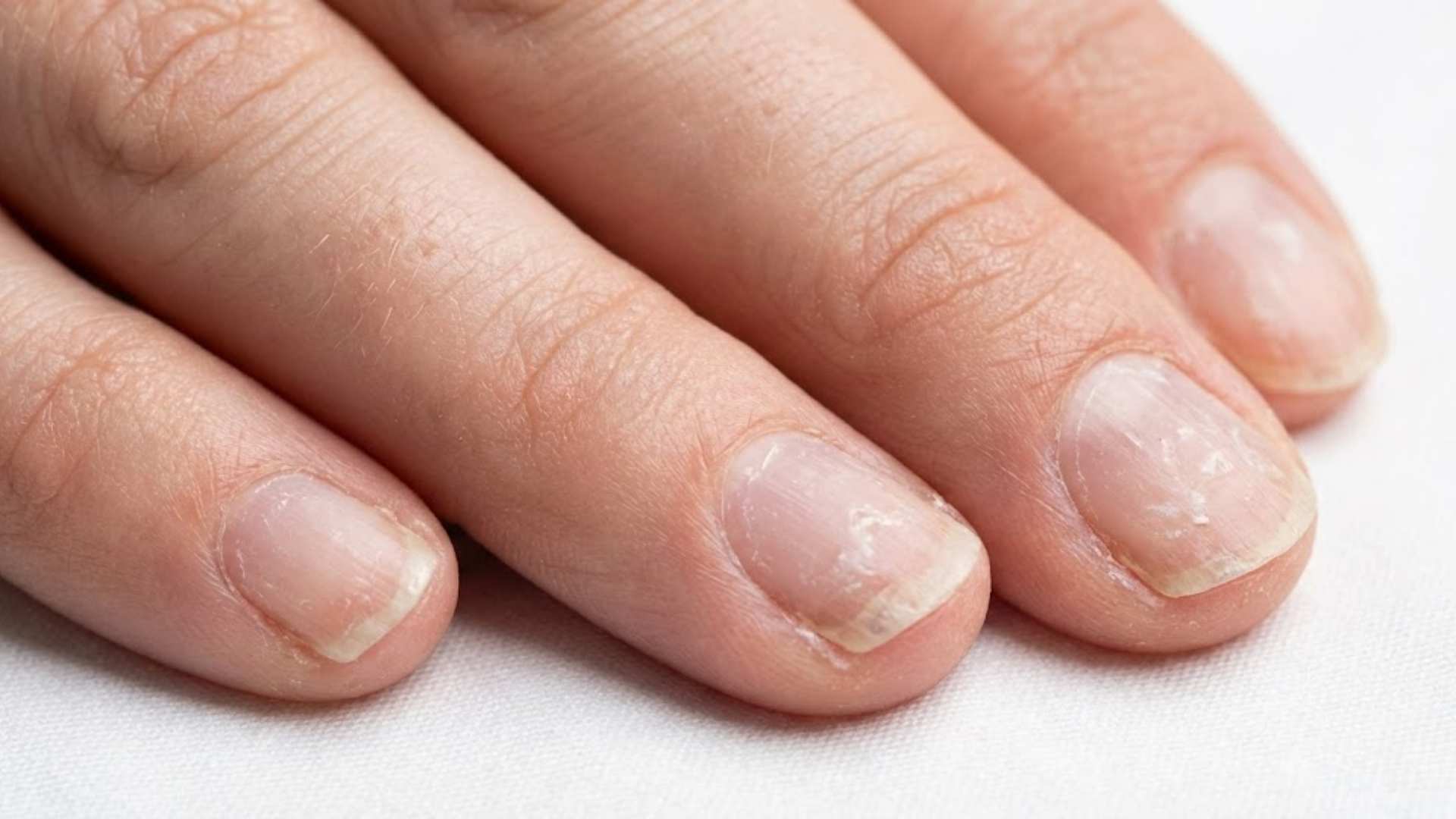
That fragile feeling is unmistakable. When your nails feel paper thin after gel removal, you know something is off. This specific sensation is incredibly common. Many people describe their nails as feeling like thin, bendable paper after removing gel polish. This delicate state can cause worry. It tells you your nail plate has experienced stress. The thinness is not permanent. Understanding why this happens is the first step. Knowledge leads to better, gentler care choices. When nails feel paper thin, they need understanding, not harsh treatments. Let’s explore what happens biologically and why this occurs.
What “Paper Thin” Nails Really Means
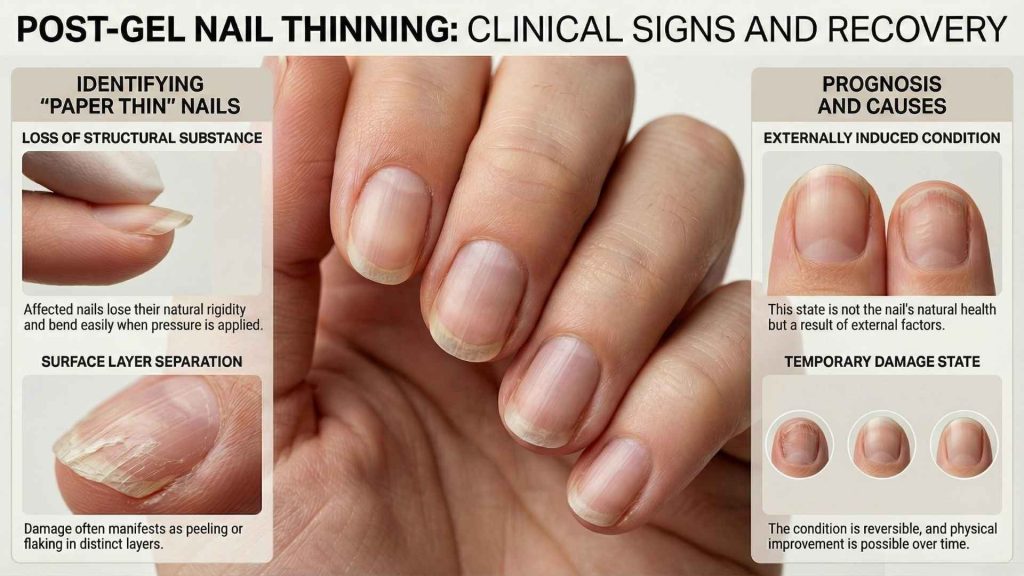
When people say their nails feel paper thin, they describe a real physical change. The sensation nails feel paper thin comes from genuine structural loss. You might notice your nails lack their usual density. Pressing on them reveals unusual flexibility. This bending can feel unsettling and strange. Sometimes the edges curl under light pressure. Other times the entire nail bends slightly. This is not how healthy nails typically behave. Healthy nails offer firm resistance.
They protect the sensitive nail bed underneath. When nails feel paper thin, that protection diminishes. You might also notice surface roughness. Tiny flakes or peels may appear along edges. These are signs the layers are separating. The nail plate consists of keratin layers. These layers normally bond together tightly. Disruption causes them to lift and split. So when your nails feel paper thin, multiple changes occur. Flexibility increases while thickness decreases. Surface integrity becomes compromised as well. Understanding this helps you respond appropriately.
How Gel Manicures Affect Your Nail Plate
Gel polish creates a hard, durable shell. It bonds firmly to your natural nail. This seal prevents moisture exchange. Your nail plate underneath can become soft over time. The removal process then exposes this vulnerable state. The method of removal is absolutely critical. It often determines the final result you see. When removal goes wrong, the consequences are immediate. You may notice your nails feel paper thin right away. This happens because the protective outer layers are gone. Aggressive filing removes more than just the gel. Prying off product takes healthy nail with it. Chemical soak solutions strip natural oils completely.
The nail plate becomes thin, dry, and weakened. It loses its natural structural integrity. Everyday tasks suddenly feel risky. Opening a soda can becomes a concern. Typing on a keyboard feels different. Washing your hair requires extra caution. Your nails may bend at the slightest touch. They might peel from the free edge. The sensation can be unsettling. You might worry about long-term damage. Understanding this process brings clarity. It explains why nails feel paper thin after removal. It also points toward better care choices.esult.
Common Causes of Thin Nails Post-Removal
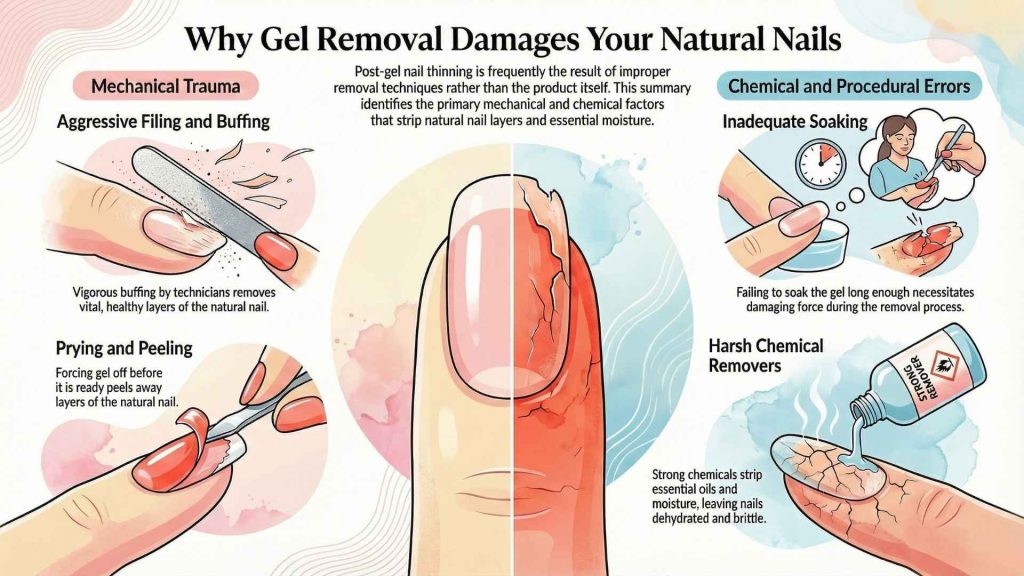
Several factors during removal contribute to this problem. First and foremost, aggressive filing is a primary cause. Technicians may buff the nail surface too vigorously. As a result, this removes vital protective layers of your natural nail. Inadequate soaking is another common issue. Consequently, prying off gel before it is ready becomes damaging. This action can peel away your actual nail layers. Harsh chemical removers also play a significant role. They strip essential oils and natural moisture from the nail plate. Because of this, the nail is left dehydrated and brittle. Understanding these specific causes helps you identify safer removal methods going forward.
Why Quick Fixes Often Disappoint
Popular advice does not always help when your nails feel paper thin after gel removal. Some recommendations can even slow your natural recovery process. Applying hardening polishes immediately is one example. These products create a rigid surface layer. But when your nails feel paper thin, they lack underlying structure. A stiff coating on a thin, flexible base may snap under pressure. This leads to painful breaks lower down.
Simply waiting for growth is another passive approach. Yet damaged nails need active protection during this time. Without it, they snag on clothing and tear painfully. This constant stress keeps nails in a weakened state. Cutting nails extremely short is also unhelpful. It removes the protective free edge completely. This exposes the nail bed to direct pressure. Daily tasks then cause more discomfort and sensitivity. Understanding why your nails feel paper thin helps you avoid these common missteps. Better choices lead to steadier, gentler progress over time.
Supportive Care for Your Nails
Your focus should be on gentle support. Think nourishment and protection. Avoid further stress on the nail plate. Consistent, simple habits make a real difference. Patience is your most important tool here.
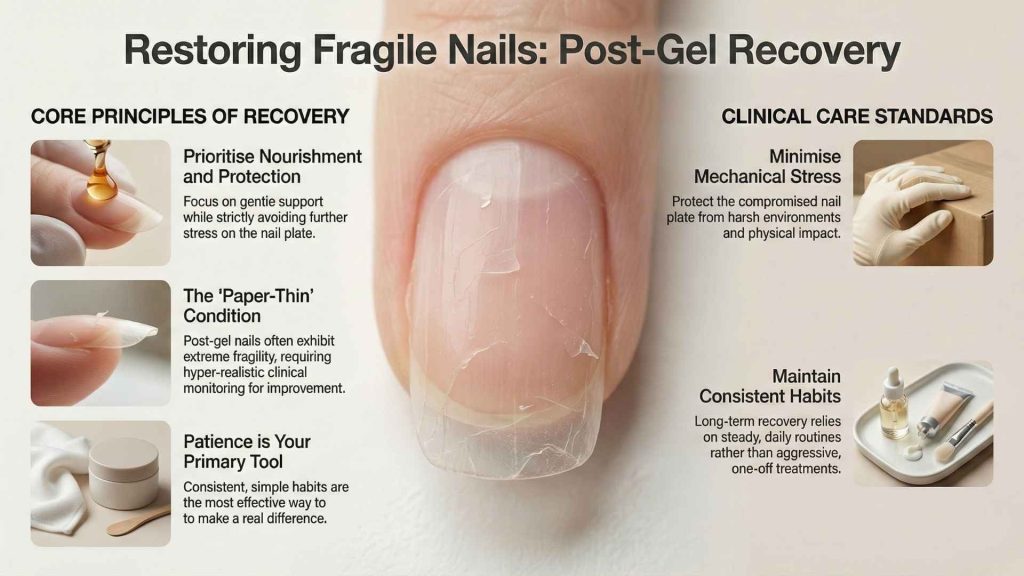
Prioritize Hydration Daily
Dry nails are brittle nails. Replenishing moisture is fundamental. Use a pure jojoba or almond oil. Apply it to your nails and cuticles daily. Massage it in gently. Follow with a rich hand cream. This seals in the hydration. Wear gloves for wet chores. Protect nails from prolonged water exposure.
Handle Nails with Extreme Care
Be mindful during everyday activities. Use tools instead of your nails. Open cans with a opener, not your fingertips. Type gently on keyboards. File nails with a fine-grit file. Always file in one direction only. This prevents tiny splits and tears. Keep nails at a moderate length. A short square shape is often strongest.
Choose Products Thoughtfully
Read product labels carefully. Look for nourishing ingredients. Avoid formulas with harsh drying alcohols. Use a gentle, acetone-free polish remover. If you apply polish, pick a protective base coat. Give your nails regular breaks from all products. Let them breathe between manicures.
The Growth Cycle and Realistic Timing
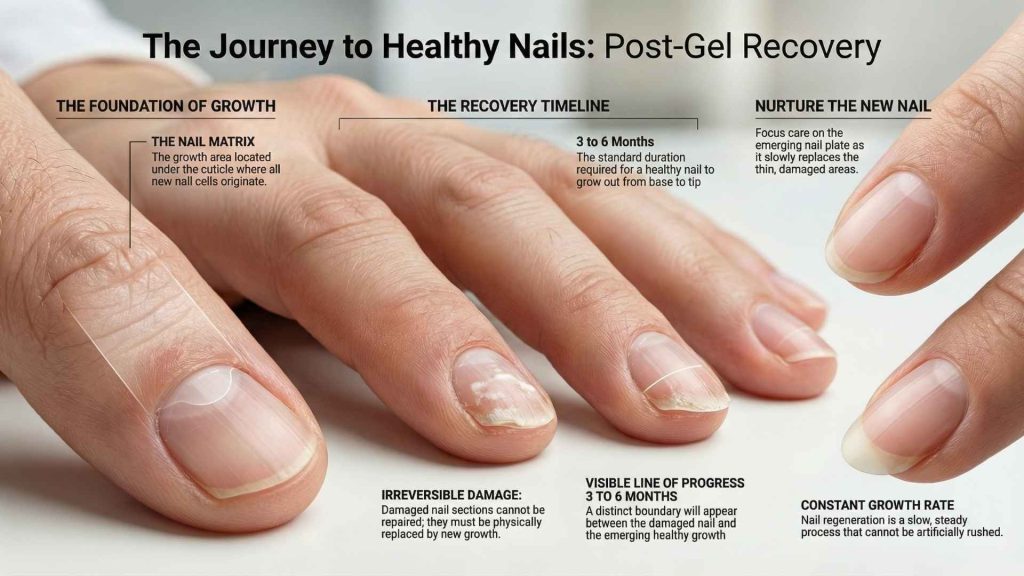
Healthy nails grow slowly from the matrix. This is the area under your cuticle. The damaged part you see must grow out. This process cannot be rushed. It often takes three to six months. New growth will be healthy. You will see a visible line of progress. Nurture the new nail as it emerges.
When to Seek Professional Advice
Home care has its limits, even when your nails feel paper thin after gel removal. Pay attention to what your body is telling you. Consult a dermatologist if you notice persistent pain. Seek professional help for ongoing redness around the nail. Noticeable swelling that does not subside requires attention. Any sign of pus or discharge is a clear cue. See a doctor immediately if the nail separates from the nail bed. This condition is called onycholysis and needs evaluation. Significant discoloration under the nail is another important sign. Dark spots or unusual color changes should not be ignored. Even when your nails feel paper thin, certain symptoms go beyond surface damage.
A healthcare professional can determine if infection is present. They can rule out underlying health conditions. They provide guidance tailored specifically to your situation. Remember that healthy nails should not cause pain. Persistent discomfort warrants a closer look. Your nails offer clues about your overall health. A dermatologist can interpret these signs accurately. They may recommend tests if needed. They can distinguish between cosmetic damage and medical concerns. Do not hesitate to seek their expertise. Early intervention often prevents bigger problems later. Your peace of mind matters too. Professional advice brings clarity to confusion. It helps you make informed decisions about nail care.
Frequently Asked Questions
The thin feeling lasts until the damaged part grows out. This typically takes several months. Consistent care supports healthier new growth.
It is generally not recommended. Your nail plate needs time to recover. Repeated gel applications can interrupt the healing cycle.
Nail thickness and health vary by individual. Some people naturally have thinner nail plates. These may show damage more readily after gel removal.
Some can help, but choose wisely. Look for protein-rich or hydrating treatments. Avoid harsh, formaldehyde-based hardeners on thin nails.
A gentle, patient soak-off is best. Lightly file the top coat only. Use acetone-soaked wraps for a full 15 minutes. Never force or pry the product off.
Moving Forward with Confidence
Feeling your nails are paper thin after gel removal is unsettling. Yet it is a manageable situation. Your nails possess a natural ability to regenerate. Support this process with informed, gentle care. Avoid aggressive treatments and quick fixes. Focus on consistent hydration and protection. Trust in the body’s capacity to heal. Your nails can return to their natural strength.
Disclaimer: This article is for educational purposes only. It does not replace professional medical advice. Please consult a healthcare provider for personal concerns.