
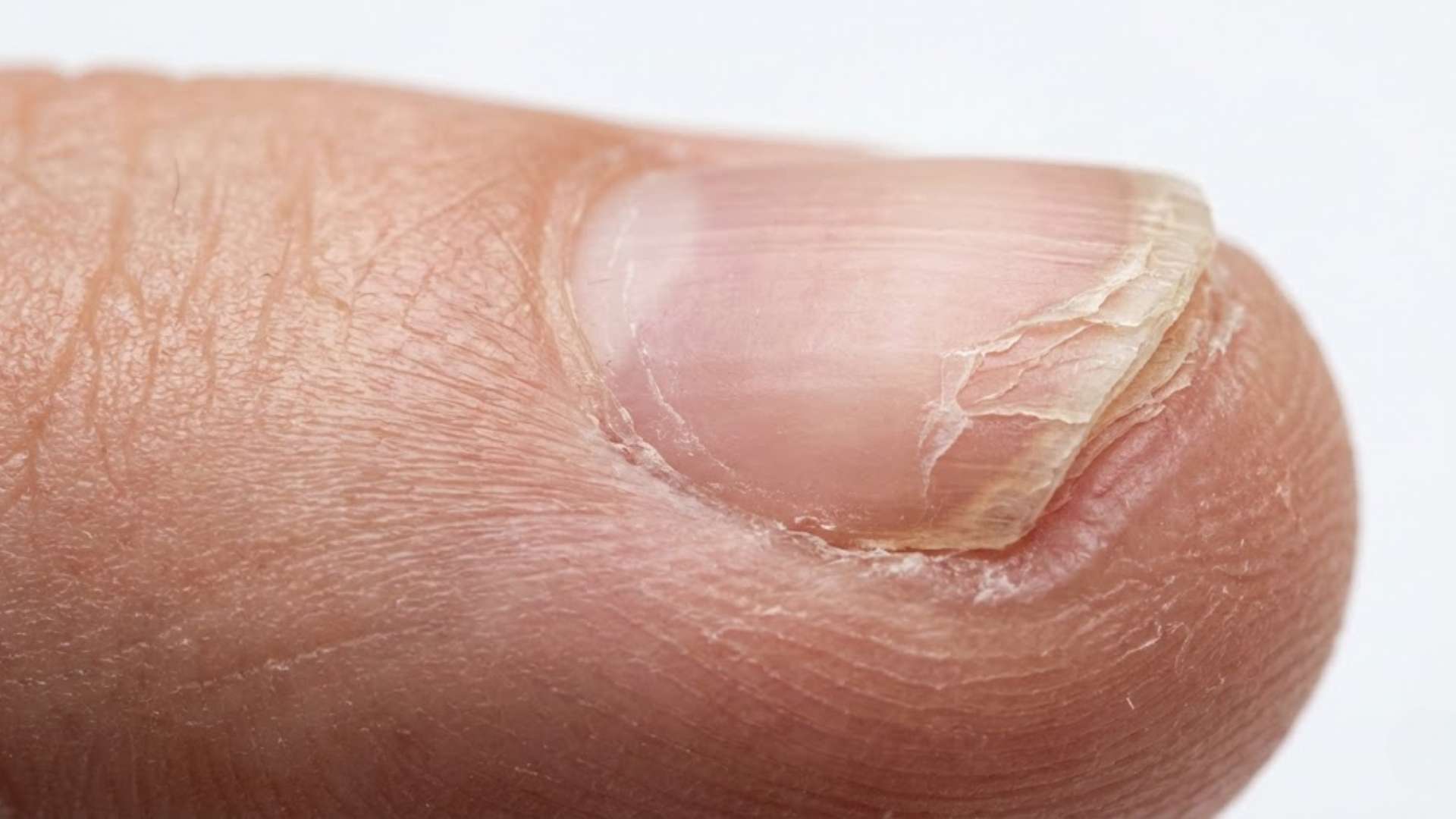
Many people notice that the tips of their fingernails begin to peel in thin layers. If you look closely, you may see a very thin layer lifting from the edge of the nail, almost like the layers of an onion peel. These tiny layers easily catch on hair and clothing, making the nail edges feel rough and uneven.
Some parts of the nail may feel soft while other areas feel dry because the layers of the nail are no longer tightly connected.
Daily activities slowly weaken the natural “glue” that holds the keratin layers of the nail together. Over time, repeated exposure to water weakens these bonds even more. Harsh chemicals remove the protective oils from the nail, and the nail tips — being the oldest and most exposed part — face the most pressure and damage every day.
That is why peeling usually starts at the tips first.
Once you understand this process, it becomes easier to know what your nails actually need. Protection is often more important than appearance. Small changes in daily habits can make the biggest difference.
If your peeling isn’t limited to just the tips, you may want to read Why Are My Nails Peeling in Layers? Causes & Care.
Understanding the Structure of Your Nails
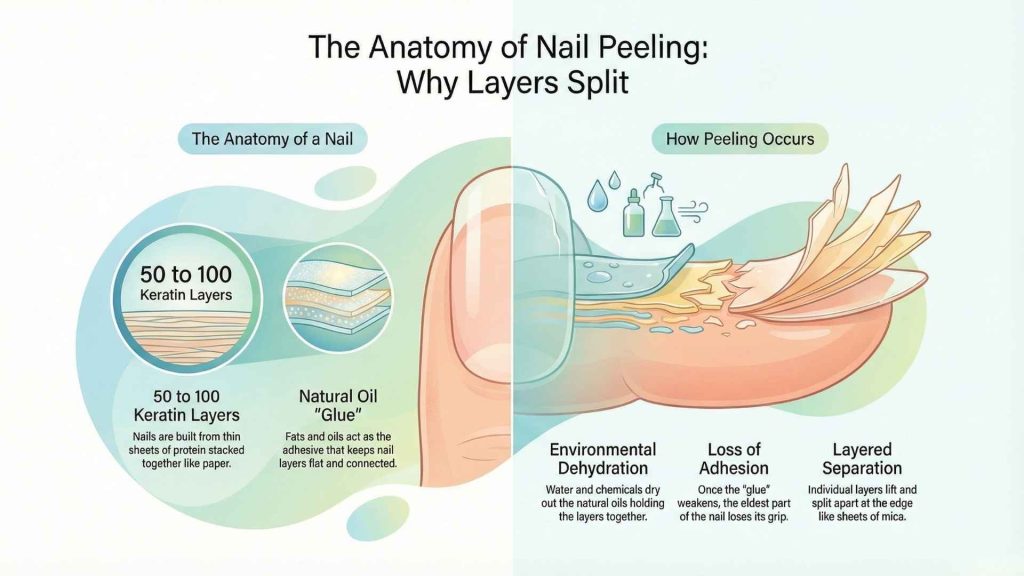
Your nails are not made of one solid piece. They are formed from about 50 to 100 very thin layers. These layers are made of a strong protein called keratin. You can think of them like many sheets of paper stacked together.
Natural oils and fats work like glue between these layers, keeping them smooth and tightly attached. The tips of your nails are the oldest parts of the nail. They separated from the nail root months ago and have been exposed to pressure, bumps, and friction every day since then.
Over time, this natural glue dries out and weakens. Water and chemicals make the drying worse. When the glue loses its strength, the nail layers begin separating from the edges. This is what you see as nail peeling. The layers may separate like thin onion skin, while the rest of the nail can still appear healthy.
Why Do Nails Start Peeling?
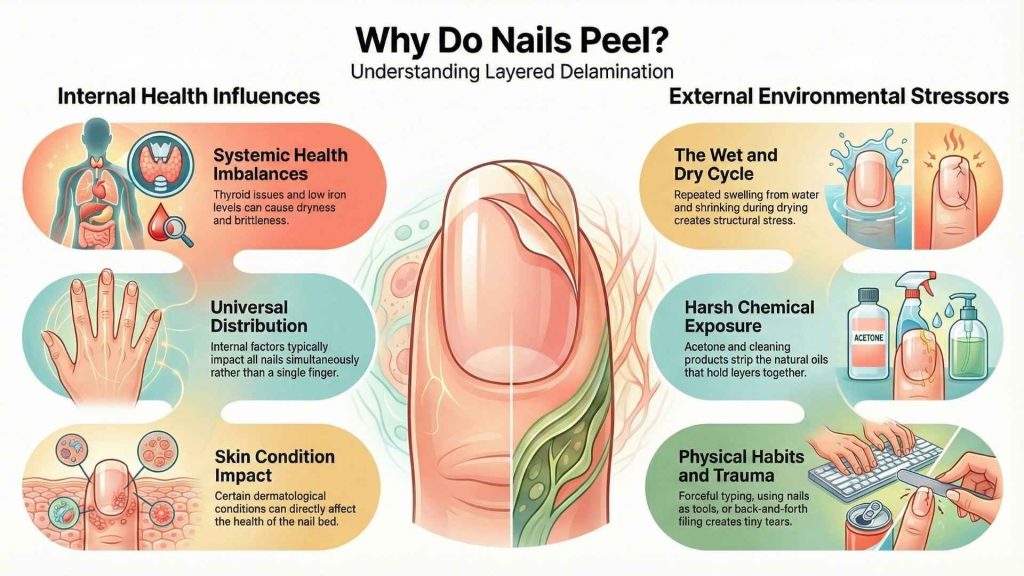
There can be many reasons behind peeling nails. These causes are usually divided into two main categories:
Internal Factors Affecting Nail Health
Your overall physical, mental, and social well-being can affect your nails. For example:
- Nutritional imbalance can make nails weak and brittle.
- Iron deficiency may damage the nails.
- Certain skin conditions can affect nail growth and texture.
- These internal causes usually affect several nails at the same time.
Noticing discoloration along with peeling? See White Spots Appearing on Nail Surface: Causes & Guidance.
Harmful External Factors
Daily habits and environmental exposure can also damage nails.
- Harmful External Factors: Daily habits and environmental exposure can also damage nails.
- Repeated Wet-and-Dry Cycles: Water easily enters the nail layers. When the nails dry, they shrink again. Repeated swelling and shrinking slowly weaken the bonds between the layers.
- Exposure to Harsh Chemicals: Cleaning products and nail polish removers can be very damaging. Acetone, especially, dries out the nail and removes its natural oils.
- Physical Habits and Injury: The way you use your hands matters. Frequent filing, rubbing, or using nails as tools creates tiny cracks in the nail edges. Even hard typing can increase pressure on the nails over time.
Why General Advice May Not Work
People often hear simple advice like “moisturize your nails,” but the method is rarely explained properly. Hand lotions mostly sit on the surface of the skin and do not deeply absorb into the nail plate.
Nails need more than just cream — they need protection. Water repeatedly makes the nails swell and shrink, which eventually causes the layers to separate.
Helpful Ways to Strengthen Peeling Nails
1. Protect Nails from Water
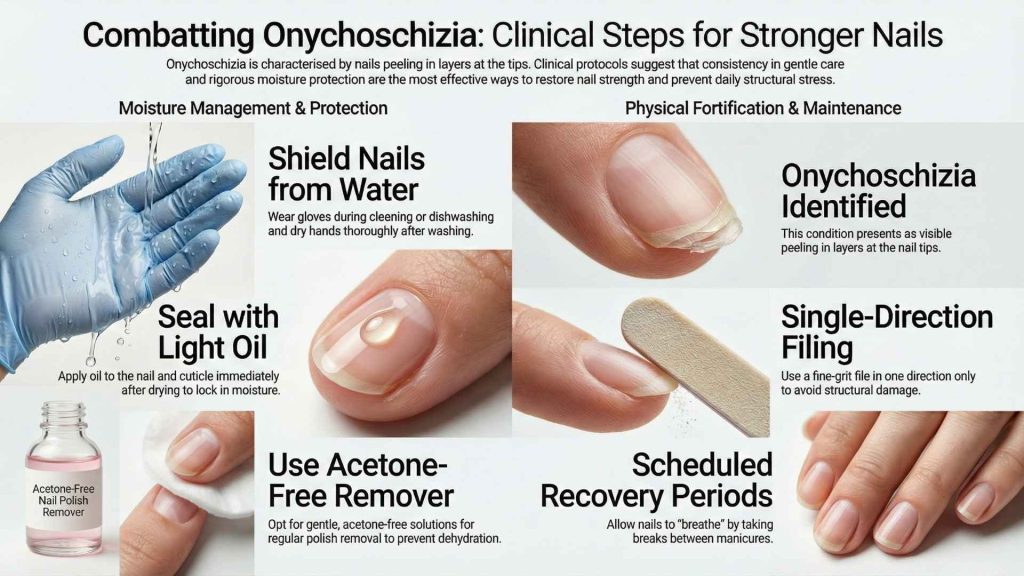
Water can be surprisingly harmful to nails. Wearing gloves while washing dishes, cleaning, or doing household work can help prevent damage before it starts.
2. Dry Hands Properly
After washing, dry your hands completely. Pay special attention to the fingertips and around the nails so moisture does not remain trapped.
3. Use Oil Regularly
Oil can do something water cannot. It can penetrate the nail plate and help keep the layers attached together. Even applying a drop of oil daily can improve nail flexibility and strength.
4. File Nails Correctly
Sawing the nail back and forth creates small cracks along the edges. Filing gently in one direction helps keep the nail edge smooth and protected.
5. Give Nails a Break
Constant nail polish or manicures may trap moisture and weaken nails over time. Leaving nails bare for a few days between manicures allows them to recover naturally.
These steps may seem small, but together they reduce daily stress on the nails and help them grow stronger.
When Should You See a Specialist?
Most peeling nails are caused by water exposure, chemicals, or physical damage. However, sometimes they can indicate an internal health issue.
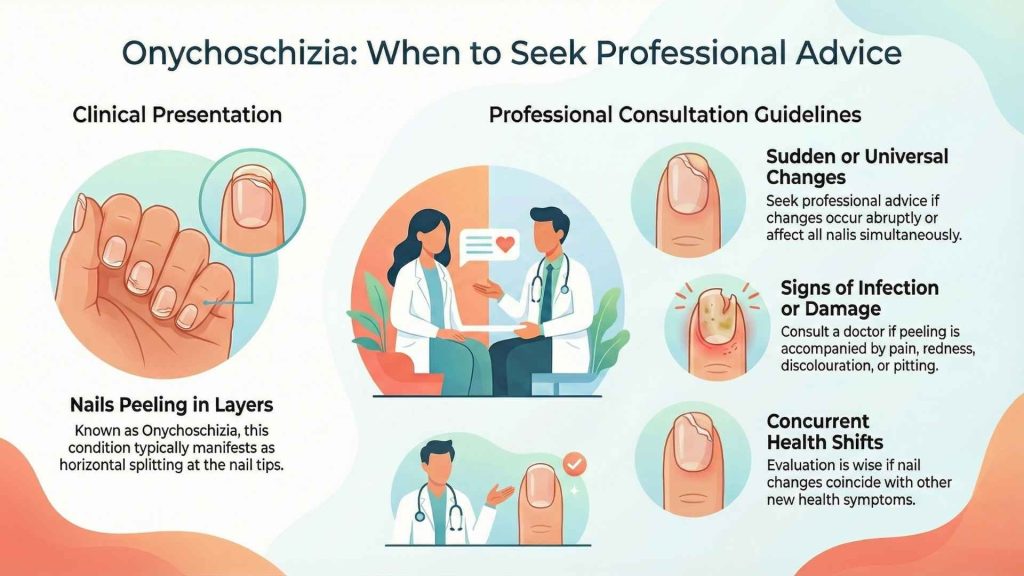
You should pay attention if:
- All nails change at the same time.
- There is pain, redness, or swelling.
- The nail changes color (black, green, or yellow).
- Small pits or dents appear on the nails.
- You also notice hair loss or unusual tiredness.
These signs do not always mean something serious, but they may need proper medical evaluation.
A dermatologist can examine the nails carefully and identify whether the cause is external damage or an internal condition. They may recommend tests for iron levels, thyroid function, or other health concerns.
Frequently Asked Questions
Which nutrient deficiency causes nail peeling?
Iron deficiency is one of the most common causes. Poor nutrition in general can also weaken nails.
How can peeling nails be treated?
Protect nails from water and chemicals, keep them trimmed and smooth, and allow healthy new nail growth to replace the damaged part.
Can Vitamin E oil help?
Yes. Vitamin E oil and similar oils may improve nail flexibility and reduce cracking and peeling.
How long does recovery take?
Fingernails grow slowly. It can take around six months for a completely new nail to grow out.
Is peeling nails a serious problem?
Usually no. In most cases, it is related to external damage or dryness. However, persistent symptoms should be checked by a doctor.
Is it harmful to peel the layers off yourself?
Yes. Pulling off the peeling layers can damage deeper parts of the nail. Instead, gently file the rough edge smooth.
Conclusion
Peeling nails is usually a sign that the nail layers have become weak and separated. Understanding the causes can help you take better care of your nails. Protect them from water and harsh chemicals, use oil regularly, and maintain gentle nail care habits.
Consistent daily care brings long-term improvement. Healthy new nails will gradually grow over time. If the condition does not improve or becomes worse, consulting a doctor is the best step.
Disclaimer: This article provides educational information only. It is not medical advice. Please consult a healthcare professional for personal health concerns.