
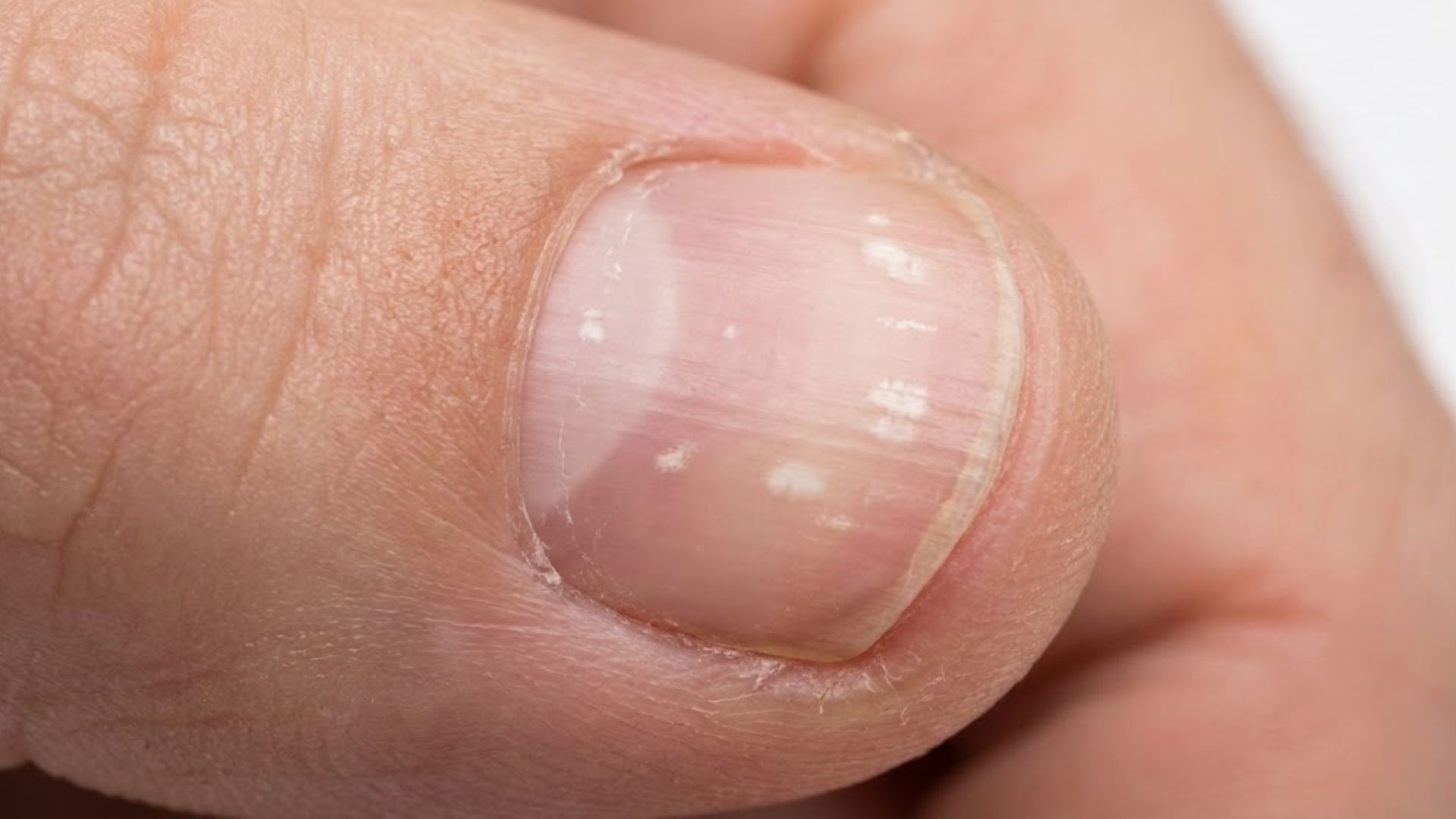
Have you noticed white spots appearing on your nail surface? This experience is very common. Many people feel confused by these sudden marks. They often wonder about their health meaning. Understanding the real cause brings quick relief. Let’s explore what your nails might be telling you. We will separate widespread myths from simple facts.
These marks are usually a harmless flaw in the nail plate. They are rarely a sign of serious illness. This guide explains the nail growth process clearly. You will learn why timing is so important. We will also discuss when a doctor’s visit makes sense.
If the discoloration looks greenish under polish, see Green Spot Appeared Under Nail Polish? Causes & Response.
First, Let’s Debunk a Major Myth
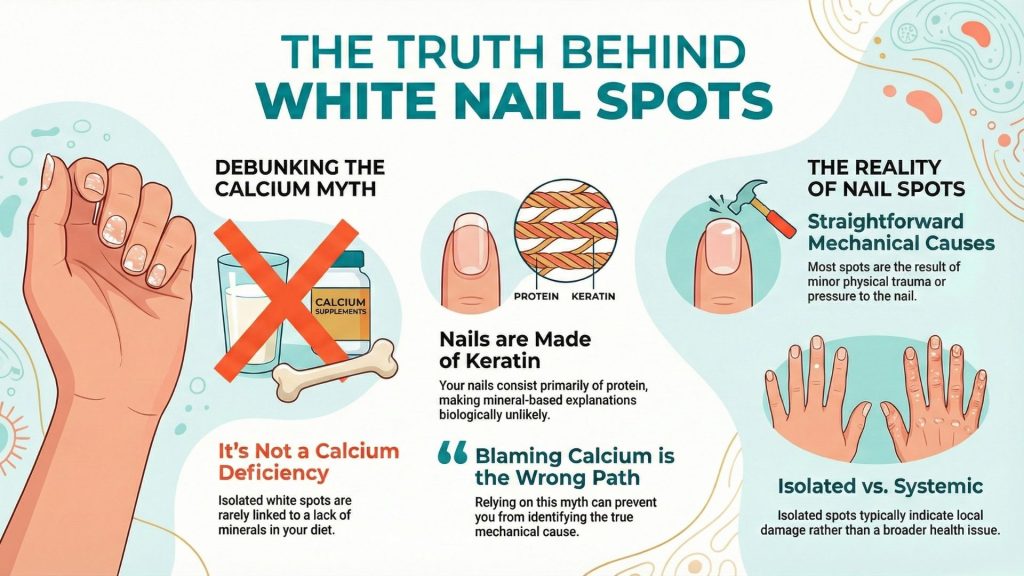
Many believe these spots signal a calcium deficiency. This idea is deeply ingrained but incorrect. Your nail is made mostly of a protein called keratin. Mineral deficiencies do not typically cause isolated spots. Blaming calcium can lead you down the wrong path. The true causes are more straightforward and mechanical.
How Your Nail Grows: The Key to Understanding
To understand white spots appearing on the nail surface, learn basic anatomy. The matrix is the nail’s hidden root. New nail cells are born in this area. Damage here shows up much later. The nail plate is the hard surface you see. The nail bed is the skin underneath it. A spot usually means a flaw in the plate itself.
The Most Common Cause by Far
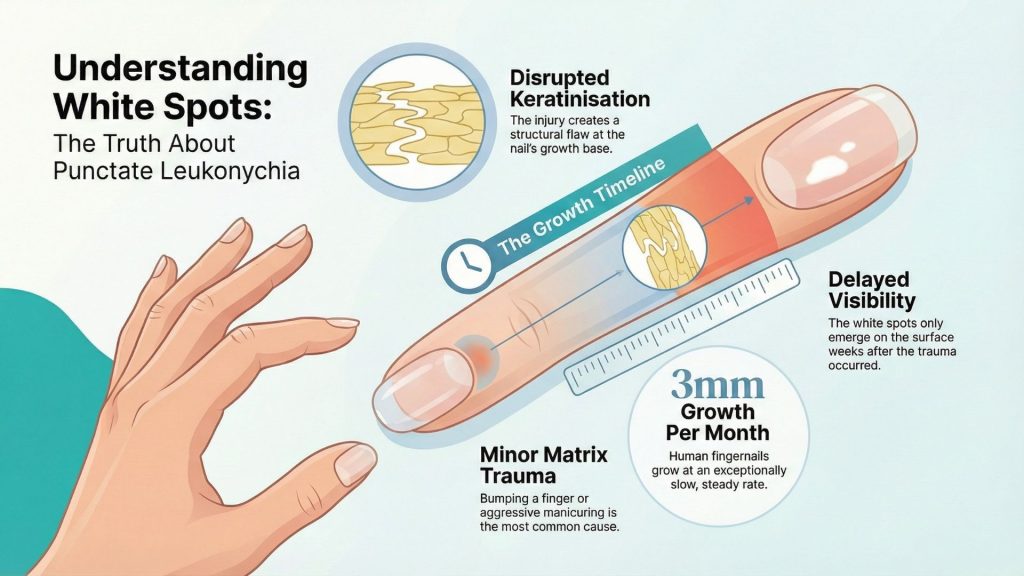
Minor injury to the matrix is the top culprit. This is often a small, forgotten trauma. Bumping your finger or aggressive manicuring can cause it. The confusing part is the significant delay. Your nail grows slowly, about three millimeters a month. The injury disrupts keratinization at the matrix. This flaw becomes visible weeks later. You see the white spots appearing on the nail surface long after the event.
Other Factors That Can Contribute
Several other factors can create these white marks. Allergic reactions to polish or gel are possible. These reactions irritate the matrix area. Excessive filing or buffing damages the surface layers. This creates streaks or cloudy white patches. A superficial fungal infection is another, less common, reason. It often looks powdery and can spread. Certain health conditions or medications may also play a role. These usually create different, more widespread patterns.
Observing the Patterns You See
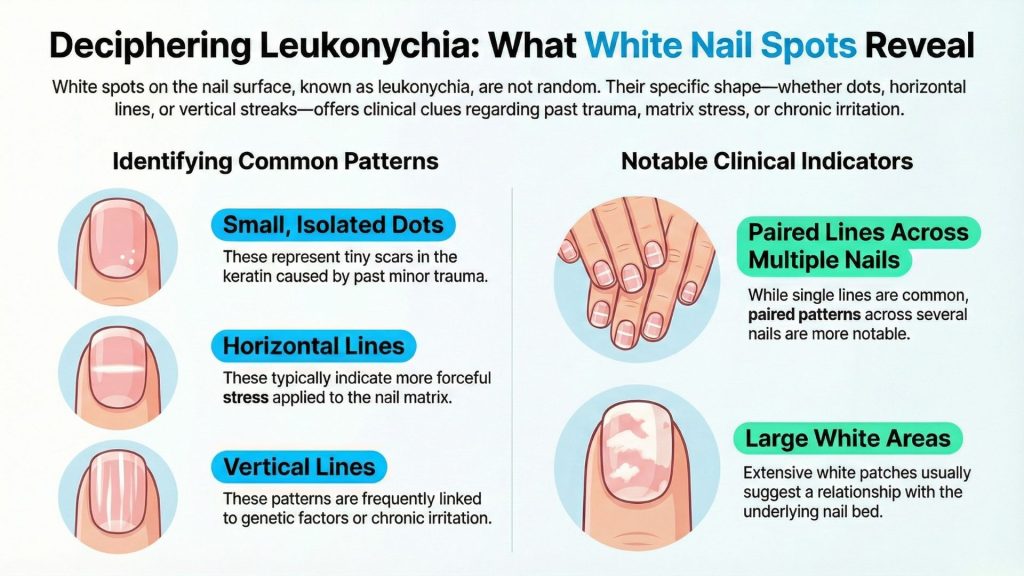
Look closely at the white spots appearing on your nail surface. Their pattern offers helpful clues. Small, isolated dots usually point to past trauma. They are like tiny scars in the keratin. Horizontal lines often come from more forceful matrix stress.
Paired lines across multiple nails are more notable. Vertical lines are frequently genetic or from chronic irritation. Large white areas might relate to the nail bed. Noticing these details aids your understanding. If your nails are also splitting or flaking, read Why Are My Nails Peeling in Layers? Causes & Care.
Why Common Advice Sometimes Feels Wrong
People often get told, “You must have hit it.” They cannot remember any specific injury. This makes the advice seem unhelpful or incorrect. The problem is the long growth timeline. The trigger happened over a month ago. Advice about supplements is also often misplaced. Nutritional links are far less common than assumed. Good guidance focuses on future care, not past blame.
Helpful Habits for General Nail Health
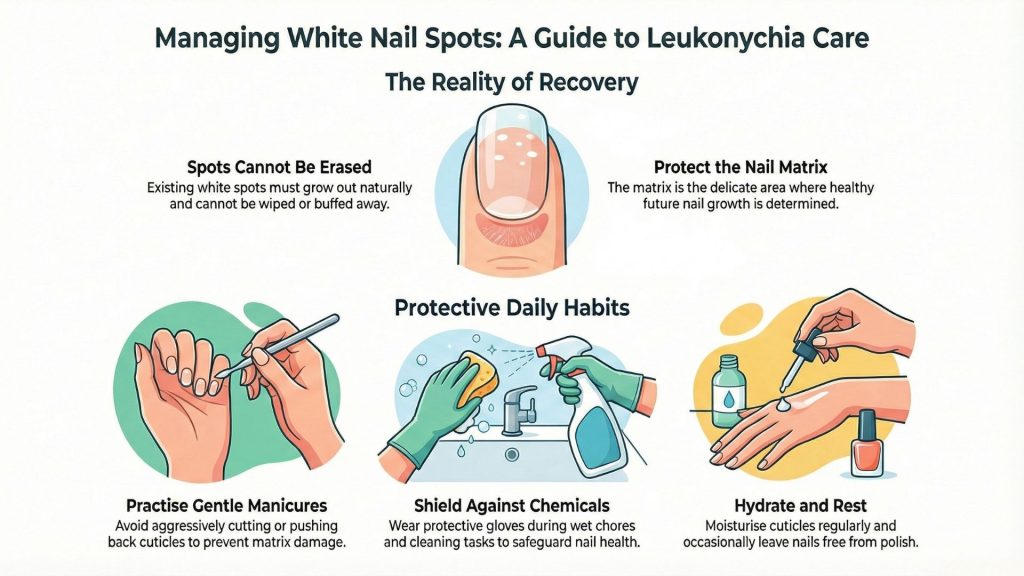
You cannot erase an existing spot. It must grow out naturally. However, you can support healthy future growth. Be very gentle during your manicures. Avoid cutting or pushing your cuticles aggressively. Wear gloves for wet chores and cleaning. Moisturize your hands and cuticles regularly. Give your nails a break from polish occasionally. These habits protect the delicate matrix area.
When to Consider a Dermatologist Visit
Most white spots appearing on the nail surface are harmless. However, some signs suggest a professional chat is wise. Seek advice if you see paired white lines on several nails. Consult an expert if most of the nail turns white. A doctor should see spots that do not grow out. Changes with pitting, thickening, or pain also warrant a visit. Persistent worry is itself a valid reason for a check-up.
Frequently Asked Questions
The causes are similar to those in adults. Minor play-related trauma is the most common reason. It is rarely a nutritional issue in developed countries.
Supplements will not remove an existing spot. The flaw is within the hardened nail plate. A balanced diet supports overall nail health.
Typically, no. Fungal spots have a distinct, powdery appearance. Common white spots are smoother and grow out directly.
They will grow to the nail’s free edge. Then you can trim them away. This process usually takes several months.
This often points to matrix pressure or filing damage. The technician may have been too rough near your cuticles.
In the vast majority of cases, no. View them as a historical record, not an urgent alarm. Watch for the broader patterns mentioned earlier.
Final Thoughts on the Matter
White spots appearing on your nail surface are usually meaningless. They represent a minor, past event in nail growth. Understanding this timeline removes much unnecessary fear. You can now observe these changes with informed eyes. Practice gentle nail care to support future health. Know the specific signs that call for professional insight. Your nails tell stories, but most are quiet and calm.
Disclaimer: This article is for educational purposes only. It does not replace professional medical advice. Always consult a dermatologist for personal health concerns.