
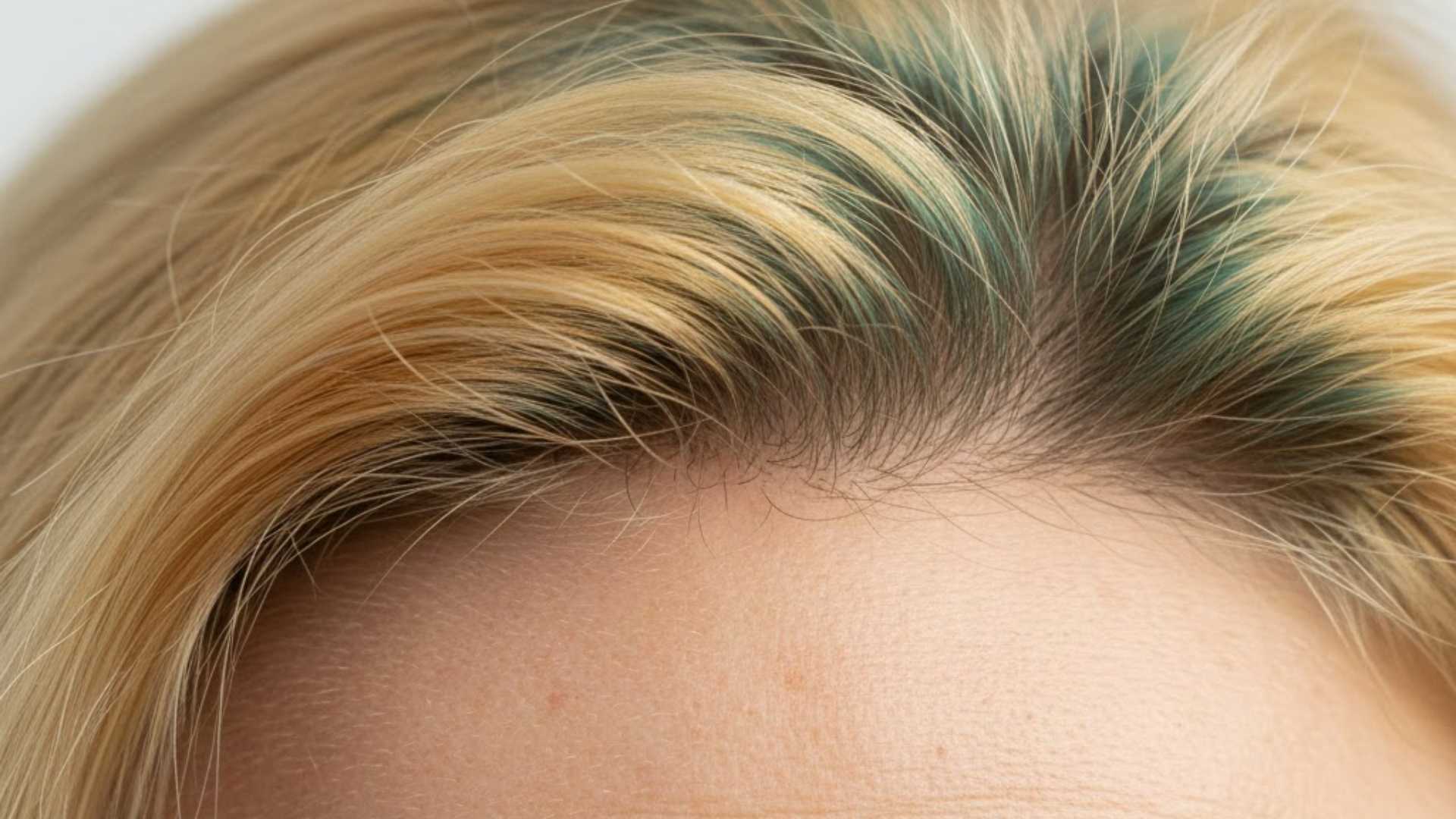
A change in tone is a frequent experience for many with color-treated blonde hair, often described as blonde hair turning green or brassy. It often begins subtly—a warmer glint in the sunlight, a duller reflection in the mirror, or an unexpected, cool hue that wasn’t there before. Two of the most discussed shifts are toward brassy, yellow-orange tones and unexpected greenish tints.
While these changes can be puzzling, they are typically not random. They are often the visible result of specific, understandable interactions between the chemical state of lightened hair and elements in its environment. If you want to know “why”? Well, This article explores these interactions to provide clarity on these common color shifts, which will make you understand the solution and go deeper into the root cause.
Texture changes after coloring can increase frizz — you might relate to
The Frizzy Halo That Won’t Smooth Down: A Complete Guide
The Visible Shifts: Recognizing the Changes
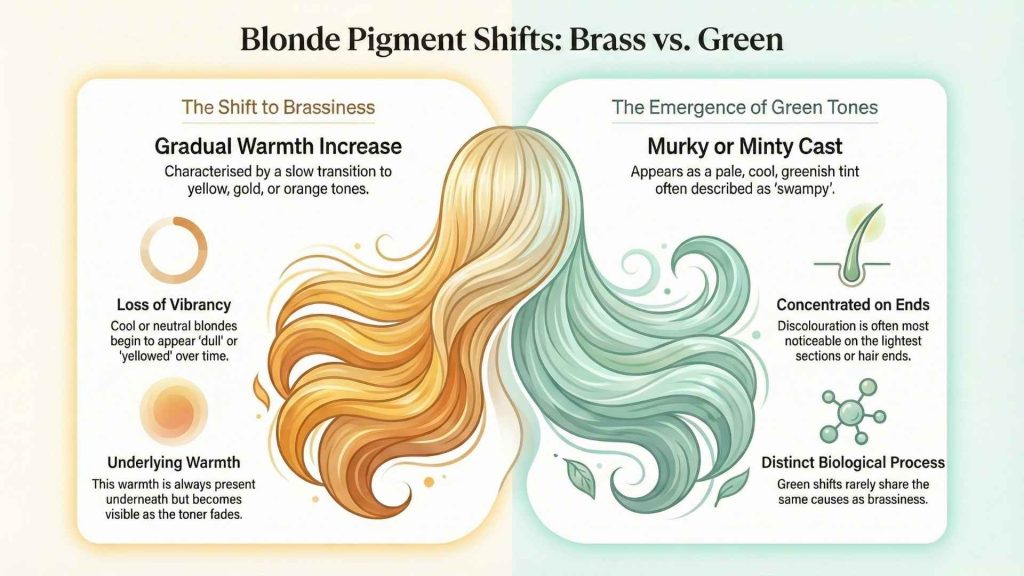
The first step in understanding is clear observation. People often notice these changes under specific lighting conditions or at certain times after a salon appointment.
- The Shift to Brassiness: This is characterized by a gradual increase in warm, yellow, gold, or orange tones. Hair that was once a cool, icy, or neutral blonde may begin to look warmer, sometimes described as “dull,” “yellowed,” or simply less vibrant. This warmth was always present underneath but becomes visible over time.
- The Emergence of Green Tones: This shift can be more surprising. It often appears as a pale, cool, greenish or murky cast, sometimes most noticeable on lighter sections or ends. It may be described as a “swampy,” “minty,” or gray-green tint, distinct from the intended blonde shade.
These are not the same phenomenon and rarely share a single cause. They are endpoints of different processes, which is why a one-size-fits-all approach to care is often ineffective.
The Altered Canvas: How Lightening Affects Hair
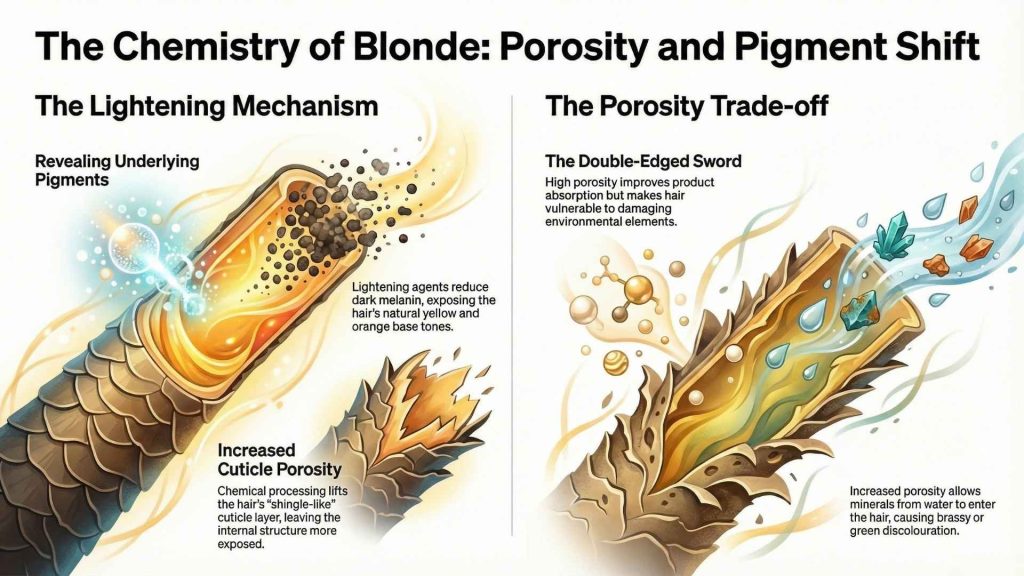
To grasp why blonde hair is prone to these shifts, it helps to understand what happens during the lightening process. Natural hair color comes from pigments called melanin. Lightening agents work by reducing these dark pigments, which reveals the underlying warm pigments—yellow and orange—that were always present.
This process also temporarily alters the hair’s structure, making the outer layer (the cuticle) more porous. Imagine the hair cuticle like the shingles of a roof. Healthy, unprocessed hair has tightly closed shingles. Lightening can cause them to lift slightly. This increased porosity is a double-edged sword: it allows color and conditioner to be absorbed more effectively, but it also makes the hair more receptive to absorbing minerals from water and reacting to environmental elements, which can change its appearance.
The Pathways to Brassiness
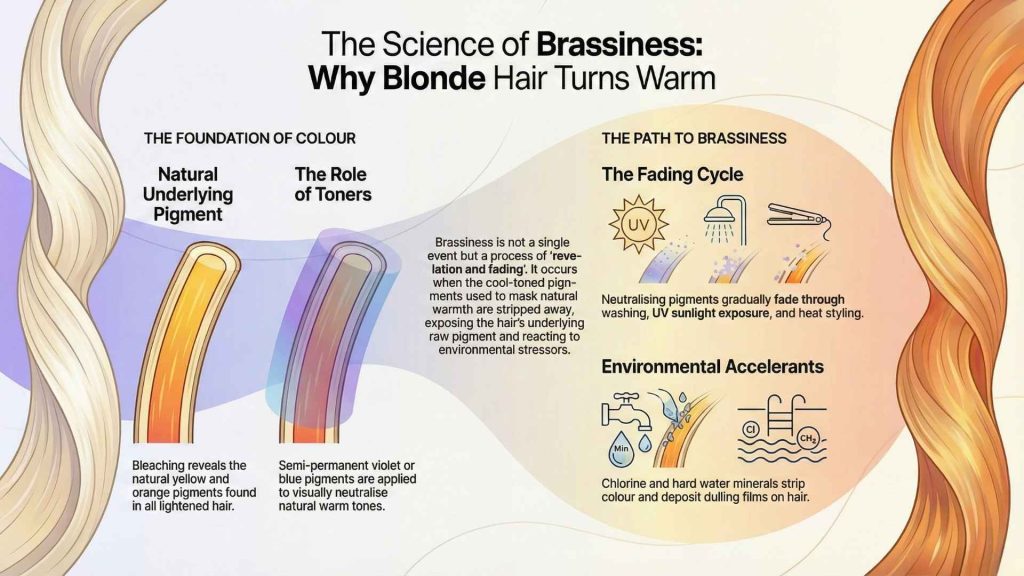
The appearance of unwanted warm tones is typically a process of revelation and fading.
- The Natural Underlying Pigment: The most fundamental cause is the natural yellow and orange pigment revealed by bleaching. Any lightened hair has this warm base. The cool, ash, or platinum blonde shades people desire are achieved by applying a toner—a semi-permanent color that deposits violet or blue pigments to neutralize that warmth visually.
- The Fading of Tone: Toner pigments are not permanent. They gradually fade with each wash, exposure to UV sunlight, and session with heat styling tools. As these cool, neutralizing pigments diminish, the persistent warm undertones become increasingly visible, leading to the perception of brassiness.
- Environmental Contributors: Certain elements can accelerate this fading or add to the warm cast. Chlorine (from pools or tap water) is an oxidant that can strip color and react with hair proteins. Hard water, high in minerals like calcium and magnesium, can deposit a dulling film on hair, muting desired tones and making brassiness more apparent.
The Pathways to Green Tints
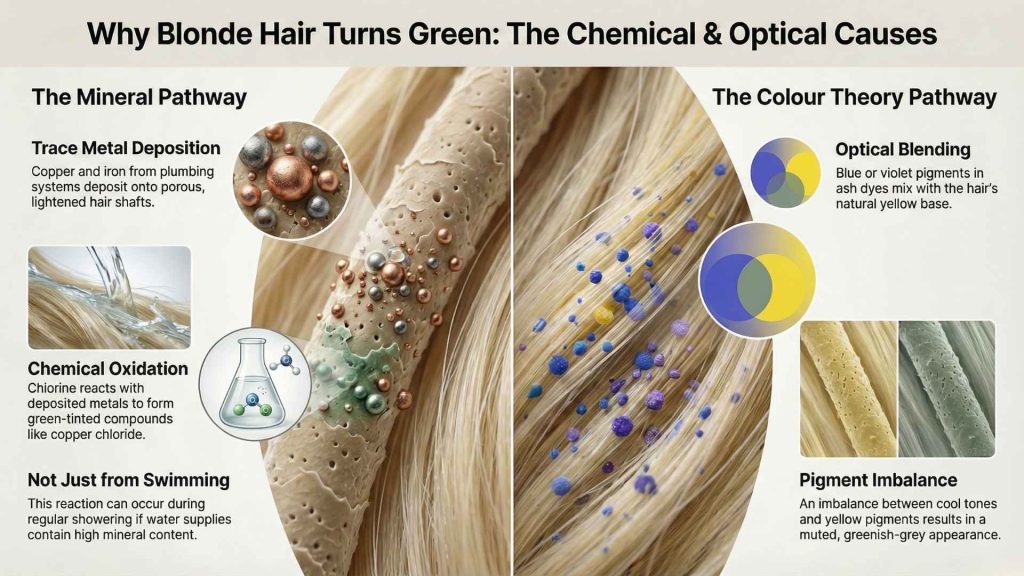
The development of green tones usually involves a different type of interaction: external deposition and chemical reaction.
- The Mineral Interaction: This is a primary pathway. Some water supplies contain trace amounts of metals like copper (from plumbing) or iron. When porous, lightened hair is regularly washed with this water, these metals can deposit onto the hair shaft. If the water also contains chlorine (a common disinfectant), a chemical reaction can occur, oxidizing the metals. This process can form compounds, like copper chloride, that leave a greenish-blue stain on the hair. This can happen from showering, not just swimming.
- The Color Theory Interaction: Occasionally, a greenish cast can result from the color process itself. If a cool-toned product with blue or violet pigments (like an ash blonde or silver dye) is applied to hair that still has a strong yellow pigment base, the colors can blend optically on the hair strand. Since blue and yellow are complementary colors that can neutralize each other, an imbalance can sometimes result in a muted, greenish-gray appearance rather than a clean, cool blonde.
Why Common Advice Can Fall Short
Given the distinct causes, it’s clear why universal tips can lead to confusion. A product designed to cancel yellow tones with violet pigments will not affect a green tint caused by copper deposits. In some cases, using a blue-based product (for orange brass) on hair with a yellow-green tinge might even accentuate the green.
This mismatch between the problem and the proposed solution is a frequent source of frustration. It underscores why identifying the nature of the color shift is a more helpful starting point than immediately applying a generic corrective treatment.
General Patterns in Managing Color Shifts
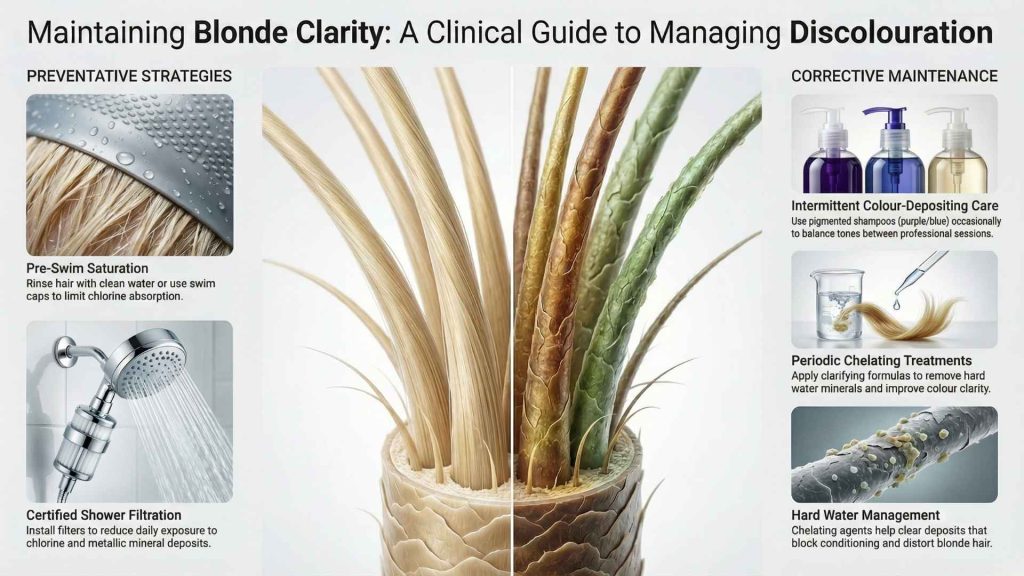
In discussions about hair care, certain consistent strategies emerge for managing these tone shifts. These approaches focus on prevention, gentle correction, and maintenance.
- Focus on Prevention: Strategies here aim to minimize exposure to contributing factors. Using a swim cap or rinsing hair with clean water before swimming can limit chlorine absorption. Installing a shower filter certified to reduce chlorine and metals can address mineral exposure from daily washing.
- Using Color-Depositing Care Products: A wide array of pigmented shampoos and conditioners (in shades like purple, blue, and pink) exist. These are generally used intermittently—not as a daily shampoo—to help manage tone. They work by depositing tiny amounts of color onto the hair surface to help balance its overall appearance between professional coloring sessions.
- Addressing Mineral Buildup: For concerns related to hard water, some find it helpful to periodically use a chelating or clarifying treatment. These formulas are designed to help remove mineral deposits from the hair, which can improve color clarity and the effectiveness of subsequent conditioning.
The Role of Professional Insight
While a consistent personal care routine is valuable for maintenance, a professional colorist’s expertise becomes particularly relevant in specific situations:
- When a color shift is pronounced, patchy, or difficult to manage with over-the-counter products.
- Before applying any new color-altering product to hair that is already feeling dry or damaged.
- To accurately assess whether a tone is due to fading, mineral buildup, or an interplay of pigments.
- For any application of professional color or lightener to ensure the integrity of the hair is maintained.
A colorist can evaluate the hair’s condition, identify the most likely contributors to the tone change, and apply professional-grade products with precision for an even, predictable result.
Chemical processing can also worsen split ends over time — read Making Sense of Split Ends That Travel Up the Shaft.
Frequently Asked Questions
Not necessarily. Brassiness is primarily a color phenomenon—the visibility of underlying warm pigments. However, the bleaching process that makes these pigments visible can compromise hair if not done carefully, and damaged, porous hair may show brassiness more quickly as toner fades from its raised cuticle.
Yes, this is possible, especially on different sections of hair. For example, ends that are more porous may show green from mineral uptake, while less-porous mid-lengths show yellow brassiness from fading toner. This complexity is why diagnosis can be challenging.
While good for internal health, it does not affect the hair. The water that comes into contact with hair during washing and swimming is the relevant factor. A shower filter addresses this direct contact.
Typically, yes. These terms are often used interchangeably for shampoos containing violet pigments intended to help neutralize yellow tones. Some lines also offer “blue” shampoos for more orange-based brassiness.
This is uncommon but could happen if the hair had a pre-existing, very pale yellow or borderline green tinge from minerals. The violet + yellow combination could, in some cases, nudge the visual color toward a muted green-gray. It may also indicate the green was present but unnoticed before.
Brassiness from fading toner can begin to be noticeable within 2-4 weeks. Green tints from mineral exposure can appear gradually over many washes or become apparent suddenly after a specific event, like intensive swimming in a chlorinated pool.
Conclusion
The journey of maintaining blonde hair is often one of observation and adaptation. The shifts toward brassiness or green are not mere annoyances but clues to the ongoing interaction between your hair’s chemistry and its environment. Understanding the distinct pathways—the fading of applied color versus the deposition of external minerals—replaces confusion with clarity.
This knowledge empowers more mindful choices, from selecting daily care products to having informed discussions with a colorist. The goal shifts from seeking a quick fix to cultivating a sustainable, understanding-based approach to hair care that prioritizes the long-term health and appearance of your hair.
Disclaimer: This article is for educational purposes only and does not replace professional hair care advice. For personalized recommendations and treatments, please consult a qualified colorist or stylist.