
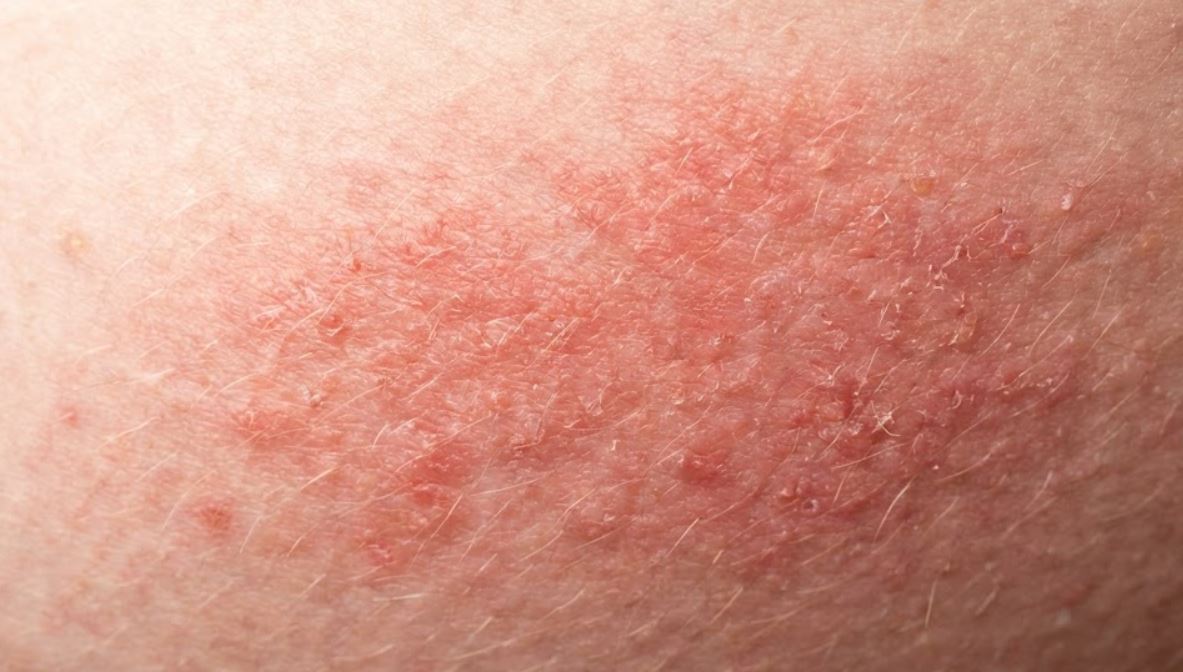
That unpleasant sting, burn, or raw sensation between your legs is more than just annoying — it’s a warning sign. Though it can occur at any time, summer appears to specialize in the problem. It’s not just you imagining things; there are specific environmental and physiological factors converging that make this outcome predictable.
This guide details why that’s the case, so you can get past just receiving nonspecific advice and take matters into your own hands in a comfortable way. We’ll examine the physics of chafing, those special summertime motivators, and the tenets of successful management, all viewed through an educational lens.
If friction is causing ingrowns, read: Ingrown Hair on Bikini Line: Causes, Prevention & Care.
What Is Chafing, Exactly?
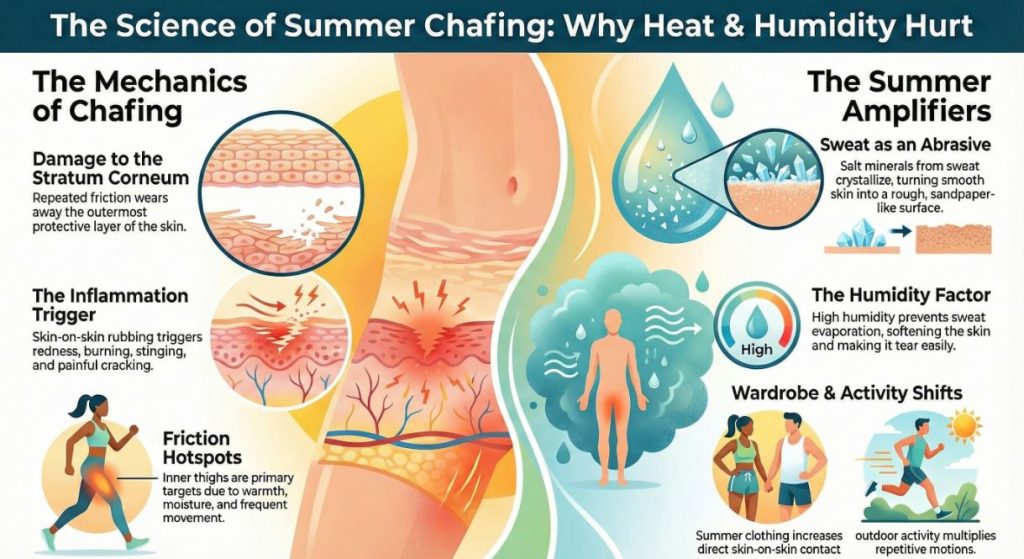
Mechanical skin irritation. Chafing is a type of mechanical skin irritation. When we rub it too many times (that means against skin or fabric), the outer layer of our protective stratum corneum gets worn down, you know, NPR explained, screwing Tonight Show could provide helpful funding for research. This damage is what causes inflammation and the symptoms you experience when your skin is irritated: red, burning, stinging or sometimes a raised bump or even cracking.
The inner thighs are a good position to make that happen, as they’re warm and often moist, with body surfaces coming into contact frequently (e.g., as you walk).
The Summer Amplifier: Why Heat and Humidity Make It Worse
Summer doesn’t cause chafing, but it dramatically amplifies the two root causes: friction and moisture.
- Rising Moisture (Sweat): Heat draws out sweat and moisture. Sweat is more than water; it holds salts and minerals that can sometimes crystallize on the skin. These tiny crystals serve as an abrasive, stripping smooth skin of its suppleness (instead making it rough) and ultimately causing increased friction. Additionally, wet skin is softened and can be more easily damaged from rubbing.
- Excessive Humidity: Sweat can’t evaporate from your skin when it’s humid. This results in water sitting on the skin and further softening/dampening/abrading all said above.
- Changes in Clothing and Habits: Warmer weather may lead to shorts, skirts, and dresses that have more skin-to-skin contact. At the same time, we are spending more time outdoors, compounding our rash of repetitive rubbing.
Beyond the Basics: Factors That Influence Your Experience
While friction and moisture are the universal culprits, several individual factors determine your personal susceptibility:
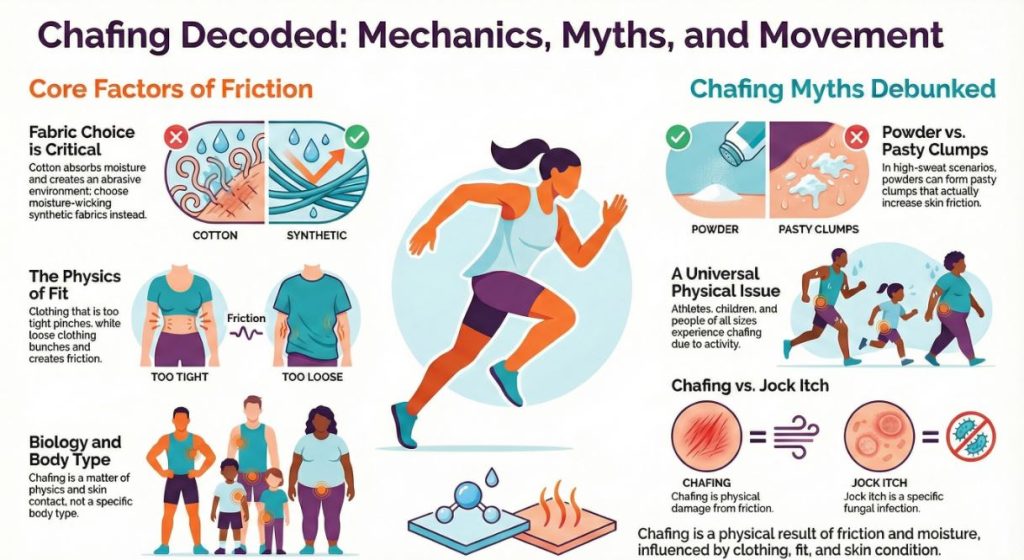
- Clothing Choice: Fabric is critical. So, believe it or not, but cotton is not all that great for active summer wear since it absorbs and retains moisture against your skin; you end up being in a slimy, rough space. Seams and tags that aren’t quite in the right place can create abrasion hot spots.
- Fit and Mobility: Skin to tight clothing can cause pinching points and rub spots. Loose clothing can fold and cause random friction. The perfect fit reduces unnecessary pulling on the garment.
- Skin and Body Characteristics: Anyone can experience chafing. The natural shape of one’s body, muscle size, or skin texture can influence how much skin contact occurs during movement. It’s a matter of physics, not body type.
- Existing Skin Sensitivity: Skin that is already irritated from shaving, has a minor rash, or is dry may have a compromised barrier, making it more vulnerable to chafing damage.
Navigating Common Misconceptions
Well-meaning advice can sometimes be confusing or counterproductive. Let’s clarify a few points:
- “Just use powder.” Powders such as cornstarch can also help to absorb moisture at the onset. But under high-sweat conditions, those can turn pasty and clumpy, and – unless reapplied frequently or cleaned off – might promote friction or even encourage microbe multiplication.
- “Wear skin-tight clothes to avoid rubbing.” Moisture-wicking compression gear can help, but you don’t need to dress “tight” in general, made out of non-breathable fabric; that could trap sweat and create new friction points.
- “It’s only a problem if you’re overweight.” Chafing is a physical issue, not a diagnostic one. Athletes, children, and people of all sizes experience it due to activity, clothing, and environment.
- “Chafing and jock itch are the same.” They can look similar but have different causes. Chafing is physical damage from friction. Jock itch is a fungal infection. Importantly, damaged skin from chafing can become more susceptible to secondary infections like jock itch.
A Principles-Based Approach to Management
Effective management focuses on reducing friction and managing moisture. Think of it as a layered strategy:
1. Create a Physical Barrier.
This is the most direct way to reduce skin-on-skin or skin-on-fabric friction.
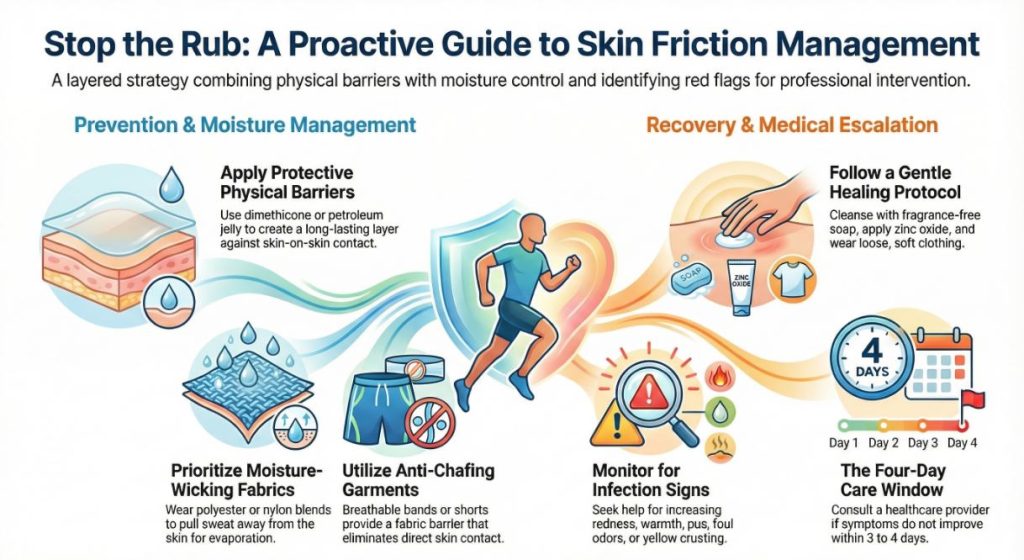
- Barrier Creams and Balms: Those with dimethicone, petroleum jelly, or zinc oxide are started as barrier creams form a wall over the skin. Smooth a thin, even layer over clean, dry skin before dressing.
- Anti-Chafing Bands/Shorts: Devices or shorts that act as a breathable fabric barrier between the legs. They are typically constructed from moisture-wicking material and remove skin-to-skin contact.
2. Manage Moisture Strategically.
- Fabric Choice: Opt for breathable, moisture-wicking fabrics (like polyester or nylon blends) that pull sweat away from the skin to evaporate.
- Stay Dry: Change out of sweaty clothes as soon as possible. If needed, use a clean, dry towel to pat the area dry during the day.
- Hydration: Drinking adequate water helps maintain normal sweat composition, which may reduce skin irritation.
3. Care for Chafed Skin.
If chafing occurs, the goal is to soothe, protect, and allow healing.
- Gently Cleanse: Use a mild, fragrance-free cleanser and lukewarm water. Pat dry—do not rub.
- Soothe and Protect: Apply a plain emollient like petroleum jelly or a zinc oxide ointment to protect the damaged area from further irritation and create a healing environment.
- Let It Breathe: When possible, wear loose, soft clothing to avoid further pressure on the area.
When to Consider Professional Medical Advice
Most chafing improves within a few days with careful self-care. You should consider speaking to a healthcare provider if you notice signs that suggest a complication or a different condition:
- Symptoms that worsen or do not start improving after 3-4 days.
- Signs of infection: increasing redness, warmth, swelling, pus, yellow crusting, or foul odor.
- Severe pain, bleeding, or blistering.
- A rash that spreads or has a very distinct border (which may indicate a fungal infection).
A provider can accurately diagnose the issue and recommend appropriate treatments, such as topical antifungal or antibiotic creams if an infection is present.
Concerned about lingering dark marks? Visit: Understanding Dark Scars from Back Acne: Causes & Care.
Frequently Asked Questions
Q: Does thigh chafing mean I need to lose weight ?
A: No. Chafing is a mechanical skin problem from friction and moisture. Both very fit athletes and people of all body types report feeling it. It is more useful to concentrate on the environmental and clothing factors instead of associating with body weight.
Q: Can I use deodorant or antiperspirant on my inner thighs to prevent sweating?
A: Applying an antiperspirant (which limits sweat) to the upper inner thighs can be helpful for some people. But it can be irritating for some people, particularly on skin that is already sensitive or compromised. If you do test it, make sure to use a gentle, fragrance-free formula and apply it to a small area of skin first.
Q: How can I tell the difference between chafing and a fungal infection like jock itch?
A: Chafing typically manifests as a red, burn-style rash exactly where chafe has rubbed. Jock itch frequently appears as a red, itchy rash that may look scaly and have a raised border; it can also spread outwards. Chafing tends to feel raw and burn, and jock itch is frequently very itchy. If you’re not sure, a doctor can make a definitive diagnosis.
Q: Do do-it-yourself remedies, such as coconut oil or shea butter, work??
A: They can act as moisturizers and offer some barrier effect. But barrier lotions are usually not as long-lasting or as resistant to rubbing off as true barrier ointments or creams. They range in effectiveness from first use to a one-time discretion.
Q: If I use an anti-chafing product, do I still need to think about clothing?
A: Yes. Think of clothing as your first line of defense. A good barrier product combined with well-chosen, moisture-wicking fabric provides the most reliable protection, especially for extended activity in the heat.
Conclusion
Thigh chafing in the summer is a natural and understandable reaction to a specific combination of physical circumstances. Instead of considering it a terrible inconvenience and learning how friction, moisture, and certain types of fabric play a part in it can help us to make better informed decisions. A sensible middle ground, and even then it often depends on the specific outfit/accessory: practical clothing choices + reliable barrier method + gentle (quick) remediation. The comfort that does last comes from knowing the “why” and taking consistent, principled action, not from finding some secret, holy grail of an answer.
Disclaimer: This article is intended for general informational purposes only and does not address individual circumstances. As always, you must consult with a physician before making any drastic changes to your skincare routine for personal health concerns.