
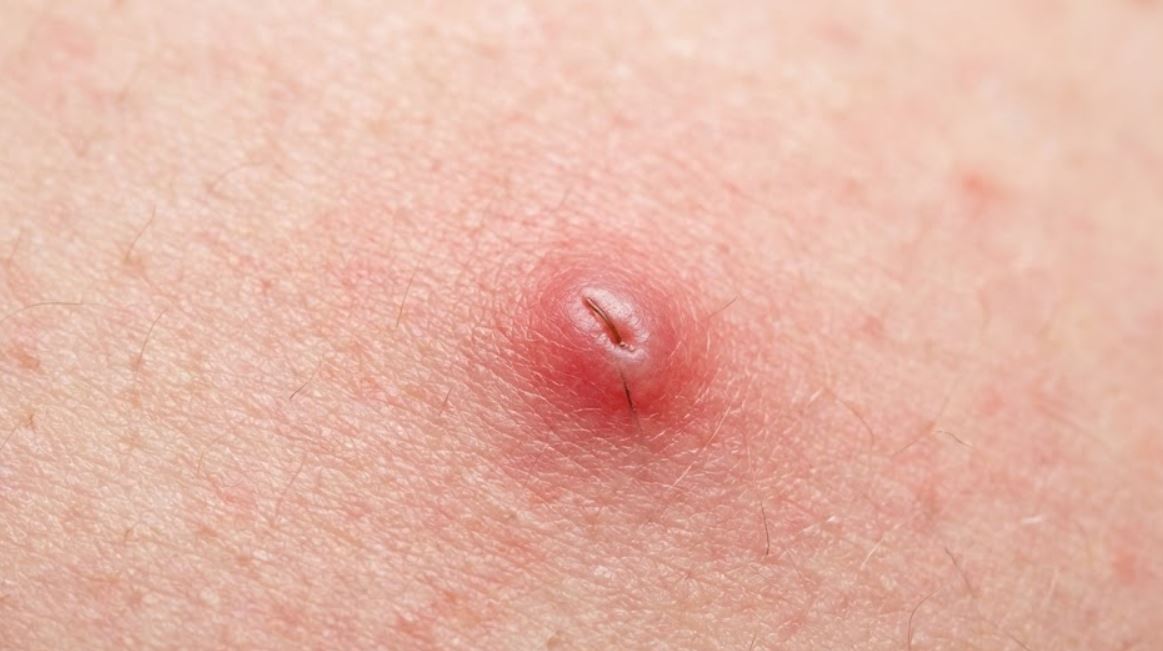
One of the most common skin complaints relates to a tender, and sometimes swollen, bump near our bikini lines after hair removal. Known as a wax plug or ingrown hair in the ear, this can be both a temporary nuisance and a recurring hell.
This article seeks to look at the filamentary nature of these ingrown hairs, how and why they develop, particularly in the bikini area, and what treatment strategies are commonly acknowledged to manage the skin’s response. Explore more on friction-related skin issues: Why Thigh Chafing Gets Worse in Summer & How to Manage It
What an Ingrown Hair Feels and Looks Like
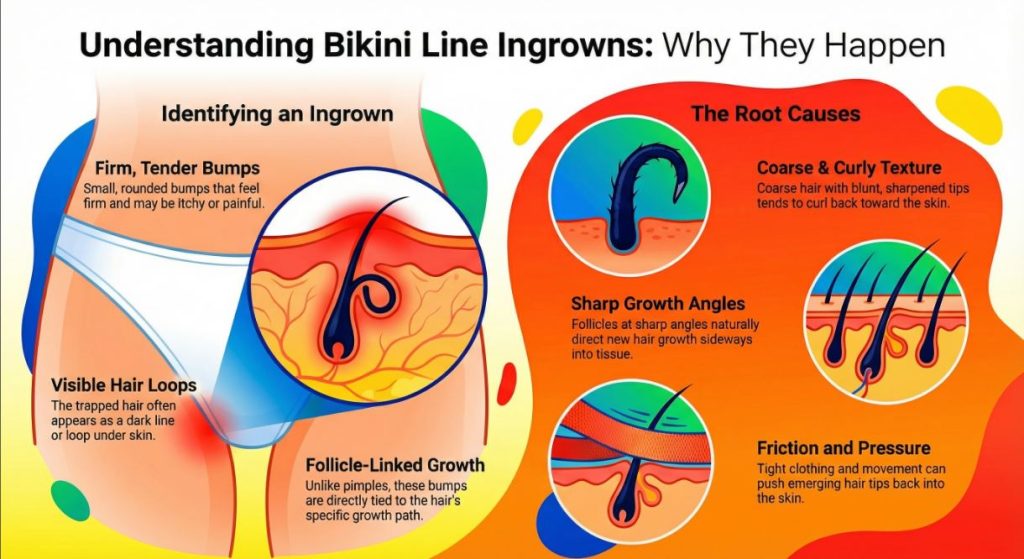
A small, round bump on the skin is usually the first thing that’s noticed. It is commonly firm to the touch and may be tender, itchy, or painful, with pain that tends to be worse upon touch. The bump can be flesh-colored, red, or dark.
In some situations, you might be able to see the trapped hair under the surface of the skin; it can appear as a dark line. Unlike typical pimples, which go away in a few days, ingrown hairs can stick around. If you’re dealing with dark marks, see: Understanding Dark Scars from Back Acne: Causes & Care
The Anatomy of an Ingrown Hair: Why It Happens Here
An ingrown hair is not an infection in its initial stage. But rather a result of hair re-entering or growing sideways into the surrounding skin tissue. The bikini area presents a unique combination of factors that make this more likely.
The Role of Hair Structure and Follicle Direction
The hair in the pubic area is generally coarser and curlier than pubhair on other parts of the body. And when hair of this texture gets snipped, particularly a blunt cut, the new, sharper edge is more likely to fold back upon itself—a popback. Also, hair will often grow out from this area at a fairly steep angle to the skin.
This natural angle, combined with the hair’s curl, makes it easier for the new growth to deviate sideways into the follicle wall or adjacent skin, rather than emerging straight out.
Skin and Friction: The External Factors
The bikini line skin is delicate and receives plenty of friction from our clothing, motion, and sweat. If you’re wearing tight-fitting clothing — think underwear, leggings, or even a swimsuit — that friction can be amplified. It’s possible the tip of a newly growing hair will be pushed back into the skin or make inflammation around its follicle worse. This atmosphere can cause the hair to have a harder time breaking through cleanly.
Common Triggers and Why “Just Exfoliate” Isn’t Always Enough
Exfoliating is a popular treatment for ingrown hairs. Exfoliation can clear away dead skin cells that might be plugging the opening of a hair follicle. Although it treats only one aspect of an intricate problem.
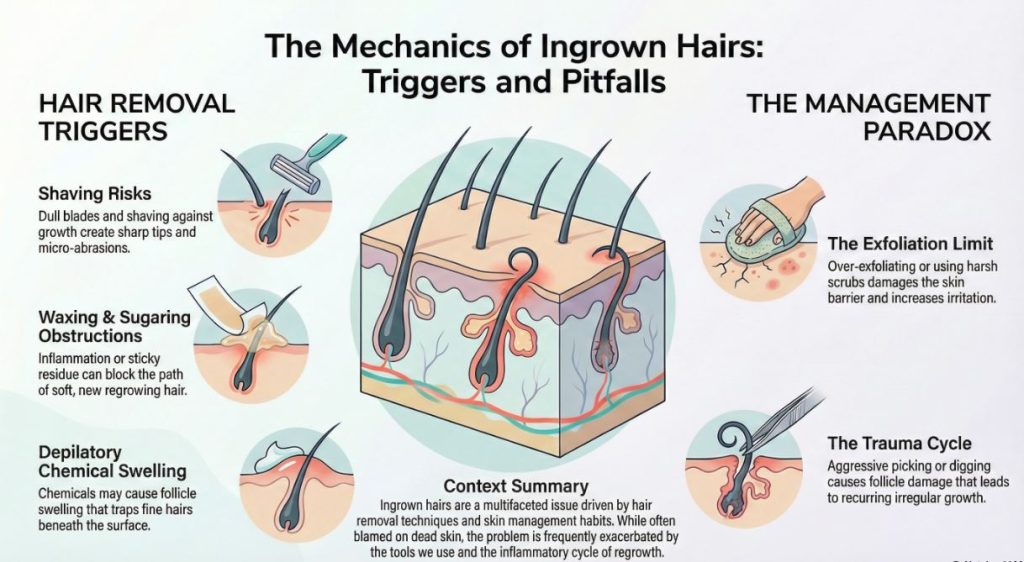
If your skin is already irritated and you over-exfoliate, or if you use abrasive scrubs when the outermost epidermal layer is tender, you are going to make matters worse because now even the protective “stratum corneum” barrier has also been injured. You might also be interested in: Understanding Loose Stomach Skin: Causes & Care Options.
Hair Removal Methods as a Primary Trigger
The method used to remove hair is often a significant contributing factor:
- Shaving: This is a frequent trigger. When using a dull blade, shaving against the hair grain or dry shaving, that might lead to sharp-angled tip hair with potential for micro-abrasions on your skin surface, where the tip can grow into its walls.
- Waxing/Sugaring: These techniques pull hair out from the root. As the hair first starts growing back, it is new and soft, and has to make its way to the opening of the follicle. Sometimes it gets blocked by the inflammation of the hair-removal process and grows inward.
- Depilatory Creams: These chemicals dissolve hair at the skin’s surface. For some, the chemical irritation can cause temporary swelling around follicles, potentially trapping the new, fine hair as it starts to grow.
The Cycle of Regrowth and Irritation
A recurring pattern many people report is a cycle where treating one ingrown hair seems to lead to another. This can happen if the care method (like aggressive picking or digging) further traumatizes the follicle. And surrounding skin, setting the stage for the next hair from that follicle to also grow irregularly.
Patterns of Care That Can Help Manage Discomfort
The goal of care is to support the skin’s health, reduce irritation, and allow hair to emerge naturally. Effectiveness varies individually, and patience is often required as the skin’s cycle adjusts.
Before Hair Removal: Preparation Matters
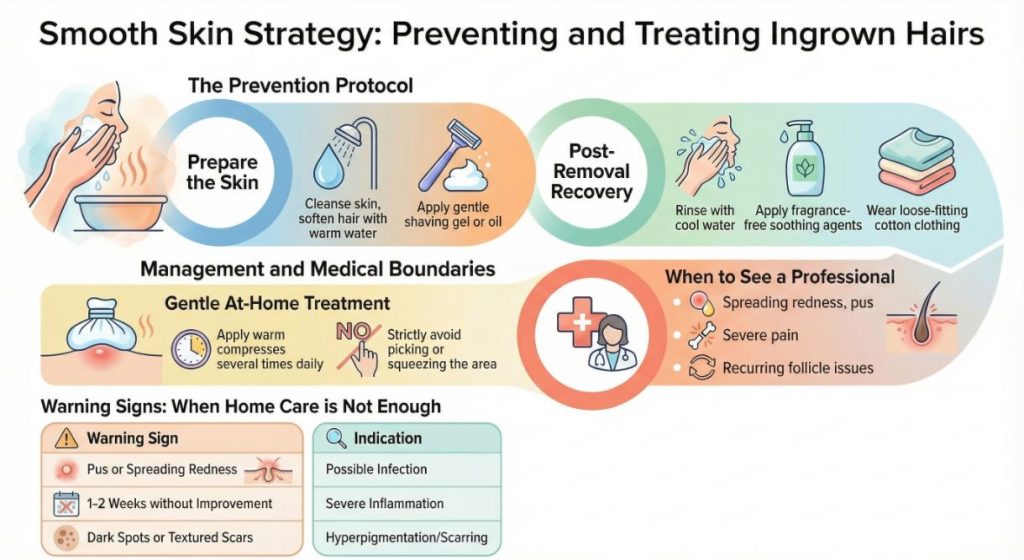
- Cleanse: Start with clean skin to reduce the introduction of bacteria.
- Softening: Using warm water or a warm compress for a few minutes can help soften the hair and open follicles.
- Lubrication: Always use a generous amount of a gentle shaving gel, cream, or oil designed for sensitive skin. This allows the razor to glide.
After Hair Removal: Calming and Protecting the Skin
- Rinse with Cool Water: This can help soothe the skin and close pores.
- Pat Dry: Avoid rubbing the area with a towel.
- Apply a Soothing Agent: A product with ingredients known for their calming properties, such as aloe vera or centella asiatica, can be applied. Avoid products with heavy fragrances or high concentrations of alcohol immediately after.
- Wear Loose Clothing: Opt for breathable, loose-fitting cotton underwear and bottoms for the next 24-48 hours to minimize friction and moisture.
For an Existing Ingrown Hair: A Gentle Approach
- Warm Compress: Applying a clean, warm washcloth to the area for 5-10 minutes, several times a day, can help soothe inflammation and may encourage the hair to move toward the surface.
- Avoid Manipulation: It is important to resist the urge to pick, squeeze, or dig at the bump. This significantly increases the risk of introducing bacteria, causing scarring, or creating more embedded hair.
- Let it Resolve: Often, with consistent warm compresses and by avoiding further irritation to the area, the hair will naturally find its way out over several days.
When Management at Home Isn’t Enough: Recognizing the Boundary
While most ingrown hairs resolve with time and gentle care, certain signs indicate it may be appropriate to seek guidance from a healthcare professional, such as a dermatologist. These signs include:
- Signs of Infection: Increased pain, spreading redness, warmth to the touch, or the presence of pus.
- Recurrence: The same follicle produces ingrown hairs repeatedly over many months.
- Severe Inflammation: The bump becomes very large, deeply painful, or does not improve after 1-2 weeks of gentle care.
- Scarring or Hyperpigmentation: The area develops dark spots (post-inflammatory hyperpigmentation) or textured scars from repeated issues.
A professional can provide a personalized assessment and discuss options, which may include topical treatments to reduce inflammation, professional extraction, or long-term hair management strategies.
Frequently Asked Questions
Why do I get ingrown hairs every time I shave my bikini line?
It’s likely a function of your own hair and shaving/shaving technique. Shaving produces a pointy end that can be bent back easily into the skin. A lot of these factors, however, can greatly raise your chances, such as shaving against the grain or using a dull blade and not having enough lubrication. Various hair removal techniques or changing how you prepare for and care of your shave can change this routine.
How long does a painful ingrown hair typically last?
Without treatment and with gentle care (no picking!) an average ingrown hair will heal itself in one to two weeks as the body loosens the offending hair and moves it out of the skin or disintegrates and reabsorbs it. Inflammation and sore iness usually recede in a few days while the irritated area remains clean.
Is it an ingrown hair or a cyst?
An ingrown hair often starts as a small, tender bump, sometimes with a visible hair. A cyst is typically a larger, softer, movable lump under the skin that forms when a follicle or gland becomes blocked. A cyst is less likely to have visible hair and may persist for much longer. An ingrown hair can sometimes develop into a cyst if the follicle becomes deeply inflamed and blocked. A healthcare professional can provide a definitive distinction.
You May Also Ask
Are some people simply more susceptible to ingrown hairs?
Yes, individual susceptibility is a factor here. Those with naturally curlier or coarser hair are more predisposed simply because their hair physically does curve. Your skin texture, an individual hair’s follicle shape, and genetic factors affecting your type of hair growth contribute to how likely you are to suffer from them.
What’s the difference between a razor burn and an ingrown hair?
Razor burn is a common skin condition that occurs when you shave, and a small rash or red area develops on the surrounding part of your face as a result of friction and sensitivity. An individual, discrete bump is known as an ingrown hair and occurs when one hair grows into the skin. Razor burns can occur prior to or along with ingrown hairs.
Can certain fabrics make ingrown hairs worse?
Yes. They added that tight, non-breathable materials such as synthetic leggings or nylon underwear can create a warm, moist environment and cause high levels of friction against the skin. This friction can inflame hair follicles and actually force growing hairs back into the skin. Loose, cotton clothing will lessen this risk, especially after hair removal.
Conclusion
The most lobby endearing experiences tend not to involve an angry red swollen pimple accompanied with pain that escapes definition, rather the painful ingrown hair on the bikini line due to a whole lot of friction as well as discomfort..+ Understanding what’s going on behind why that bad boy feels so harsh—from how hair grows into skin and what sort of treatment options are available—can demystify this somewhat frustrating experience. This knowledge changes the approach from looking for a quick fix to gently and consistently treating your skin in this delicate area. Acknowledgment that not all treatments are equally effective and some patients may benefit from professional guidance for management of recalcitrant cases enables patients to make educated decisions about self-care.
Disclaimer: These articles are for educational purposes and not a substitute for professional medical advice. Always seek the advice of your dermatologist or doctor for persistent skin problems or before embarking on a new treatment.