
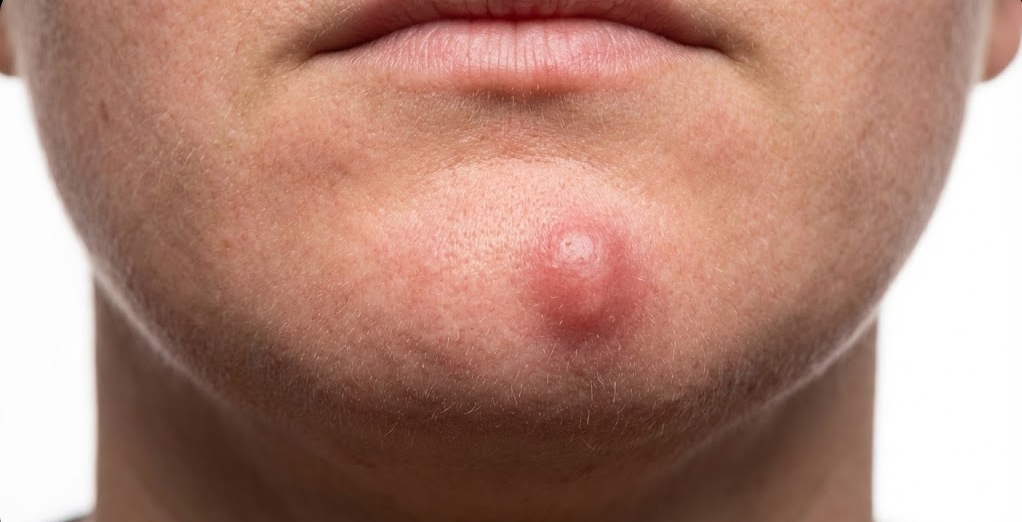
Discovering a hard, painful lump under the skin on your chin can be both uncomfortable and worrying. Unlike typical surface pimples, this type of deep bump refuses to develop a “head” and can linger for weeks. While many conditions can cause chin lumps, one of the most common explanations is a severe form of inflammatory acne.
This article will help you understand what might be happening beneath your skin, explain why common pimple advice often fails in this scenario, and guide you toward appropriate and effective care.
Some under-the-skin bumps are actually severe inflammatory pimples — read Chin Pimples: Why They Hurt and How to Care for Them
What Is This Painful Lump Under Your Chin?
When you find an painful lump under your skin it is probably because something big is going on underneath, around the hair follicle and oil gland. In dermatology, this is known as nodular acne.
We need to make a difference between this and the usual skin problems that we can see on the surface.
- Blackheads/Whiteheads (Comedones): These are non-inflammatory blockages within the pore.
- Papules/Pustules: These are inflammatory pimples that are closer to the surface, often red and with a visible white or yellow center.
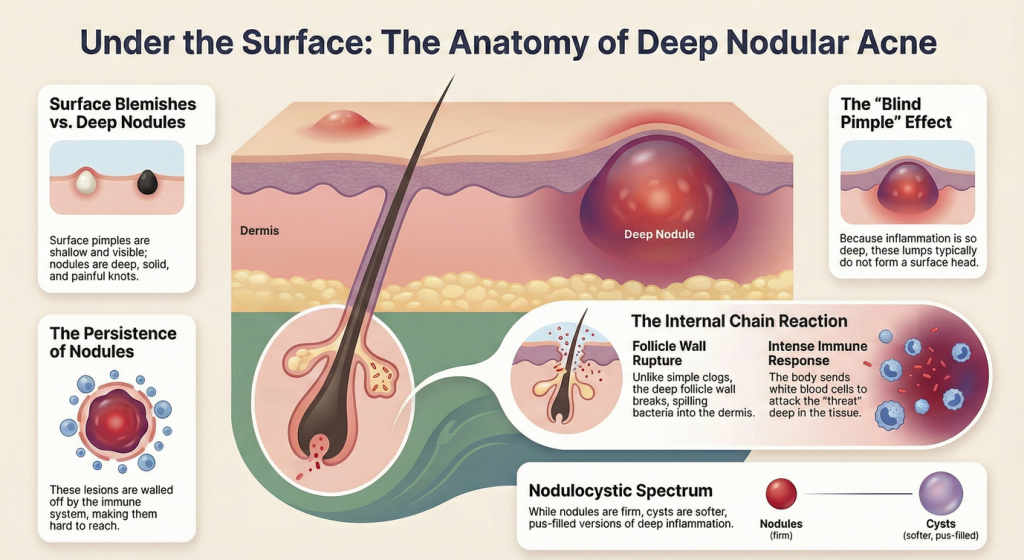
- Nodules: They are under the skin. Can be very painful when you touch them. Nodules feel like a lump or a big bump under the skin. The problem with nodules is that they are, inside the skin. This means they usually do not form a head like spots do. Nodules are a kind of lesion. They are solid. Can be really sore. Because the inflammation is so deep, they typically do not come to a head.
- Cysts: Cysts are like nodules. They are filled with pus. This makes cysts softer. They can feel different when you touch them. The terms “nodular” and “cystic” acne are often used together (“nodulocystic”) as they represent the severe end of the acne spectrum.
The primary characteristic of a nodule is its depth and persistence. The body’s immune response has walled off the inflammation deep within the dermis, creating a firm, often painful mass that topical treatments cannot easily reach.
Why Deep, Painful Lump Form Under Chin Skin
To really get why this lump is different you need to think about what’s happening underneath. It is, like trying to figure out the lump by looking at what’s going on below the surface of the skin, where this lump actually is.
- The Initial Blockage: It happens when a hair follicle becomes clogged with excess sebum (oil) and dead skin cells.
- Rupture and Immune Response: The follicle wall, which is deep under the skin can actually break open. When this happens it lets the bacteria that’re normally on our skin (C. acnes) and the clogged material to spill into the surrounding dermis.
- Deep Inflammation: Your body recognizes this spillage as a threat. It launches a significant inflammatory response and sends white blood cells to the affected area. This intense, localized inflammation deep within the skin tissue forms the hard, painful, and often red nodule you feel.
- The “Blind Pimple” Effect: Because the entire event is so deep and walled off by the immune response, it does not travel upward to form a pustule at the surface. This is why it feels “blind” or like it will never come to a head.
Common Triggers and Contributing Factors
While the biological process is consistent, certain factors are known to contribute to or worsen this deep form of acne, particularly around the chin and jawline:
- Hormonal Fluctuations: Hormonal changes are a reason for this problem especially in grown ups. The androgens, which are hormones can make the oil glands in our skin work. These hormonal changes happen a lot during the time of month when women have their period when they are pregnant when they go through menopause or when they have something like ovary syndrome or PCOS for short no actually it is still polycystic ovary syndrome. Hormonal fluctuations, like the ones caused by ovary syndrome can really affect the skin.
- Genetics: If your family has a history of acne you are more likely to get really bad acne too like those big painful bumps, under your skin(Nodular lesions). Genetics and family history of acne can increase your chance of developing these nodular lesions.
- Friction and Pressure: Friction and Pressure can really cause some problems. When you do things like rest your chin on your hand use your phone a lot against your cheek and jaw or wear a helmet with straps that’re too tight it can irritate the hair follicles on your skin. This can lead to a condition called acne mechanica, which’s basically acne that is caused by Friction and Pressure.
- Stress: Stress is a problem. When we are stressed all the time it can cause a lot of trouble. Chronic stress elevates cortisol levels, which then leads to increased oil production and inflammation throughout the body, including the skin.
- Skincare and Cosmetic Products: Heavy, occlusive, or oily products can contribute to pore clogging, particularly in acne-prone individuals.
- Dietary Influences (Individual): For some people, high-glycemic diets (rich in sugary, processed foods) and dairy may exacerbate acne, though the link varies significantly from person to person.
Why Your Usual Acne Routine Isn’t Working
A key point of frustration is that the advice and products effective for common acne often fail completely on a deep nodule. Here’s why:
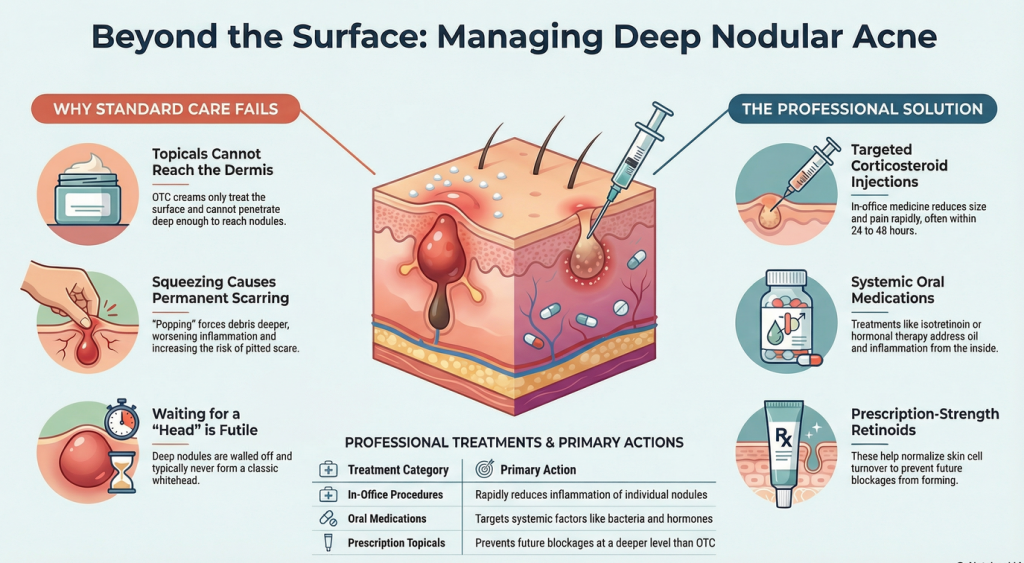
- Topical Treatments Can’t Penetrate Deep Enough: Over-the-counter creams with benzoyl peroxide or salicylic acid work on the skin’s surface and upper pores. They lack the ability to reach and calm the intense inflammation buried deep in the dermis where the nodule resides.
- “Popping” is Dangerous and Counterproductive: Attempting to squeeze a deep nodule is not only excruciating but forces the inflammatory debris deeper into the skin or sideways. This dramatically worsens the inflammation, increases healing time, and significantly raises the risk of permanent, pitted scarring.
- Waiting for a Head is Futile: Since the inflammation is deep and walled off, a classic “head” typically never forms. Applying harsh spot treatments or heat in an attempt to “draw it out” often just irritates the surface skin without affecting the core problem.
Patterns of Care: The Professional Approach
Managing deep, nodular acne effectively usually requires guidance from a dermatologist or healthcare provider. They can assess the lesion and may recommend treatments designed to work from the inside out or penetrate deeply. The following table outlines common professional approaches, framed for educational understanding:
| Approach Category | How It Addresses the Problem | Common Examples (For Context) |
|---|---|---|
| In-Office Procedures | Targets individual nodules directly to rapidly reduce inflammation and prevent scarring. | Corticosteroid Injection: A small amount of anti-inflammatory medicine is injected into the nodule, often reducing size and pain within 24-48 hours. |
| Prescription Topicals | Aims to unclog pores and reduce inflammation at a stronger, deeper level than OTC products. | Retinoids: Help normalize skin cell turnover to prevent future blockages. Prescription-Strength Antimicrobials. |
| Oral Medications | Works systemically to tackle multiple contributing factors like bacteria, inflammation, and hormones. | Oral Antibiotics: Reduce bacteria and inflammation. Hormonal Therapies: (e.g., certain birth control pills, spironolactone) target androgen-driven oil production. Oral Isotretinoin: A potent option for severe, treatment-resistant nodular acne. |
Supportive At-Home Care should be gentle: cleanse with a mild, non-abrasive wash, apply non-comedogenic moisturizers, and use a clean, cool compress for temporary pain relief. Avoid scrubbing, picking, or applying irritating products to the area.
If these breakouts leave discoloration behind, this guide can help: Red Acne Marks That Won’t Fade: A Guide to Stubborn Discoloration
Navigating Concerns: When a Lump Might Be More
Though a lump on the chin often turns out to be a deep pimple, it helps to know what else it might be. Sometimes, the cause is something entirely different. If you notice a new bump or it just seems off, talking to a doctor is the surest way to get answers.
Consider seeking professional evaluation if the lump exhibits any of the following characteristics:
- It is completely painless and feels rock-hard or immobile.
- It continues to grow steadily over several weeks without any change.
- It is accompanied by systemic symptoms like unexplained fever, night sweats, persistent fatigue, or unintended weight loss.
- It is located away from typical acne areas (e.g., directly under the jawline near the neck) and is not associated with any skin changes like redness.
- It does not improve or resolve over several weeks, even with conservative care.
By looking at it, a doctor might see it’s just an acne nodule. Or perhaps it’s a swollen lymph node, usually tied to an infection your body is fighting. It could even be a harmless growth like an epidermoid cyst. If things aren’t clear right away, they may do more checks to figure it out.
FAQ’S
A lump from acne feels like it’s part of the skin – the area above may look red, feel sore, and won’t shift when you touch it. If it’s a swollen lymph node – say, from a cold or dental issue – you’ll likely find it slightly under the jaw or higher on the neck. That kind of lump moves around beneath the skin, while the surface itself tends to appear unchanged.
Add image
A deep nodule won’t usually surface just from warm compresses – the blockage lies too far beneath. Gentle warmth may still help with comfort and blood flow near the area. Stay away from harsh, hot applications; they might burn the skin. For pain and redness on the surface, a cool compress could actually work better.
Without any intervention, a deep lump might last for weeks or sometimes months. A doctor can help by giving a treatment, often an injection, which makes the swelling go down in days. Getting it treated helps it heal faster and reduces the chance of a scar.
Deep inflammation always results in some scarring, either a dark spot (post-inflammatory hyperpigmentation) or an indented or protuberant scar. The risk is greatly increased by picking or squeezing the lesion. Seeking professional care is the best strategy to minimize potential scarring.
Diet alone is not the direct cause, although some dietary factors (for example, high-glycemic foods) may play a role in triggering episodes in a subset of individuals, possibly in combination with genetic and hormonal factors. A better approach is the use of a multidisciplinary management program by health professionals.
Conclusion
A hard, painful lump under the skin on the chin can be really frustrating, especially if you’ve tried every standard acne treatment with no success. The good news is that it’s likely to be a deep, inflammatory form of acne, which means that the problem is occurring quite deep underneath the skin. Given this, it may be helpful to seek care from a knowledgeable practitioner, so that you can have an improved level of comfort, a shorter duration of lesion, and a longer-term reduction of damaging effects to your skin. Getting the best care is the best way to minimize lesions on your skin.
Disclaimer: This article is for educational purposes only and does not replace professional medical advice. Always consult a qualified healthcare provider for diagnosis and treatment of any skin condition or concerning lump.